Portuguese
  Spanish


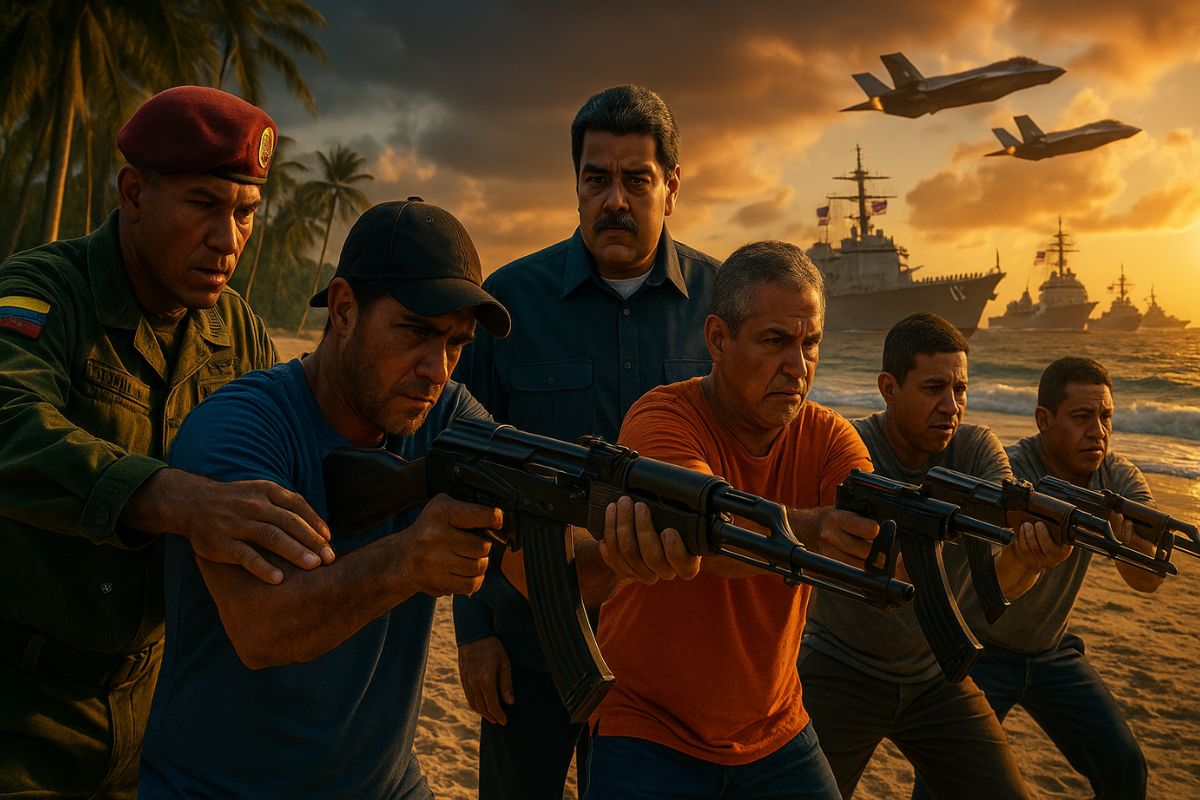

According to G1, Maduro’s Call to Train Civilians in Shooting Comes at a Time When Eight Warships and F-35 Aircraft from the United States Are Positioned Less Than 100 km from the Venezuelan Coast.
Maduro’s call to train civilians in shooting techniques and weapon use marks another chapter in the growing military tension between Venezuela and the United States. The announcement was made on September 12, 2025, during a speech broadcasted on state television, in which the Venezuelan president appeared in military uniform and declared that “all the weapons of the Republic” would be ready to defend the country.
The context is explosive: eight American warships and F-35 fighters are positioned in the Caribbean, less than 100 km from the Venezuelan coast. Officially, the U.S. claims that the operation is aimed at combating drug trafficking. However, for Caracas, it represents a direct threat of military intervention and attempted political intimidation amidst a regional crisis.
Internal Mobilization with Civilians and Militias
Maduro ordered all those enrolled in the Bolivarian Militia to report to 312 barracks spread across the country for practical shooting training.
-
U.S. Military Intervention Risk in Brazil Raises Alarm, Highlights National Sovereignty Amid Tensions Over Washington’s Terrorist Designation of PCC and Comando Vermelho

-
Brazilian Air Force’s Sole KC-30 Aircraft Completes Strategic Mission to Spain for 105mm Anti-Tank Ammunition for Leopard 1A5 Tanks

-
Brazilian Air Force Seeks to Acquire More Gripen Fighter Jets
-
U.S. Air Force Launches Air-to-Air Missile Project with Range of Up to 1,850 km for Indo-Pacific Operations

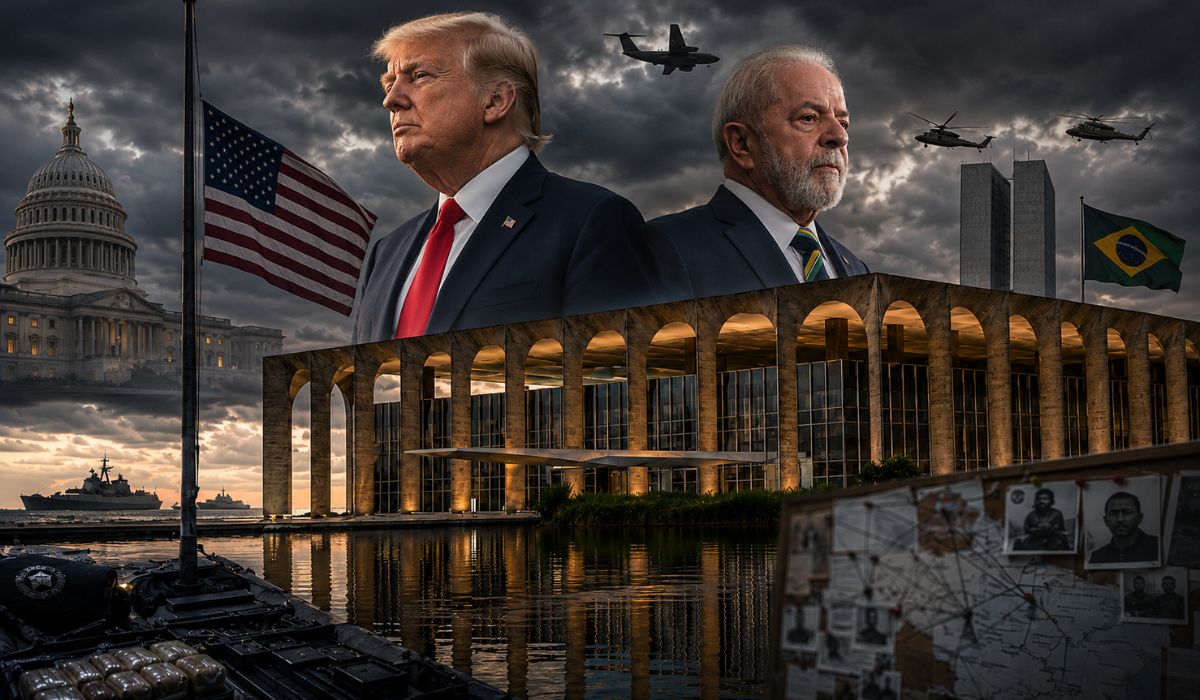


The militia, created by Hugo Chávez, consists of pre-enlisted civilians who act as an auxiliary force to the Armed Forces.
According to estimates from the International Institute for Strategic Studies (IISS), Venezuela has around 212,000 active militia members, in addition to 123,000 regular soldiers.
The problem is that only a fraction of this contingent has adequate training and equipment.
Many militia members are retirees, public servants or supporters of the ruling party, which limits the operational effectiveness of the force.
Still, Maduro’s call aims to convey the image that the country would be prepared to resist external pressures, transforming civilians into potential combatants in the face of the threat posed by the American military presence in the Caribbean.
Heavy Weapons and Reinforcement at the Borders
In addition to civil mobilization, the Venezuelan government announced the deployment of 25,000 soldiers from the Bolivarian National Armed Forces (FANB) to sensitive regions.
The states bordering Colombia and the Caribbean coast received reinforcements with tanks, missiles, and rifles, in an attempt to create symbolic barriers against the approach of the U.S.
According to Maduro, the order is clear: defend every inch of the national territory and display deterrent capabilities.
The rhetoric of “resistance against the external enemy” reinforces the Chavista discourse of homeland defense and seeks to mobilize popular support at a time of severe economic and political crisis.
Pressure from Washington and Risk of Incidents
The United States sent its ships and aircraft to the Caribbean in August 2025, justifying the mission as part of an international operation against drug trafficking.
However, Venezuelan analysts and officials view the movement as a gesture of direct intimidation, which increases the risk of unplanned clashes.
The Caribbean and the border with Colombia become critical areas, where any incident could escalate into more serious confrontations.
For Washington, it is about maintaining diplomatic and military pressure on Caracas. For Maduro, the strategy is to showcase internal strength and prepare the population for a scenario of resistance.
Real Capability of Venezuela in Question
Despite the announced mobilization, experts question Venezuela’s real capacity to sustain a confrontation against the U.S.
The country is facing one of the worst economic crises in its history, with a shortage of resources for maintaining military equipment and low logistical capacity.
While Americans have state-of-the-art means, such as F-35 fighters and destroyers equipped with long-range missiles, Venezuela relies on the quantity of troops and the rhetoric of popular mobilization.
This military mismatch shows that the call for civilians may hold more political and symbolic value than practical.
Maduro’s call to train civilians in shooting comes at one of the tensest moments in the relationship between Caracas and Washington in recent decades.
The mobilization of thousands of militias, soldiers, and heavy weapons seeks to project strength, but also raises doubts about the actual capacity for resistance of the country.
What do you think, does Maduro’s strategy strengthen national defense or just increase the risk of confrontation in the Caribbean? Leave your opinion in the comments — we want to hear from those who closely follow the impact of this military escalation in the region.