






 Portuguese
  Spanish


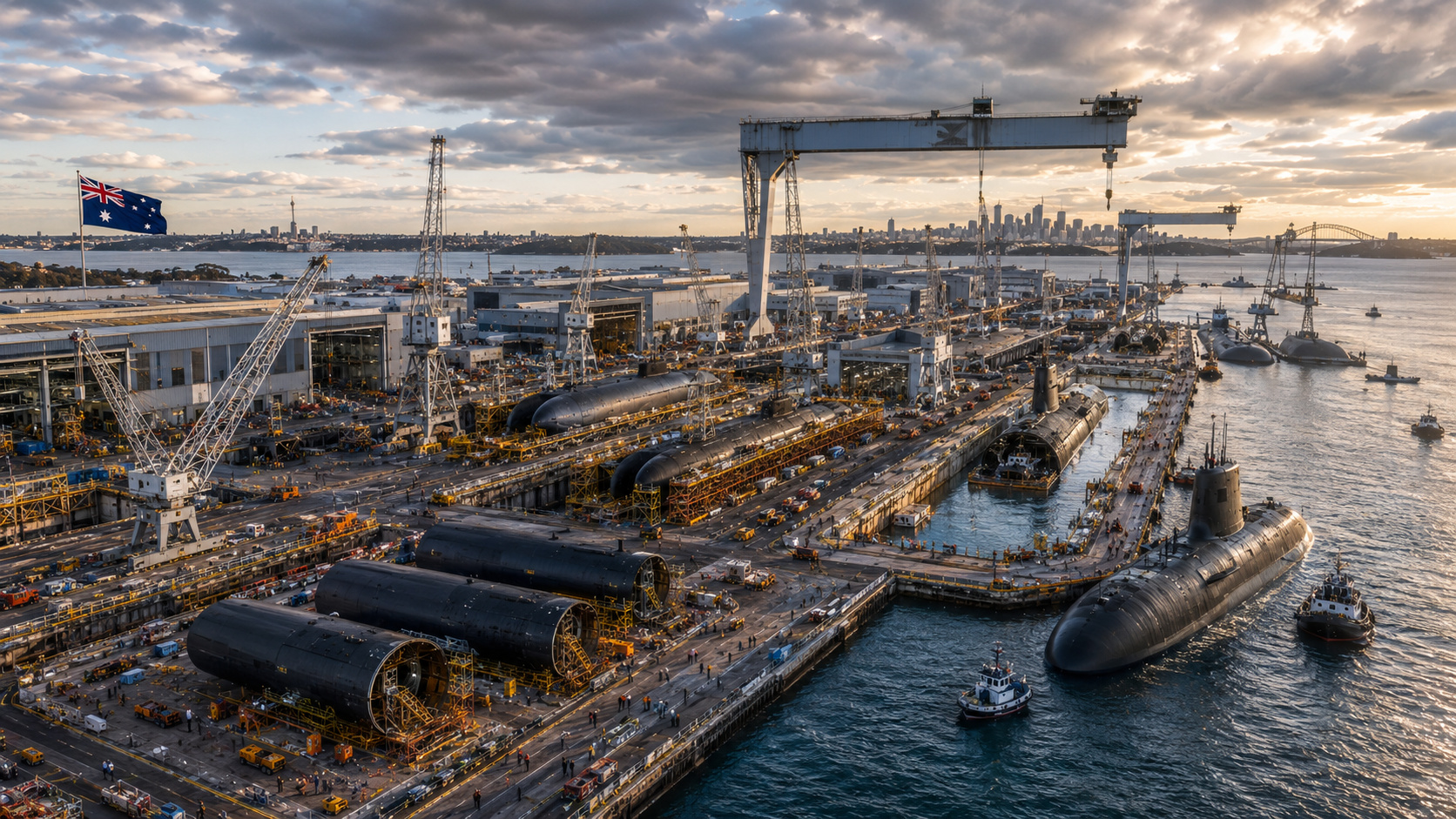

Australia advances in the AUKUS program, plans to operate up to 8 nuclear submarines and builds a new billion-dollar naval industry.
Australia is undertaking the largest military transformation in its modern history. After decades of operating only conventionally powered diesel-electric submarines, the country has initiated a strategic program that aims to place it among the few nations on the planet capable of building and operating nuclear-powered submarines.
The project is part of the AUKUS agreement, signed between Australia, the United Kingdom, and the United States, and foresees the acquisition of a fleet of up to eight conventionally armed nuclear submarines, capable of remaining submerged for months, traveling great distances, and significantly expanding Australia’s presence in one of the most contested regions of the planet: the Indo-Pacific.
Australia wants to operate up to eight nuclear submarines and change its patrol capacity in the Indo-Pacific
Currently, Australia operates the Collins class, composed of conventional diesel-electric submarines in service since the 1990s. With AUKUS, the goal is to make an unprecedented technological leap.
-
Indonesia Begins Construction of 2,000-Ton Scorpène Stealth Submarines with Advanced Weaponry and French Steel

-
Brazil’s Largest Navy Ship, NAM Atlântico, Transforms into Field Hospital During National Crises

-
Brazilian Navy Demonstrates Strength in Naval Exercise with Over 20 Nations, Deploys Frigate Independência in Anti-Submarine and Air Defense Scenarios, and Joins Historic Formation with 26 Ships from 14 Allied Navies off the U.S. Coast

-
BAE Systems to Supply New Bofors 40Mk4 Cannons to the Brazilian Navy



According to the Australian Submarine Agency, Australia intends to operate a fleet of nuclear-powered submarines that will progressively replace the Collins class, allowing for much longer and more extensive missions.
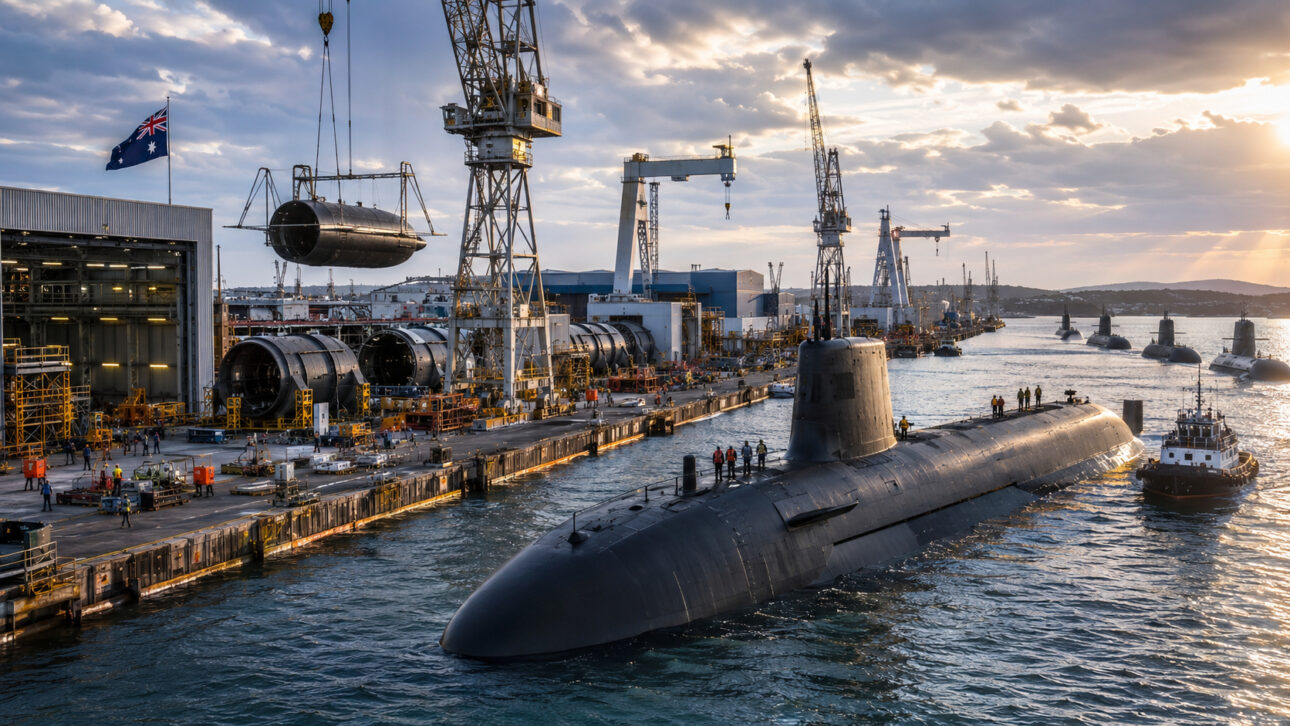
According to official documents of the AUKUS agreement, Australia’s goal is to have at least eight conventionally armed nuclear submarines, enhancing the country’s maritime deterrence capability and strengthening its strategic presence in the Indo-Pacific.
Unlike conventional submarines, which need to surface or use a snorkel periodically to recharge batteries, nuclear vessels can remain submerged for much longer periods, limited mainly by logistical factors, food supply, and crew needs.
First Australian submarines will be built in Adelaide and are expected to enter service in the early 2040s
According to the Australian Submarine Agency, the construction of the first Australian submarine of the future SSN-AUKUS class is expected to begin in Adelaide, in the state of South Australia, before the end of this decade.
The Australian government anticipates that the first locally built unit will be delivered to the Royal Australian Navy in the early 2040s.


The new infrastructure will be installed in Osborne, a region that is being transformed into a gigantic naval industrial complex.
Documents released by the Australian government show that the shipyard expansion is part of an investment estimated at tens of billions of Australian dollars, creating thousands of highly specialized jobs linked to the naval and nuclear industry.
According to information released by the Australian press, the Osborne complex is expected to employ about 4,000 workers directly, potentially reaching approximately 5,500 people during peak construction periods.
AUKUS program foresees American submarines before the arrival of the new SSN-AUKUS generation
The Australian plan has intermediate stages. According to the agreement announced by the Australian Submarine Agency in 2023, Australia is initially expected to receive three Virginia-class submarines, manufactured in the United States, with the possibility of acquiring two more units, depending on future approvals.
These vessels would serve as a transitional solution until the arrival of the SSN-AUKUS submarines produced on Australian soil.
The SSN-AUKUS project will use British and American technology, incorporating combat systems from the United States and nuclear propulsion developed by Rolls-Royce Submarines, according to official information released by the British government and the Australian Submarine Agency. Experts consider this one of the most complex industrial initiatives ever undertaken by Australia.
Nuclear submarines represent a gigantic leap in autonomy and endurance at sea
The main difference between conventional and nuclear submarines lies in the way energy is generated. While diesel-electric vessels rely on fuel and battery recharging, nuclear submarines use reactors capable of continuously producing energy for decades.

According to technical information from the SSN-AUKUS program, the future Australian submarines will use reactors designed to operate throughout the vessel’s lifespan without the need for nuclear refueling.
This feature allows for extremely long journeys, extended patrols, and greater responsiveness in regions far from the national territory.
In a maritime area marked by the growing strategic competition between the United States and China, the ability to remain submerged for months is seen by many analysts as an important military advantage.
AUKUS transformed Australia into one of the largest industrial projects of the 21st century
The Australian submarine program also has an economic dimension. According to estimates released by ABC Australia, the total cost associated with AUKUS could reach 368 billion Australian dollars over approximately three decades, making it one of the largest industrial and military investments ever undertaken by the country.
The initiative involves personnel training, nuclear infrastructure, shipyard expansion, supply chains, training of specialized engineers, and the development of unprecedented industrial capabilities for Australia.
The Australian government considers the program a long-term strategic investment, while critics question timelines, costs, and the country’s ability to sustain such a complex industry.
Regardless of the political debate, a transformation is already underway. For the first time in its history, Australia is moving towards joining an extremely exclusive group of countries capable of operating nuclear-powered submarines, machines that can silently cross entire oceans and remain hidden beneath the surface for months.


