Portuguese
  Spanish


The giant cannons were found during the dredging of the Savannah River in the United States, and some were still loaded. Radiocarbon tests pointed to the late 18th century. Restored by Texas A&M University, 17 of them will be on display on July 2, but the ship’s identity remains hypothetical.
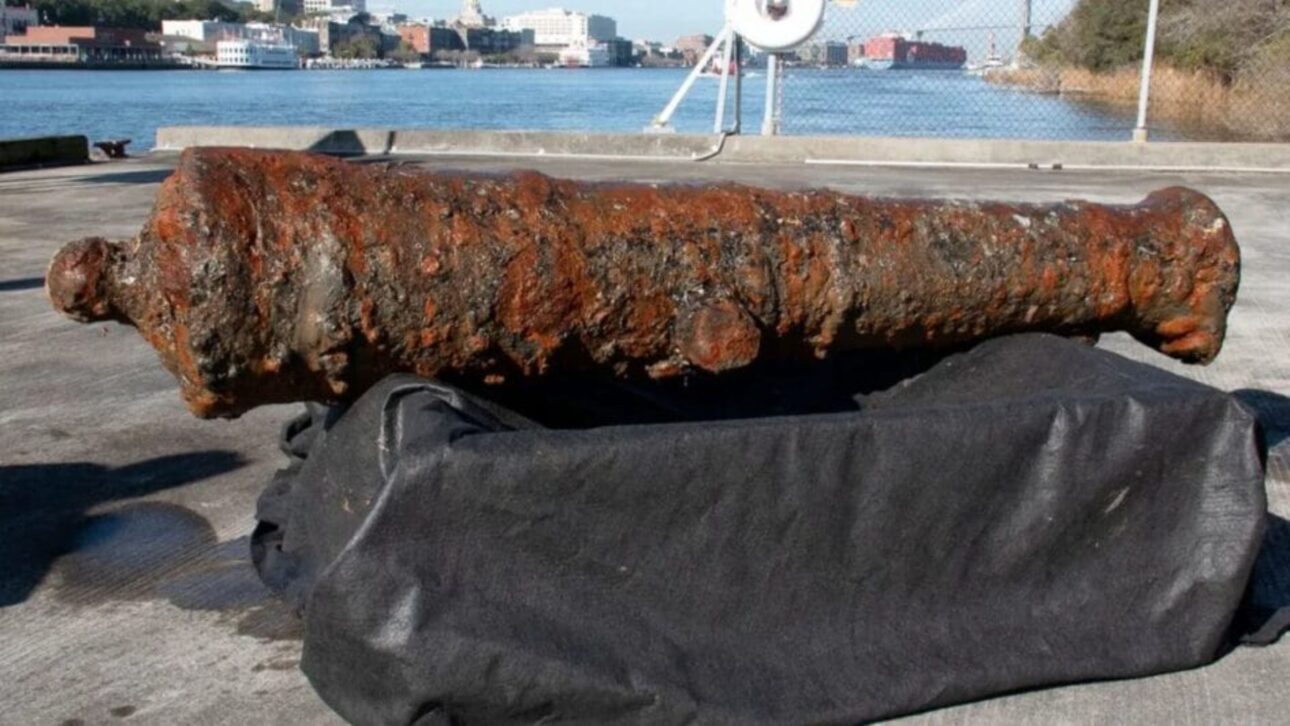
During the dredging of a river in the United States, workers found 19 giant cannons in 2022 that had been forgotten at the bottom for almost 250 years. According to the report from the smithsonianmag portal, each piece weighs more than 450 kilograms and dates back to the time of the American Revolutionary War. The artifacts were submerged in the bed of the Savannah River, on the border of South Carolina and Georgia.
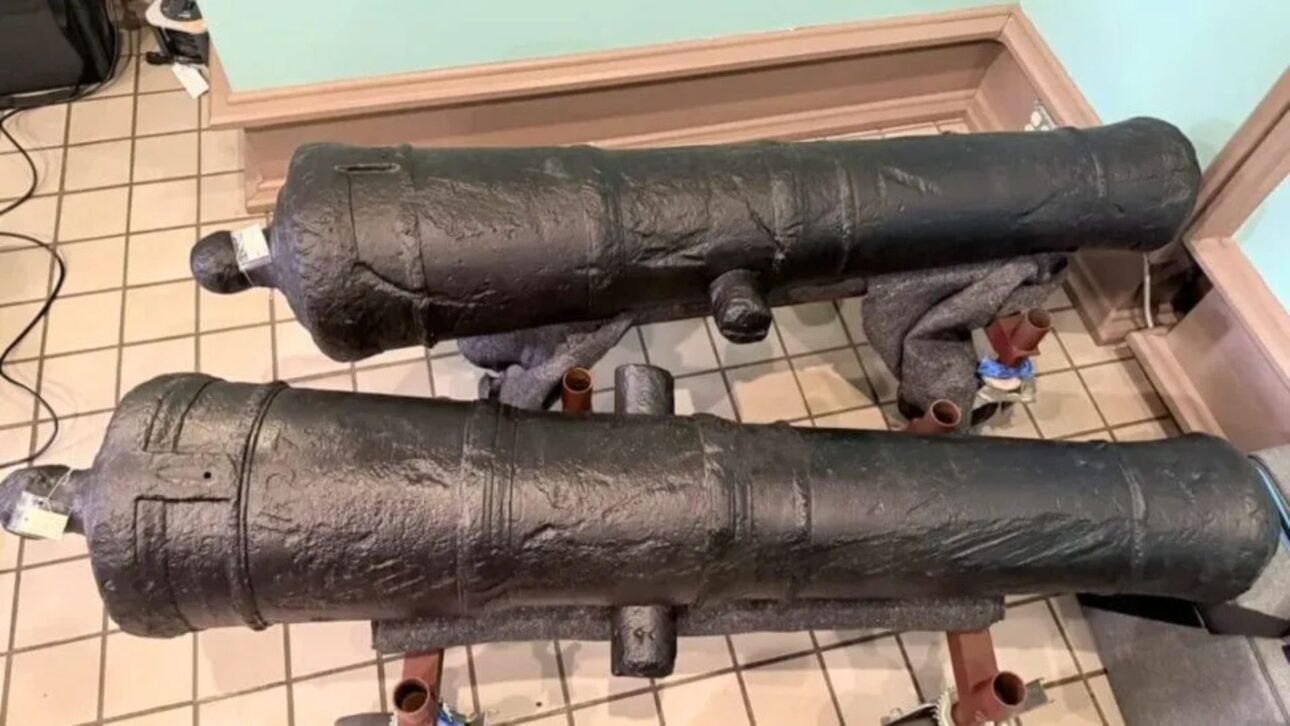
According to the material, the cannons were gradually removed over the course of a year using a clamshell dredge that removed the mud from the bottom. After being restored by specialists from Texas A&M University, 17 of them will be part of an exhibition at the Savannah History Museum. The most curious detail is that some cannons were still loaded.
How the giant cannons were found
from the Savannah District, U.S. Army Corps of Engineers, via Flickr under CC BY 4.0 license
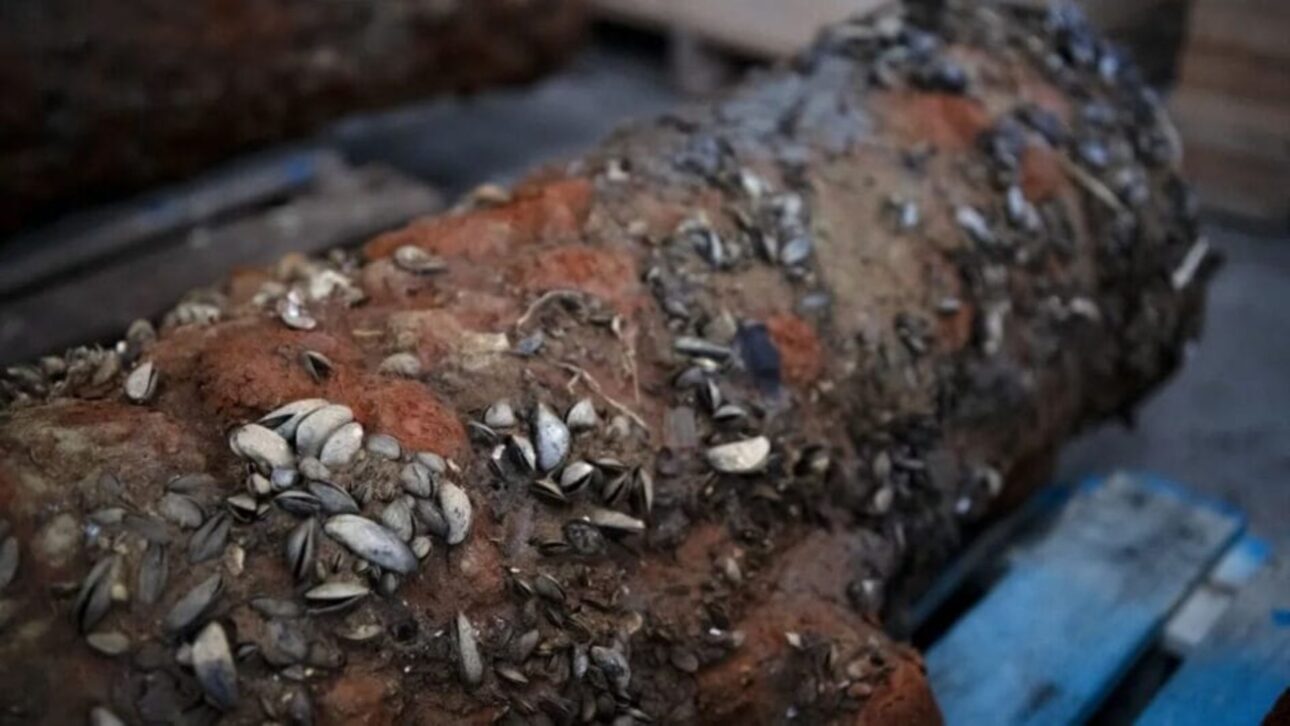
The giant cannons appeared during the dredging of the Savannah River in the United States. According to the report, workers used a clamshell dredge to remove the mud from the riverbed when they began to find the pieces. Over the course of a year, 19 cannons were recovered, each weighing more than 450 kilograms.
-
New Superfiber Developed by Imperial College Researchers and Approved by the EU Promises to Increase Satiety and Help Prevent Weight Gain

-
Harvard Researchers Develop Biological Clock to Estimate Life Expectancy, Potentially Transforming Human Aging Studies
-
Methane, natural fuel lakes, ice, and a nitrogen-rich atmosphere make Titan central to NASA’s plans for the first “space fuel station” to speed up missions beyond Mars.
-
16-Year-Old Kentucky Student Solves Long-Standing Biomedical Challenge, Wins Top Young Scientist Award at $9 Million Science Fair




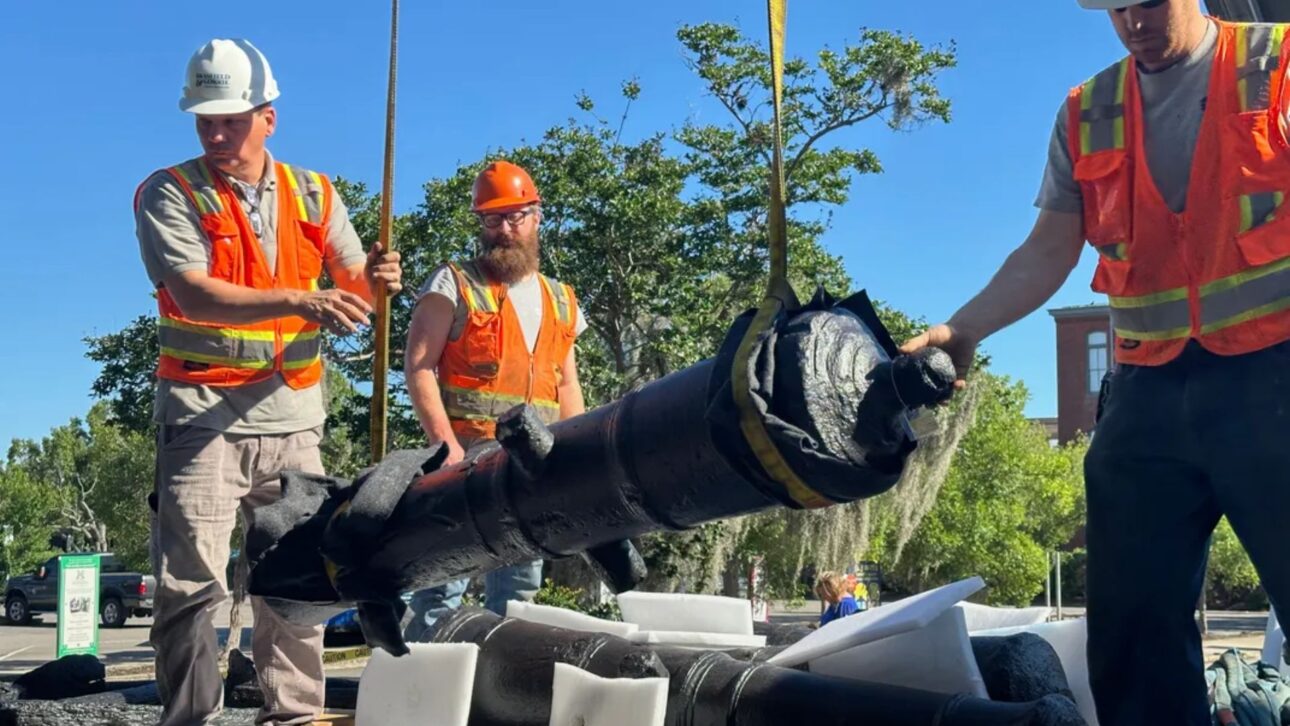
Photo AP/Russ Bynum
Initially, the archaeologists called to examine the artifacts believed that the weapons belonged to an American Civil War ship, fought from 1861 to 1865, which would have sunk nearby. According to the material, however, later analyses showed that the cannons were even older. They would have been used in the War of Independence, which occurred between 1775 and 1783, and remained submerged for more than two centuries.
The mystery of the ship and the still-loaded cannons
Mel Orr / Savannah District, U.S. Army Corps of Engineers via Flickr under CC BY 2.0 license
The most intriguing part is that some of the giant cannons were found still loaded. According to the report, this suggests that the weapons were part of a ship sunk in haste. Historians believe it to be the HMS Savannah, a British ship that would have sunk in the river during that period, although the identification is still a hypothesis.
The historical context helps explain the find. According to the material, the British occupation of Savannah began at the end of 1778, and when the British saw French troops approaching the Georgia coast to try to regain control, they sank several of their own ships to block the passage. The cannons may have come from these deliberately sunk vessels.
The science behind the discovery: radiocarbon and restoration
To confirm the age of the pieces, experts resorted to radiocarbon dating. According to the report, tests were conducted on the wooden lids of the cannons and indicated that the material was from the late 18th century, compatible with the War of Independence. This examination helped correct the initial hypothesis, which was linked to the Civil War.
After being identified, the giant cannons underwent a careful restoration process. According to the material, the task was entrusted to specialists from Texas A&M University, who recovered the weapons after more than two centuries of immersion. Part of this collection is now ready to be displayed to the public.
The “Loyalists and Liberty” exhibition brings the cannons to the public
Of the 19 giant cannons recovered, 17 will be part of an exhibition at the Savannah History Museum. According to the report, the show will be called “Loyalists and Liberty” and will be open to the public starting July 2. The aim is to present up close a little-remembered chapter of United States history.
The preparation of the exhibition required months of planning, according to the museum team. In an interview with the Associated Press, curator Samantha Moss stated that the team “has been preparing for months” to safely display such large and special pieces. For this, specific supports were constructed, capable of sustaining the weight and size of each cannon.
The recovery of the giant cannons from the bottom of the Savannah River turned a dredging operation into a journey back almost 250 years in time. Between one hypothesis and another, what was confirmed is that the weapons date from the late 18th century and remained submerged in the mud throughout the War of Independence. Starting July 2, part of this history can be seen up close at the Savannah History Museum exhibition.
And you, would you like to see these cannons that spent almost 250 years at the bottom of the river up close? Comment on what you think of this discovery and exchange ideas with other readers about what else might be hidden beneath the waters.