






 Portuguese
  Spanish


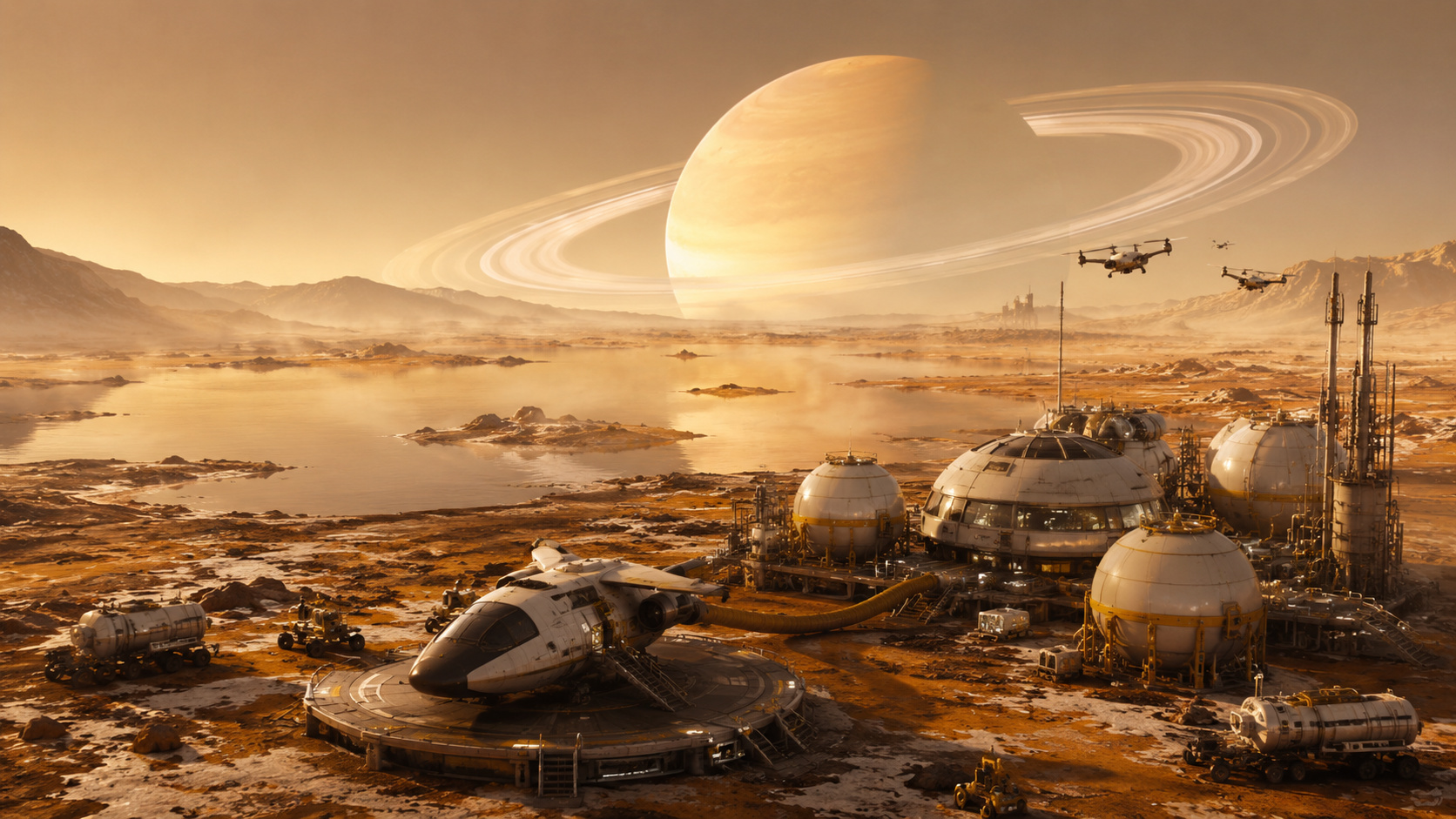

A study supported by NASA indicates that Saturn’s largest moon gathers natural resources capable of supplying future space missions, producing fuels, plastics, and other essential materials, paving the way for a new era of human exploration far beyond Mars.
While Mars remains the main target of future manned missions, scientists are already beginning to look even further. According to information released by the site ZME Science, based on a study supported by NASA, Titan, the largest moon of Saturn, may play a strategic role in space exploration for future generations. The research indicates that the natural satellite gathers a rare combination of resources that could transform it into a true supply and production center for missions destined for the most distant regions of the Solar System.
The research, recently released and made available in pre-publication format on the platform arXiv, analyzes how the abundant hydrocarbons present on Titan could provide fuel, industrial raw materials, and even essential elements for the maintenance of future human bases outside Earth.
Titan gathers a rare combination of natural resources in the Solar System
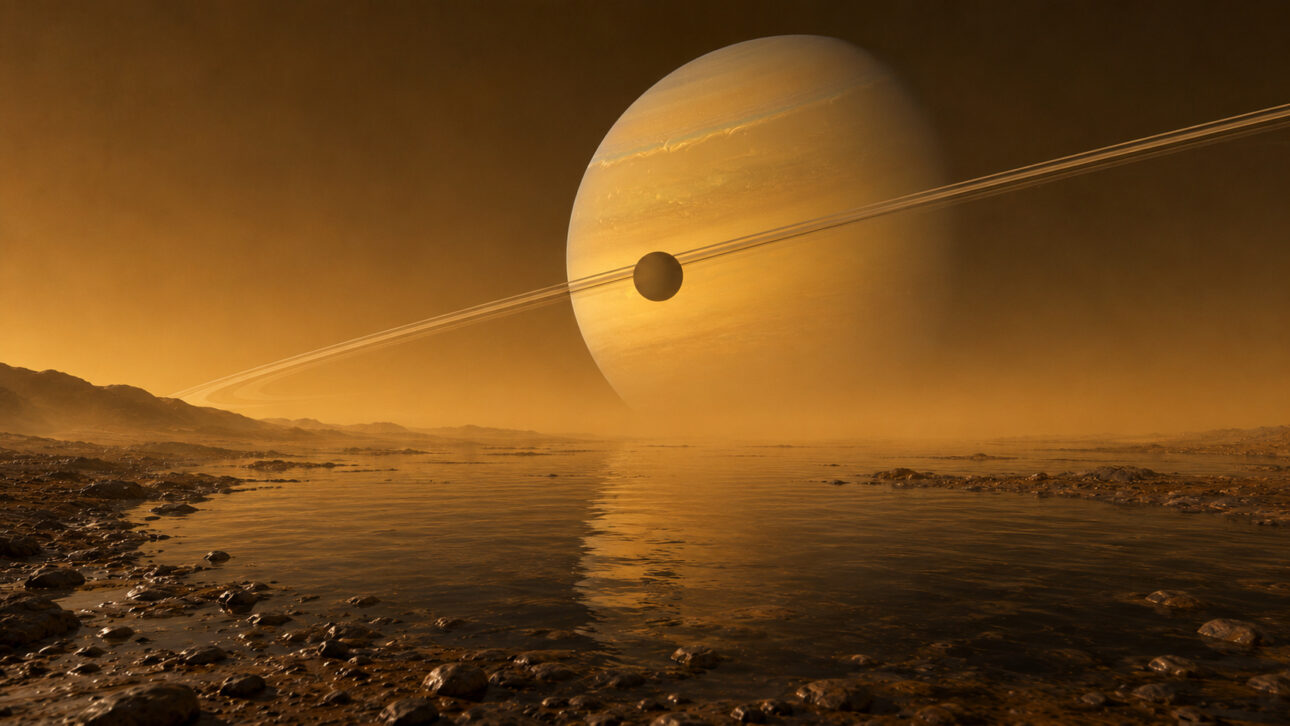
Unlike most known moons, Titan has an extremely dense atmosphere, composed mainly of nitrogen and about 5% methane. Additionally, its surface harbors seas, lakes, and dunes formed by liquid and solid hydrocarbons — compounds that, on Earth, give rise to fossil fuels such as oil and natural gas.
-
16-Year-Old Kentucky Student Solves Long-Standing Biomedical Challenge, Wins Top Young Scientist Award at $9 Million Science Fair

-
Teen Invents Biodegradable Material from Shrimp Shells That Decomposes 1.5 Million Times Faster Than Regular Plastic
-
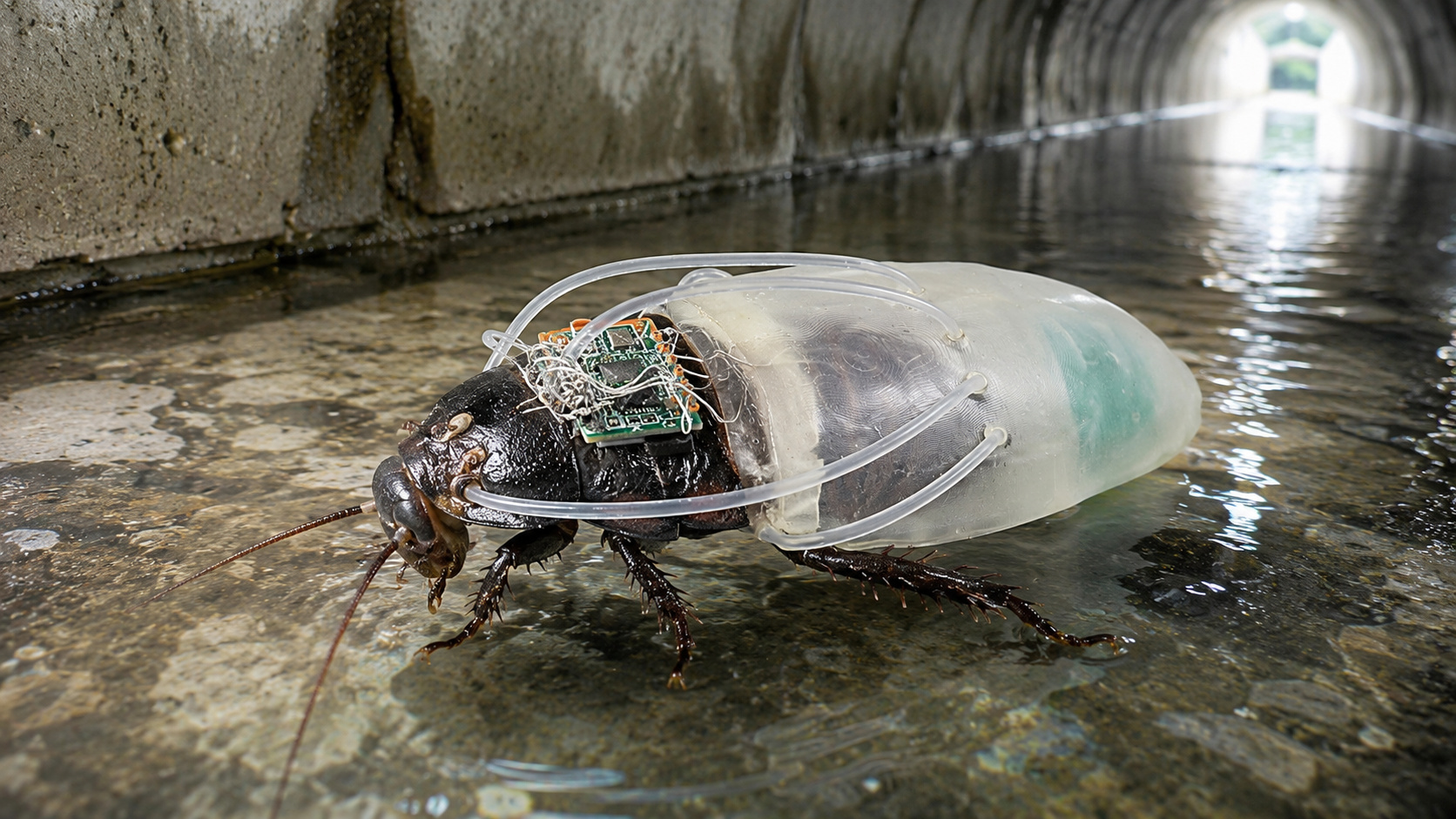
Scientists Develop Diving Suit for Cyborg Cockroaches to Survive Underwater for 3 Hours, Navigate Flooded Tunnels, and Aid in Disaster Rescue Missions, with Potential for Mars Exploration
-
Xiaomi Unveils Ultra-Slim Washer-Dryer with Over 30 Programs, Hygienic Steam, Smart Drying, 15-Minute Quick Wash, App Control, and Space-Saving Design




According to astronomer and planetary scientist Conor A. Nixon, from NASA’s Goddard Space Flight Center and principal author of the study, Titan presents an impressive abundance of these materials.
According to the researcher, besides atmospheric methane, the surface contains heavier hydrocarbons, including propane, butane, kerosene, and gasoline-like compounds. These elements could be used not only as rocket fuel but also in the manufacture of plastics, synthetic rubbers, solvents, fertilizers, and various other products indispensable for a future space colony.
Another important advantage is the presence of enormous reserves of water ice. This ice could be separated into hydrogen and oxygen through electrolysis, allowing the production of both fuel and oxygen for life support systems.
The abundant nitrogen in the atmosphere could also be used in the production of agricultural fertilizers and in creating habitable environments for astronauts.
Study imagines Titan as a supply base for missions to Uranus, Neptune, and other moons
The researchers describe different scenarios for a future space infrastructure on Titan.
One possibility would be the development of spacecraft capable of collecting gases directly from the atmosphere during low-altitude flights. Another hypothesis envisions landing modules that would refine methane on the surface before transporting fuel to stations in orbit.
In a more advanced stage, Titan could host a permanent base responsible for storing fuel, water, oxygen, and various supplies destined for ships crossing the Saturn system.
According to Nixon, this supply would not only serve for return trips to Earth. The reserves produced on Titan could boost even more ambitious missions to Uranus, Neptune, and other regions of the outer Solar System, as well as facilitate frequent travels between Saturn’s various moons.
The authors of the study also highlight that the hydrocarbons could power industrial 3D printers and chemical factories installed on the moon itself. Compounds like ethylene could be converted into polyethylene, one of the most used plastics in the world, while nitrogen-containing molecules could give rise to new materials, such as acrylics and rubber-like compounds.
This capability would significantly reduce the need to transport large quantities of equipment directly from Earth.
The challenges remain enormous, but NASA is already preparing the first steps
Despite the enormous potential, transforming Titan into a space industrial hub is still far from reality.
The surface has an average temperature of approximately -179 °C, lacks breathable oxygen, and receives little sunlight due to the great distance from the Sun and the thick layer of haze covering its atmosphere.
For this reason, researchers consider that future installations would mainly depend on nuclear power generation systems.
Another challenge involves the scarcity of metals near the surface. Since Titan is predominantly composed of water ice and organic compounds, many metallic materials would likely need to be transported from Earth or obtained from nearby asteroids.
Even so, some factors favor human exploration.
The extremely dense atmosphere offers natural protection against some space radiation and, combined with low gravity, makes aircraft flight much more efficient than on the Moon or Mars.
Scientist Amanda Hendrix, director of the Planetary Science Institute and president of Explore Titan, emphasizes that this atmosphere significantly reduces the need for extremely complex pressurized suits, although the intense cold remains one of the biggest obstacles for any manned mission.
Meanwhile, NASA is already preparing a mission that will help assess these possibilities.
The Dragonfly mission, scheduled to launch no earlier than 2028, will send a nuclear-powered aircraft to explore different regions of Titan’s surface. The vehicle will analyze the chemical composition of the environment and collect fundamental data for future scientific and, perhaps, human missions.
During the recent Humans to Titan Summit, held in Boulder, Colorado, experts discussed the technological challenges necessary to turn this scenario into reality.
According to planetary scientist Scot Rafkin, human exploration of Titan has shifted from being a problem related to the laws of physics to one that mainly depends on time, technological development, and international commitment.
Although a permanent base may still take more than a century to become viable, the study reinforces that if humanity definitively advances beyond Mars, Titan could be one of the few places in the Solar System capable of providing fuel, raw materials, and sufficient resources to sustain deep space exploration without relying exclusively on Earth.
Source: ZME Science, with information from the scientific study available on arXiv and statements published by Universe Today and Space.


