





 Portuguese
  English
  Spanish
  6 min of reading
  0 comments


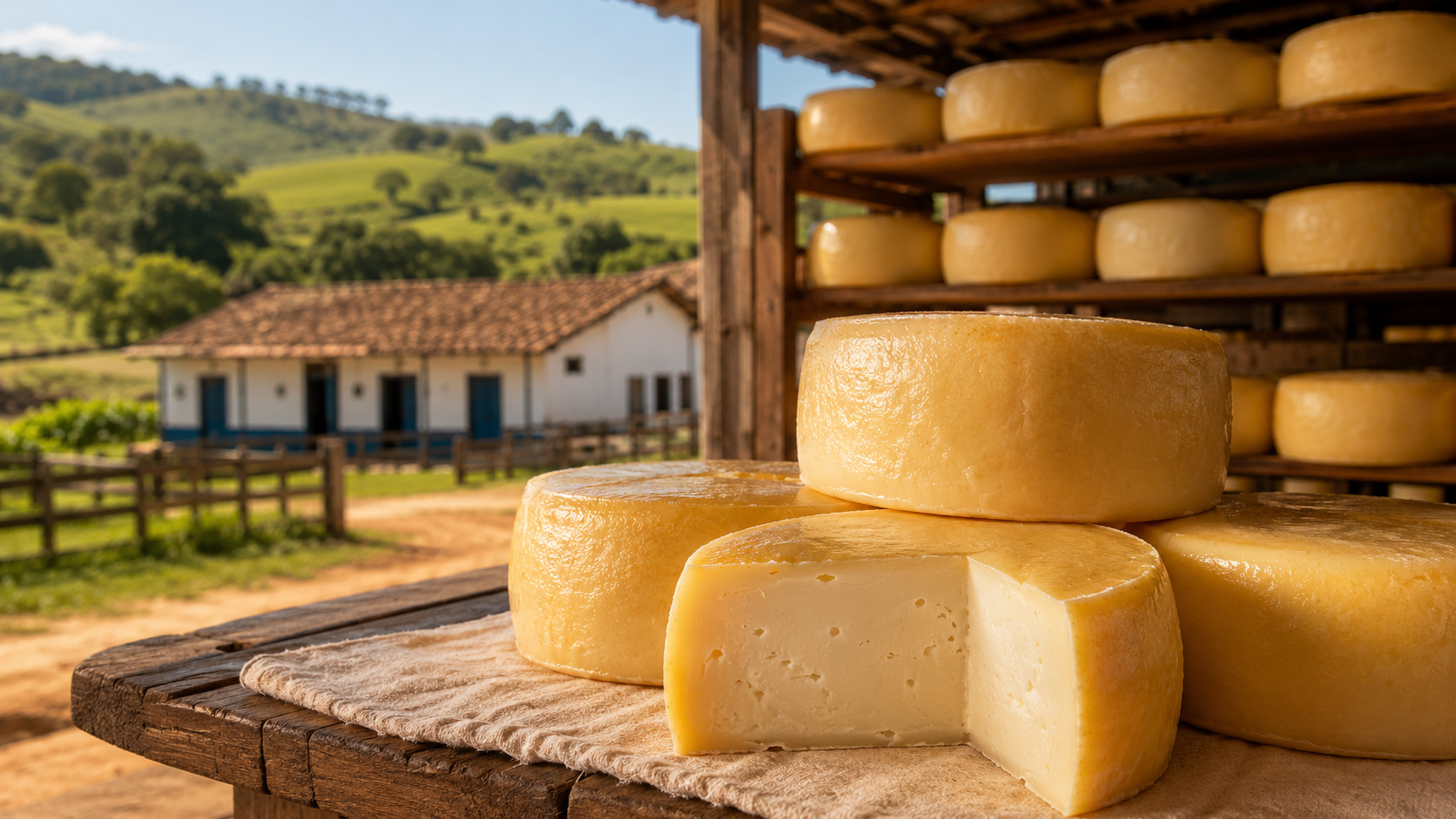
Fazenda Só-Nata, in Araxá, produces 250 cheeses per day, won gold in France, and became one of the references for Queijo Minas Artesanal.
The Fazenda Só-Nata, in Araxá, transformed a family tradition from the countryside into one of the strongest trajectories of Queijo Minas Artesanal. What began as a generational family endeavor led the property to national and international recognition, with a daily production of about 250 cheeses and prominence in prestigious competitions in Brazil and abroad, according to a report by Agencia Sebrae on 05/28/2026.
The story gained even more strength because it did not originate from an industrial expansion disconnected from its roots. On the contrary. The growth of the farm was built on the foundation of family tradition, dairy management, and continuous production improvement. Instead of abandoning its regional identity, the property used this heritage to elevate the product standard and transform Araxá into a showcase for artisanal Minas cheese.
Fazenda Só-Nata was born from family tradition and brought Araxá’s heritage to the center of artisanal cheese
According to the Agência Sebrae de Notícias de Minas Gerais, the connection of Alexandre Honorato‘s family with cheese began long before the award phase. The grandfather was already involved in the product chain, and the father also remained connected to production and marketing. This knowledge was passed down within the family until it took on a more professional form in the current generation.
-
Two rivers that emptied into the Mediterranean 5 million years ago were diverted by the birth of entire mountains and joined to form the Euphrates; the cradle of Mesopotamia was born from a twist that took the Earth millions of years to complete.

-
12-year-old boy makes handmade rosaries with seeds grown at home and delivers them to hospitals to bring faith, care, and hope to hospitalized children.

-
MrBeast surpasses 500 million subscribers, makes YouTube history, and proves that videos with million-dollar challenges, celebrities, dangerous islands, and off-platform businesses still make the internet stop.

-
A mother who worked as a recycler took money from her own food to put credit on her daughter’s broken-screen cell phone; now Débora has been accepted into medical school at two universities and wants to save hearts in the operating room.



This continuity is one of the most important points in the property’s trajectory. The growth of Fazenda Só-Nata did not break with the past but took advantage of the experience accumulated over decades to build an increasingly refined product, without losing the connection with the tradition of the Queijo Minas Artesanal from the Araxá region.
When Alexandre took over the production, the goal was no longer just to keep the activity alive. The objective became to produce a cheese capable of competing with the best in the country, without giving up the rural identity and the traditional knowledge built by the family.
Production of 250 cheeses per day transformed the property into a reference for Queijo Minas Artesanal
The consolidation of Fazenda Só-Nata is also evident in the scale achieved. According to the Agência Sebrae de Notícias de Minas Gerais, the property currently produces about 250 cheeses per day, an impressive volume for a family business that remains linked to the world of artisanal products.


This number shows that the farm’s growth did not come at the expense of the product’s character. The operation advanced in production, organization, and recognition, but maintained a focus on quality, maturation control, and the characteristics that distinguish the cheese from the microregion of Araxá.
In practice, the farm managed to combine significant volume with regional identity, something that few producers can sustain for long in increasingly competitive markets. It is precisely this combination that explains why the brand has come to be seen as a reference within the universe of artisanal Minas cheese.
Gold medal in France placed Araxá cheese among the most respected names in the sector
The moment that projected Fazenda Só-Nata beyond Brazilian borders was the international achievement. According to the Agência Sebrae de Notícias de Minas Gerais, Alexandre Honorato won a gold medal at the World Cheese Championship in Tours, France, in 2019.
The award was also reported by Emater-MG, which highlighted the producer from Araxá among the winning producers from Minas Gerais in the competition in France. The recognition had great impact as it placed a cheese from the interior of Minas Gerais in direct competition with producers from countries with a global tradition in the artisanal cheese sector.
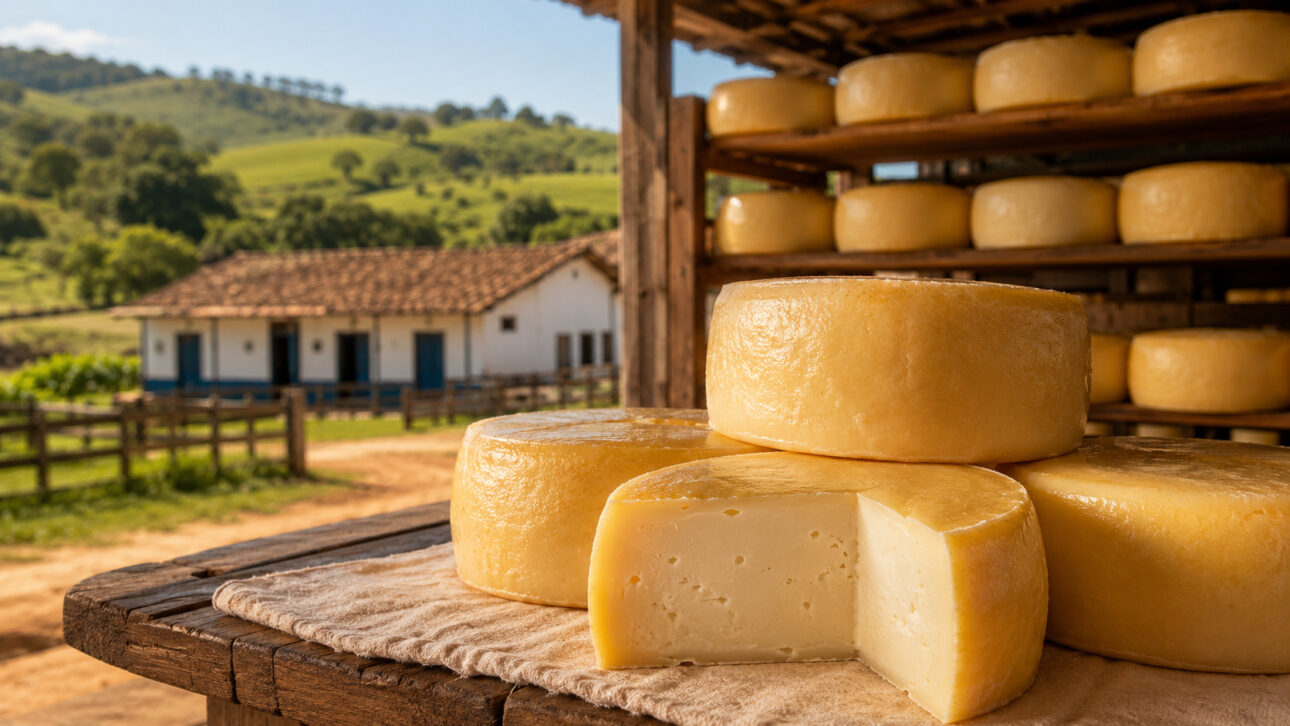
The award did not represent just an isolated medal. It served as an international endorsement of work that had been perfected over the years on the property. In other words, the achievement in France showed that the family tradition of Araxá had reached a competitive standard in one of the most respected showcases in the segment.
Awards in Brazil reinforced the name of Fazenda Só-Nata in the artisanal cheese market
The recognition of the farm was not limited to abroad. According to the Agência Sebrae de Notícias de Minas Gerais, the property also accumulated important titles in regional, state, and national competitions, strengthening its reputation in the universe of Queijo Minas Artesanal.
Among the highlights mentioned are achievements in the Regional Cheese Contest of Araxá, in the State Contest of Queijo Minas Artesanal, as well as medals in more recent competitions like the World Cheese Contest of Brazil and the ExpoQueijo Brasil. This set of results helped consolidate the brand as one of the most respected in the sector.
These awards had an effect that goes beyond the farm. They helped to increase the visibility of Araxá as a producing territory and reinforced the cultural and economic value of artisanal Minas cheese in a market increasingly attentive to the origin and identity of food.
Technical improvement and herd genetics helped to raise the cheese standard
The evolution of Fazenda Só-Nata did not rely solely on tradition. According to the Sebrae News Agency of Minas Gerais, Alexandre Honorato also invested in technical improvement, process adjustments, and genetic improvement of the herd to raise the quality of the milk used in production.

Among the measures adopted are the use of Sebraetec FIV, aimed at genetic improvement, as well as genotyping for the selection of animals with A2A2 milk. This work was designed to improve milk characteristics and, consequently, influence sensory attributes of the cheese, such as creaminess, smoothness, and texture.
The farm also began to better control the maturation of the cheeses throughout the year, using heating and cooling of the environment according to the season. This helped to give more stability to the product and to reduce quality fluctuations caused by climate changes, a classic challenge for artisanal producers.
Fazenda Só-Nata became a symbol of the appreciation of artisanal Minas cheese
The trajectory of Fazenda Só-Nata helps to explain a larger transformation that is occurring in Minas Gerais. The artisanal cheese, which for a long time circulated in a more restricted and local manner, began to gain space in specialized markets, high-level competitions, and debates about origin, territory, and added value.
In the case of Araxá, this appreciation is very clear. The history of the Honorato family shows how a product linked to rural routine can cross the ocean, achieve international recognition and still remain strongly connected to its origins.
In the end, what Fazenda Só-Nata represents goes beyond medals and production volumes. It shows that tradition, technique, family continuity, and constant improvement can transform a cheese from the interior of Minas into a national and international reference without breaking with what made it special from the beginning.




Be the first to react!