Portuguese
  Spanish


Satellite observations show that when El Niño and other phenomena move enormous volumes of water, the shape and gravity of the Earth change slightly. These are tiny variations, detected only by instruments, that no one feels in their body. But they help to better understand the planet.
Climate changes affect more than just temperature and rainfall. They also subtly alter the shape of the planet and even Earth’s gravity, that invisible force that keeps everyone grounded. This observation comes from studies with satellite data, and is more fascinating than frightening.
As shown by Revista Oeste, large-scale phenomena, like El Niño, displace gigantic volumes of water between oceans, continents, and the atmosphere. This movement of water masses slightly changes the flattening of the poles and the planet’s gravitational field. All of this, however, is on such a small scale that it only appears on instruments, never on your scale.
Why moving water changes the shape of the planet
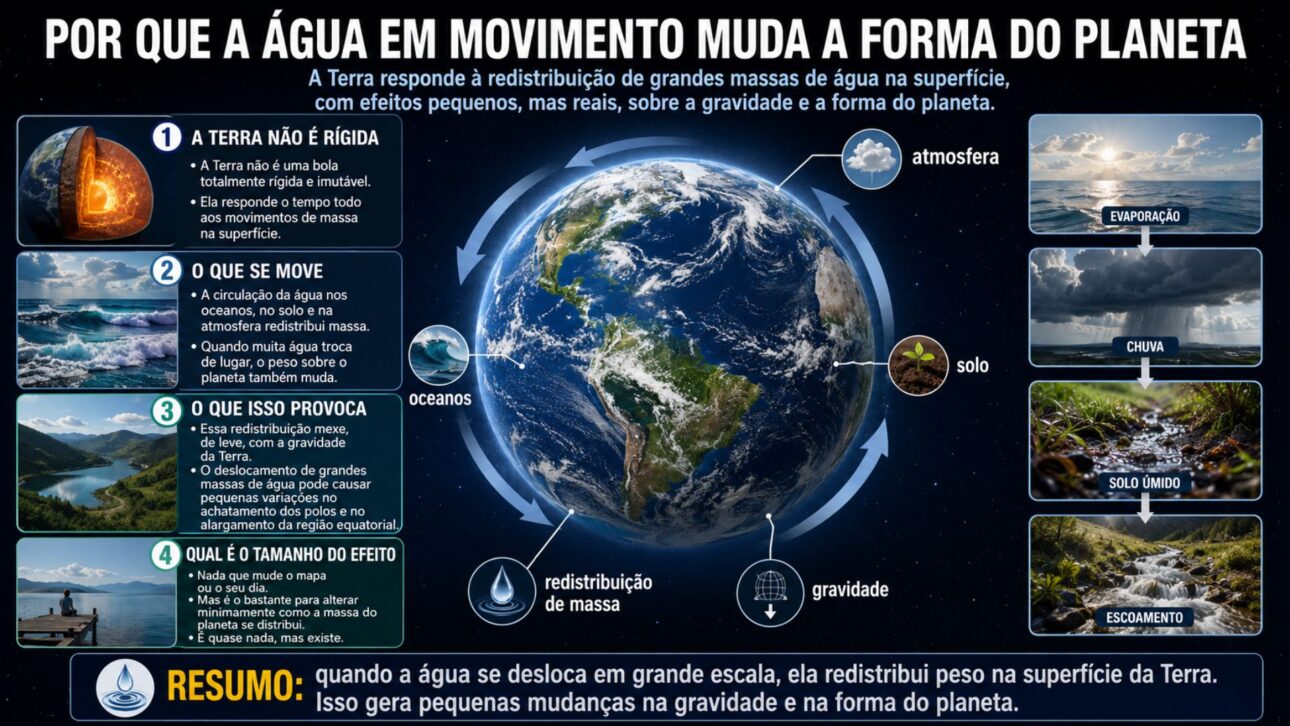
The planet constantly responds to mass movements occurring on the surface, especially those related to water circulation in the oceans, soil, and atmosphere.
-
In Tasmania, a Beach Features a Natural Stone Mosaic Formed by Earth’s Cracks Millions of Years Ago
-
China’s Artificial Sun Reaches 100 Million Degrees, Six Times Hotter Than the Sun’s Core, Putting Beijing Ahead in the Race for Infinite Energy

-
Steam Machine Converts All Types of Plastic Waste into Durable Building Blocks, Processes Over 90 Tons Monthly, and Is Sold to Municipalities
-
John Deere’s Autonomous 9RX Tractor Uses 16 Cameras for 360-Degree Vision, Operates in Short Weather Windows While Monitored by Smartphone


When a lot of water changes place, the weight on the planet is redistributed.
This redistribution slightly affects Earth’s gravity.
The displacement of large water masses can cause small variations in the flattening of the poles and the widening of the equatorial region.
Nothing that changes the map or your day, but enough to minimally alter how the planet’s mass is distributed. It’s almost nothing, but it exists.
The role of El Niño and the Pacific Oscillation
El Niño is one of the central characters in this story.
It warms the waters of the Pacific Ocean and disrupts atmospheric patterns, which changes rainfall regimes, causes droughts in some places and floods in others, and redistributes water masses across the oceans.
These shifts are large enough to leave a mark on the planet’s physical structure.
There is also a slower sibling of El Niño, the Pacific Oscillation.
Unlike it, this phenomenon extends over decades, gradually changing the position of cold and warm waters and the distribution of moisture around the world.
In the end, it also pushes the water masses that affect the Earth’s physical balance and gravity.
How satellites see the invisible
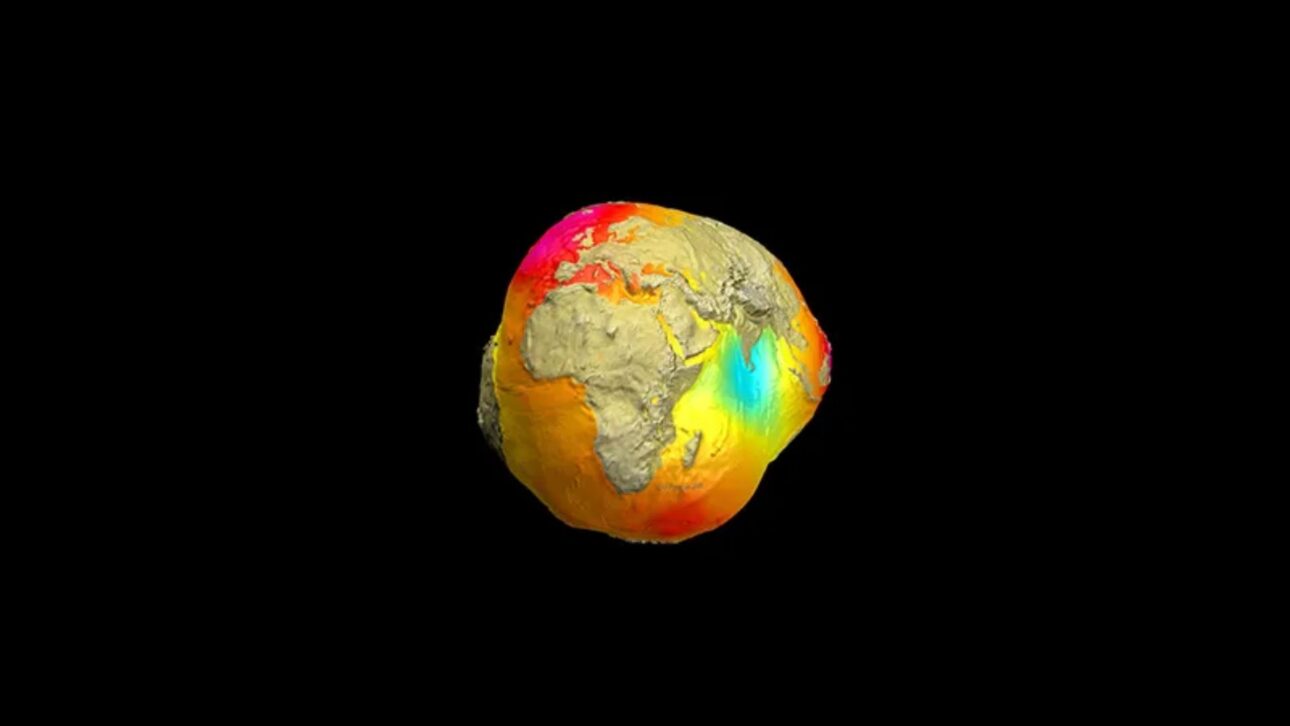
Specialized satellites can measure tiny variations in the shape of the planet and Earth’s gravity, things that no ground instrument could capture with the same precision.
It’s like having a giant scale keeping an eye on the weight of water spread around the world.
What these satellites track is quite a list.
They monitor the movement of ocean masses, variations in water storage on continents, the amount of water vapor in the atmosphere, and the oscillations of the gravitational field itself.
Together, these data help understand how climate, oceans, and the solid part of the planet interact all the time.
Real changes, but far from something you feel
Here, it’s worth keeping your feet on the ground, literally.
Earth’s gravity depends on how mass is distributed across the planet, so moving large volumes of water changes this distribution just a little bit.
Minimal, indeed. The changes are so subtle that only modern instruments notice them. No one will become lighter or heavier because of an El Niño.
The value of this is scientific, not a cause for alarm.
Tracking these variations helps researchers monitor long-term climate changes and understand how natural systems continuously shape the Earth.
Instead of a threat, what we have is a new window to see the planet from within.
In the end, the idea that climate affects Earth’s gravity is less science fiction and more everyday geophysics.
The water that moves back and forth between oceans, continents, and the atmosphere leaves a subtle trace in the shape and gravitational field of the planet, and satellites have learned to read this trace.
It’s small, it’s invisible to the naked eye, but it’s real.
And you, did you imagine that floods and droughts could even affect Earth’s gravity? What other hidden effects of climate change make you curious? Tell us in the comments, respecting different opinions, and share this article with that friend who loves science and curiosities about the planet.