Portuguese
  Spanish


A study cited by Revista Oeste reconstructed the origin of the Euphrates from two ancestral rivers, now linked to the Karasu and the Murat, in Turkey. They flowed to the Mediterranean until the birth of the Taurus Mountains, over millions of years, diverted the water to the southeast.
The Euphrates seems eternal, but it hasn’t always flowed where it does today. The river that bathed the cradle of Mesopotamia was born from the union of two much older courses, which poured water into the Mediterranean more than 5 million years ago. It was the Earth itself, raising mountains, that changed this destiny.
The reconstruction, attributed to researchers cited by the University of Western Australia, appears in a report by Revista Oeste. According to the study, the Euphrates emerged from the fusion of two ancestral systems, named Palaeo-Karasu and Palaeo-Murat, in present-day Turkey. Tectonic movements in the Taurus Mountains and the Anatolia region gradually pushed the water to the southeast.
The two rivers that vanished in time
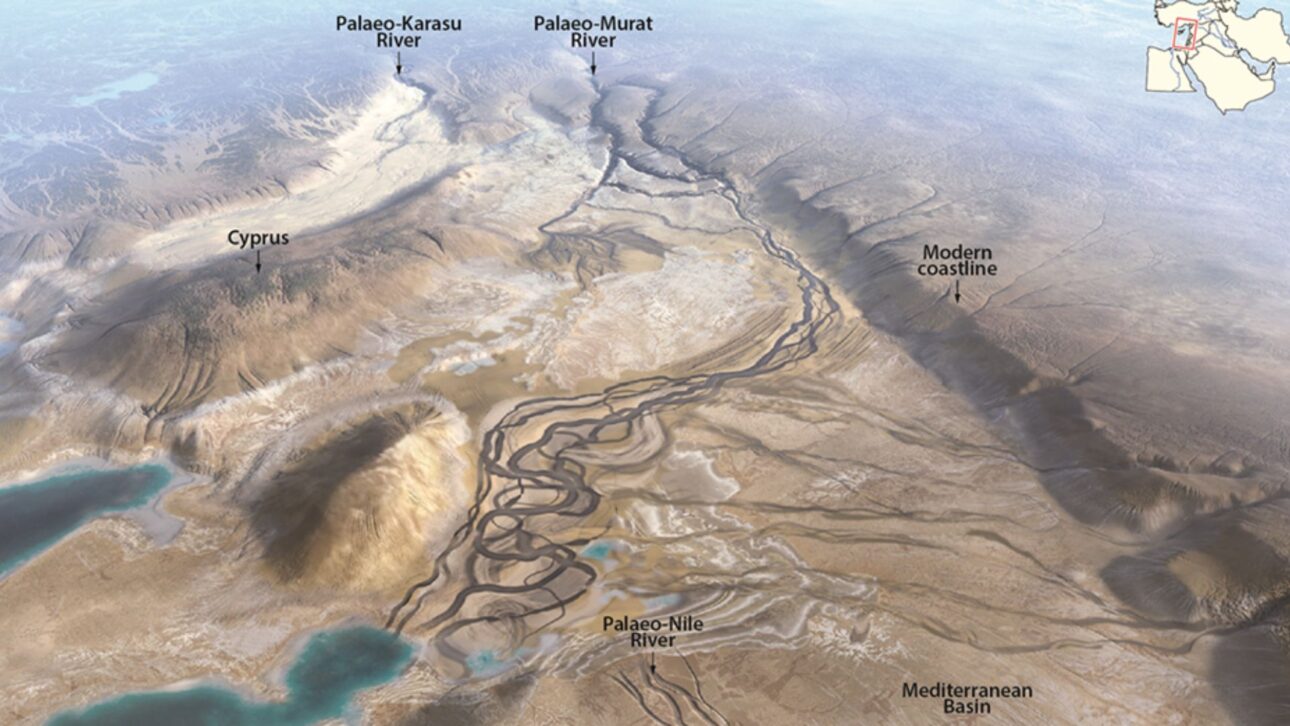
Scientists identified and named them Palaeo-Karasu, to the north, and Palaeo-Murat, further south, both linked to the ancient drainage of the Anatolia region.
-
WHO Warns of Unnecessary Interventions in Natural Births Worldwide, Advocates for More Human-Centered Care, Reigniting Debate on Medicalization

-
World War II American Bombs Discovered in German City Prompt Evacuation of 20,500 Residents

-
World’s Largest Ice Cave Extends 42 km Beneath Austrian Alps, Revealing a Vast Frozen Realm Preserved by Natural Air Currents

-
Volcanic Soils from Destructive Eruptions Turn into Million-Dollar Crops: Ashes Nourish Grapes in Lanzarote, Bananas in the Canary Islands, Blood Oranges on Mount Etna, and Cacti in Mexico, Showcasing How Lava-Formed Lands Sustain Rare Harvests in Seemingly Barren Regions


They were ancient rivers, with a route that today would seem out of place. Another world, basically.
The difference from the current scenario is radical.
Instead of heading to the Persian Gulf, as the Euphrates does today, these courses poured water and sediments towards the Eastern Mediterranean.
It was another map, drawn by a geography that would still change a lot.
A turnaround of millions of years, step by step
The turnaround did not happen overnight.
The reconstruction by researchers indicates a long sequence: about 5.4 million years ago, the ancestral rivers still flowed to the Mediterranean.
Around 3.6 million years ago, the Palaeo-Murat began to be diverted to the southeast.
Later, about 2.8 million years ago, the Palaeo-Karasu joined this redirected system, and around 1.6 million years ago the Euphrates was already following a route similar to today’s.
Large rivers do not change course just because of rain or local erosion.
In the case of the Euphrates, the transformation involved the uplift of mountains, the shifting of faults, and the reorganization of entire basins.
That’s why it took millions of years, a geological clock that is in no hurry.
The sea that almost dried up became a clue
There’s quite a detail in the origin of the Euphrates, a sea that almost disappeared.
More than 5 million years ago, the Mediterranean went through the so-called Messinian salinity crisis, when it almost dried up and accumulated thick layers of salt.
It was precisely at this time that the ancestral rivers deposited their sediments in the basin.
These sediments became a time capsule at the bottom of the sea.
By analyzing buried structures with seismic reflection images, geological maps, and sediment modeling, the team was able to link buried channels to the Karasu and Murat river basins.
According to Reuters, seismic data revealed features resembling ancient channels below the seabed, formed when much of the Mediterranean was dry or isolated.
From ancient bed to cradle of civilization
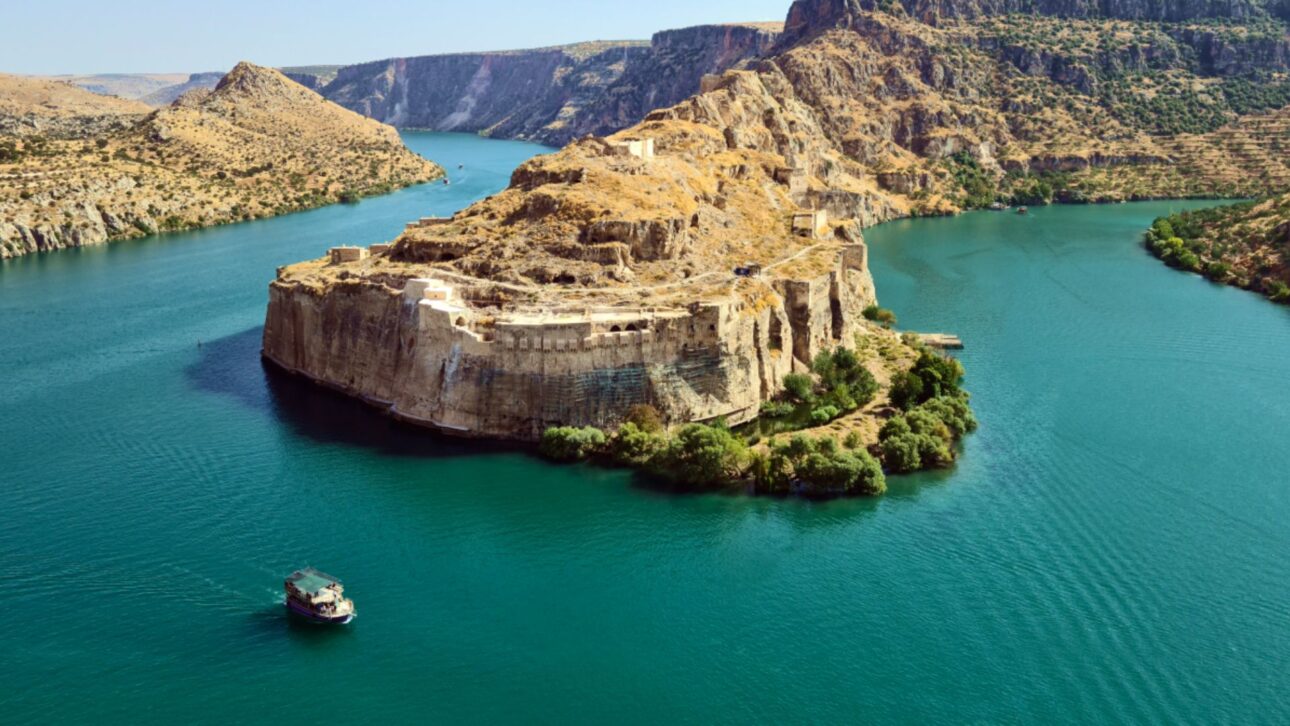
Long after it formed, the Euphrates shaped history because its waters nourished Mesopotamia, the land of irrigated agriculture, the first cities, and cuneiform writing.
Cities like Uruk, remembered as one of the first great metropolises, and Babylon grew depending on the system formed by the Euphrates and the Tigris. From there, Mesopotamia was born.
And the Euphrates is not alone in this kind of turnaround.
Reuters itself recalled a comparison made by researchers with the Amazon, which also had its direction altered over geological time, there because of the growth of the Andes.
Large rivers, it seems, are less fixed than we imagine.
The Euphrates carries a history that began long before empires and irrigated fields.
Before being the river of the Fertile Crescent, it was the result of two ancient systems, of a sea in crisis and tectonic plates reshaping the region’s drainage.
The water that flows today is just the most recent chapter.
And you, did you imagine that the cradle of Mesopotamia was born from a turnaround of millions of years? What other hidden stories of the Earth leave you amazed? Tell us in the comments, with respect for different opinions, and share this article with those who enjoy science, geography, and the mysteries of the planet’s past.