Portuguese
  Spanish


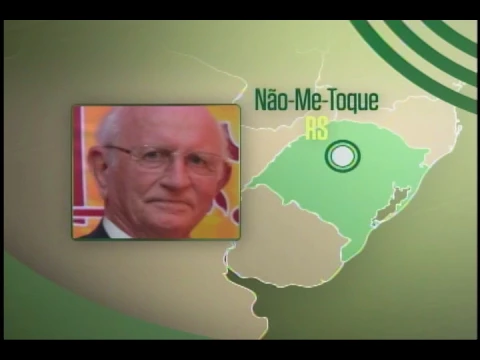
Não-Me-Toque (RS) Is the “Frankfurt of Soy”: A City with High Productivity, Strong Cooperative Culture, and Rural Financial Education. A Model of Economic Power Based on Agriculture and Financial Intelligence.
Few cities in the Brazilian interior can be compared to international financial centers. But Não-Me-Toque, a municipality with just over 17,000 inhabitants in northern Rio Grande do Sul, defies all expectations. Amidst soybean fields, international agricultural technology fairs, and financial cooperatives that operate like regional banks, a true hub of agrofinances and rural intelligence has emerged. No wonder it has been dubbed the “Frankfurt of soy” — an allusion to the financial capital of Germany but rooted in the fertile soil of Brazilian agriculture.
Não-Me-Toque is not just a reference in productivity in the field. It has become symbolic of a new rural economy, where producers operate with high management, structured credit, access to innovation, and mastery over their numbers. While much of the country still associates farming with informality, here the farmer is a manager, investor, and a conscious decision-maker.
Capital of Precision Agriculture
Since the 1990s, Não-Me-Toque has stood out for adopting cutting-edge technology in the field. It was one of the first Brazilian cities to implement complete systems of precision agriculture, mapping the soil with GPS, using sensors for productivity analysis, monitoring climate in real time, and automating the use of inputs.
-
Brazil to Gradually Increase Annual Revenue Cap for Microentrepreneurs to Between $130,000 and $140,000 by 2028

-
Toll Fees Drop by Up to 50% in São Paulo State’s Interior, Now as Low as $1.70
-
Brazil’s Central Bank Warns: Inflation Projected to Hit 5.2% in 2026, Exceeding Target Ceiling of 4.5%, with Risk of Missing Target Rising from 30% to 79%

-
Japan’s Economic Shift: End of Decades of Cheap Money Sparks Global Investor Concerns



This mindset has driven soybean productivity to international levels — averages exceeding 60 sacks per hectare, in areas that operate with meticulous data control and qualified technical assistance.
The city is also home to the Expodireto Cotrijal, one of the largest agribusiness fairs in Latin America, which annually attracts more than 250,000 visitors and over 500 exhibitors of machinery, biotechnology, irrigation systems, digital solutions, and finance.
A Cooperative and Financial Center in the Interior
But what truly transforms Não-Me-Toque into an uncommon rural power is the way money circulates. The municipality is home to some of the strongest and most organized cooperatives in the country, such as Cotrijal, which unites more than 8,000 producers and moves billions of reais per year, acting in the purchase of inputs, storage, marketing, and credit.
Additionally, the Sicredi, one of the largest cooperative financial institutions in Brazil, has a strong presence in the city, with a consolidated presence and a predominantly rural clientele. Here, the farmer is not a bank customer — they own the bank. They participate in decisions, profits, and strategies.
The city has developed a rare culture of rural financial education, where it is common to see young people learning about investments, production costs, balance sheets, and risk analysis since high school. Technical schools, courses in partnership with Senar, Emater, and local universities help train a new generation of producers with a business mindset.
Soybean as a Strategic Asset
The local economy revolves around soy and corn, but it is not just about planting and harvesting. The producers of Não-Me-Toque act as market agents, following real-time quotations, conducting hedge operations, purchasing agricultural insurance, and managing harvests as if they were running a medium-sized business.
The multinationals of agriculture, such as John Deere, Syngenta, Bayer, and Basf, frequently have a presence in the region through dealerships, technical centers, or events. The municipality is considered an open-air laboratory for new technologies, pioneering the testing of genetically modified seeds, spray drones, and smart irrigation systems.
A City Connected to the World
Even small, Não-Me-Toque has urban infrastructure above the national average, with fiber optic internet services available in almost the entire rural area, well-maintained roads, and a strong presence of service providers linked to agriculture: consulting firms, customs brokers, transport companies, storage, logistics, and insurance firms.
The city also stands out in public governance and transparency, with a high investment per inhabitant and a low level of municipal debt.
All of this places it on the radar of investors, agricultural technology companies, and even traditional banks that are now seeking to understand how such a small city became a global reference in productivity, credit, and rural management.
Frankfurt of Soy: An Analogy That Goes Beyond the Name
Frankfurt is famous for housing the European Central Bank and being the financial capital of Germany. In Não-Me-Toque, the parallel is established because money management in the field is done with precision, strategy, and a long-term mindset. Just as Frankfurt organizes European capital, Não-Me-Toque organizes the wealth generated by its agricultural production.
Here, the producer is not limited to caring for the crops — they keep an eye on exchange rates, fiscal policy, agricultural geopolitics, and market fluctuations with an increasingly technical outlook. This stance has propelled the municipality to become one of the fastest-growing in terms of added value of agricultural production per hectare.
Moreover, there is a visible pride in how capital is used: reinvestment in technology, workforce qualification, improvement of local infrastructure, and strengthening of cooperatives.
In times of transformation in the field, Não-Me-Toque serves as a model for the new rural Brazil: connected, efficient, financially educated, and the protagonist of its own trajectory. It is a municipality where cooperativism and financial innovation are not just slogans — they are concrete tools of collective prosperity.
Contrary to many regions that rely on transfers, subsidies, and external actions, Não-Me-Toque shows that with organization, cooperation, and management intelligence, it is possible to build an agriculture that distributes income, sustains families, and forms leaders with a voice in the national and international market.