Portuguese
  Spanish


The British heavy machinery manufacturer JCB, the same company that turned a tractor into the world’s fastest at 217 km/h, is preparing the Hydromax to attempt the land speed record with hydrogen at the Bonneville SpeedWeek in Utah in August. According to information from Forbes, the 9.75-meter vehicle is powered by two hydrogen combustion engines that together deliver 1,600 horsepower, developed over five years of research with an investment of US$ 135 million.
The pilot will be Andy Green, a former pilot of the British Royal Air Force and still the fastest man on Earth after breaking the sound barrier on land in 1997. Green has already piloted for JCB in 2006, when he took the diesel-powered JCB Dieselmax to 563.48 km/h on the same Bonneville Salt Flats, setting a record that remains unbroken to this day. The mission of the Hydromax is to surpass this mark using hydrogen instead of diesel, proving that combustion engines powered by the gas can deliver performance equal to or greater than fossil fuels. “The Hydromax is lighter, more powerful, and faster than the original Dieselmax,” stated Green. The attempt will begin with tests in the UK before the team heads to Utah, and JCB also plans to seek records recognized by the FIA.
US$ 135 million to prove that hydrogen works

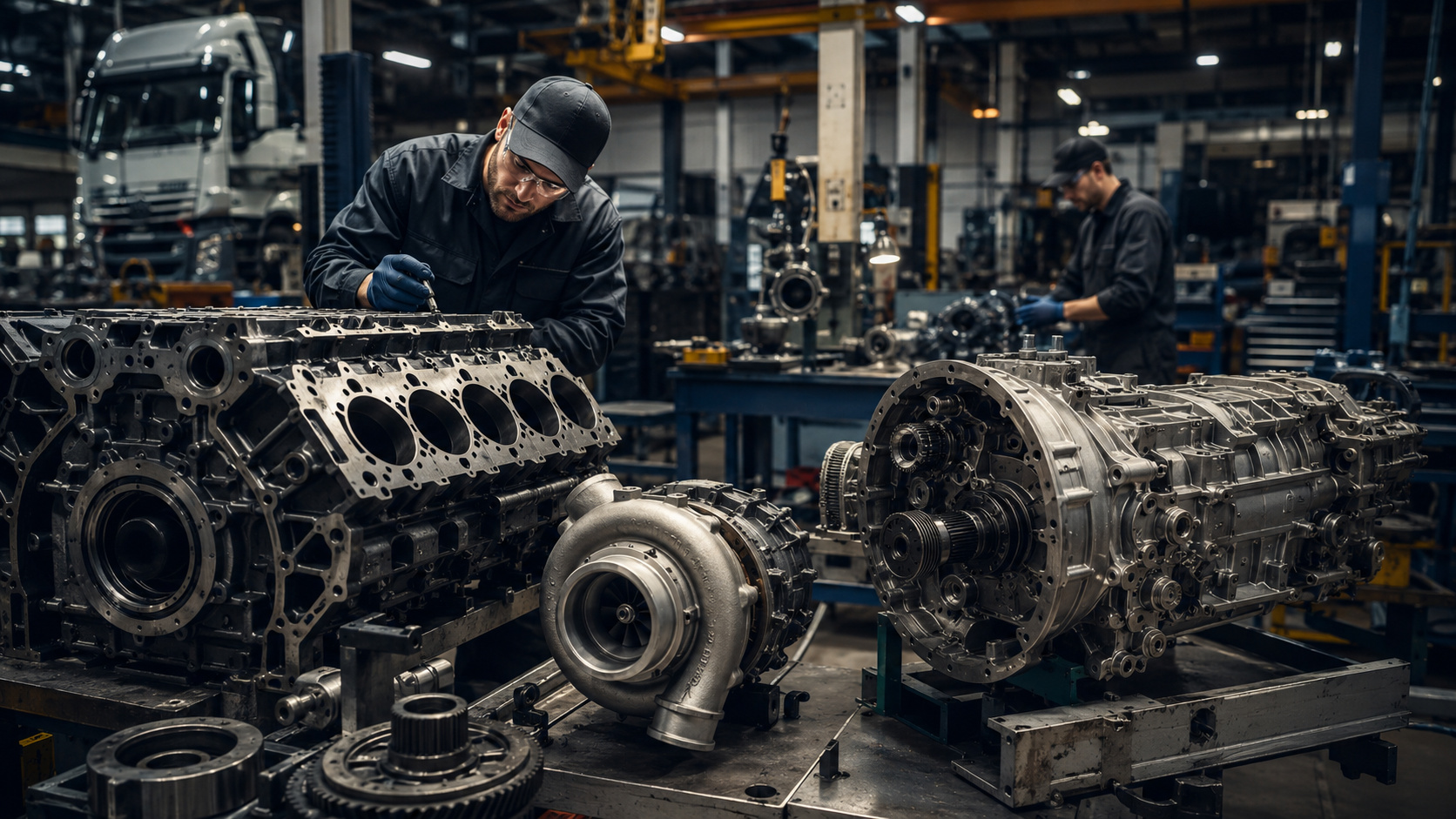
The Hydromax is not a garage project. JCB has invested US$ 135 million over five years in the development of hydrogen combustion engines, a bet that goes against the majority of the industry, which is focused on battery electric vehicles. The choice of combustion engines instead of fuel cells (which convert hydrogen into electricity) is deliberate: JCB argues that heavy construction and agricultural machinery need brute power, quick refueling, and continuous operation in remote environments, characteristics that electric batteries do not yet offer competitively.
The record-breaking vehicle was developed in partnership with the British companies Prodrive and Ricardo, both specialized in high-performance engineering and motorsport. The two hydrogen engines of the Hydromax are based on production units, which means that the technology is not just for breaking records: it is already being applied in JCB machines that began rolling off the production lines earlier this year. The speed record is the most spectacular way to demonstrate this technology, but it is not the ultimate goal.
-
DNA Analysis Reveals How Five Cattle Survived Over 130 Years on a Deserted Brazilian Island

-
Private Spacecraft Intercepts Another for First Time in History During U.S. Space Force Mission Completed 11 Hours Early with Rocket Launched in Record 16 Hours

-
Scientists Predict Earth’s Habitable Lifespan: 1.8 Billion Years Before Oceans Evaporate and Sun Forces Planet Out of Life Zone
-
LG Unveils XBOOM Stage 501 Portable Speaker with 25-Hour Battery, AI Karaoke, and Sound by will.i.am in Brazil


The fastest man on Earth returns to the wheel

Andy Green is not just any driver. In 1997, he became the first human to officially break the sound barrier on land, driving the ThrustSSC at 1,228 km/h in the Black Rock Desert, Nevada. The record remains unbeaten to this day, and Green continues to be recognized as the fastest man on Earth. In 2006, he drove the JCB Dieselmax at 563.48 km/h in Bonneville, setting the speed record for diesel vehicles.
Now, at 63 years old, Green will return to the same Utah Salt Flats to attempt a new record, this time with hydrogen. The ongoing partnership between Green and JCB over two decades indicates mutual trust between driver and manufacturer. For Green, the challenge is different: while the 2006 Dieselmax used mature and well-understood technology, the Hydromax works with hydrogen combustion engines that have never been tested at these speeds. Every kilometer above 500 km/h is uncharted territory for this technology.
Why hydrogen combustion and not fuel cell

Most hydrogen projects in the automotive industry use fuel cells, devices that convert the gas into electricity to power electric motors. JCB chose a different path: internal combustion engines that burn hydrogen directly, in the same way a conventional engine burns gasoline or diesel. The difference is that hydrogen combustion emits no carbon dioxide, only water vapor and small amounts of nitrogen oxides.
For JCB, direct combustion makes more sense than fuel cells in heavy machinery because it preserves the robustness and simplicity of engines that the construction industry already knows. A backhoe loader operating on a dusty construction site, under constant vibration and with variable power demands, needs an engine that can withstand extreme conditions. Combustion engines have been designed for this for over a century. Adapting them to burn hydrogen instead of diesel maintains this resilience while eliminating carbon emissions.
From the world’s fastest tractor to the record-breaking hydrogen car
JCB has an unusual history of using speed records as a technological demonstration tool. In 2019, the company transformed a Fastrac tractor into the fastest in the world, reaching 217 km/h. In 2014, a JCB GT backhoe loader broke the speed record for this type of machine, surpassing 116 km/h. In 2006, there was the Dieselmax at 563 km/h. Each record served to demonstrate the company’s engineering capability in a way that a corporate presentation could never achieve.
“An excavator doesn’t always capture the imagination in the same way,” admitted chairman Anthony Bamford when explaining why JCB invests in extreme speed projects. The Hydromax follows this logic: by putting hydrogen engines in a vehicle capable of exceeding 563 km/h, the company turns an industrial technology into a spectacle that the public and the press echo globally. If the record is broken, the message will be clear: if hydrogen can power a car at over 563 km/h, it can power any heavy machine on the planet.
The $500 million factory in Texas
The Hydromax project does not exist in isolation. JCB is building a new $500 million manufacturing facility in San Antonio, Texas, a complex of nearly 93,000 square meters that will employ around 1,500 workers in the production of machines for the North American market. The temporal proximity between the opening of the American factory and the hydrogen record attempt is no coincidence: both are part of an expansion strategy that positions JCB as a global manufacturer of heavy equipment with low-emission technology.
For the American market, where state regulators like California impose increasing restrictions on emissions from heavy machinery, offering hydrogen-powered equipment can be a decisive competitive advantage. The factory in Texas will produce machines for construction and agriculture, and the prospect of hydrogen-powered versions meets a regulatory and market demand that is only expected to grow in the coming years.
563 km/h with hydrogen: the record that could change the conversation
JCB will take the Hydromax to the Bonneville Salt Flats in August to try to surpass the 563 km/h mark set by the Dieselmax itself in 2006, this time using hydrogen. The 9.75-meter vehicle with two 1,600 horsepower engines was developed with a $135 million investment and will be driven by the fastest man on Earth. If the record falls, JCB will have proven that hydrogen combustion engines can deliver superior performance to diesel, shifting the conversation about clean energy from theoretical promise to a proof of concept at over 500 km/h.
Do you believe that hydrogen can replace diesel in heavy machinery? Tell us in the comments what you think of the Hydromax project, if direct hydrogen combustion makes more sense than electric batteries for the heavy industry, and if the speed record is the best way to prove a technology. We want to hear your opinion.