Portuguese
  Spanish


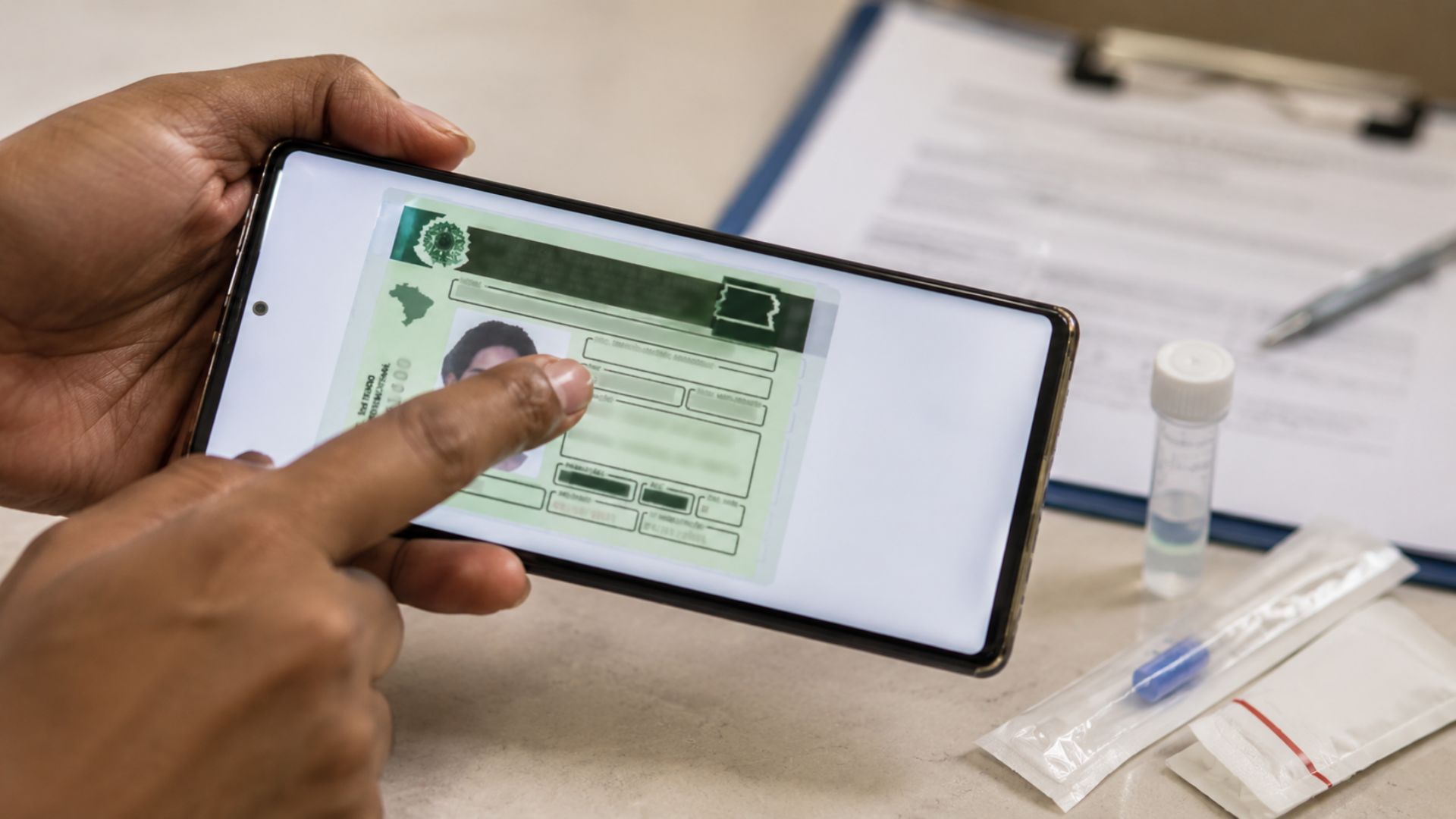

The National Traffic Secretariat (Senatran) determined that the State Traffic Departments throughout Brazil must immediately require the toxicological exam for candidates for the first driver’s license in categories A (motorcycle) and B (car). According to the NSC portal, the measure was formalized on Friday (15) through Circular Letter No. 573/2026, signed by the acting national traffic secretary, Ana Beatriz Vasconcelos de Medeiros, and changes the licensing process throughout the country.
The requirement of the toxicological exam for the issuance of the first driver’s license in these categories was already provided for in Law No. 15.153, of June 26, 2025, but there were doubts among Detrans, driving schools, and candidates about the need to wait for detailed regulations from the National Traffic Council (Contran) before applying the rule. Senatran decided to end this uncertainty by publishing the guidance that standardizes the procedure at a national level and obliges the Detrans to start requiring the exam even while Contran’s definitive rules are not disclosed. The agency itself acknowledged in the document that adapting state systems involves complex technical and operational difficulties, but considered that delaying the requirement would compromise the application of a law that has been in force for almost a year.
What changes in practice for those who are going to get their first driver’s license

Until the publication of the circular letter, candidates for the first driver’s license in categories A and B underwent a medical exam, psychological exam, theoretical classes, theoretical test, practical classes, and practical test. Now, before receiving the Learner’s Permit (PPD), the candidate will need to present a negative result of the toxicological exam, which detects the use of substances such as marijuana, cocaine, amphetamines, methamphetamines, opiates, and their derivatives within a window of up to 90 days prior to collection.
The toxicological exam is different from the conventional blood or urine test. The collection is done through samples of hair, fur, or nail, materials that retain traces of substances for much longer periods than body fluids. Accredited laboratories analyze the samples and issue reports that the Detrans must verify in the system before issuing the PPD. For the candidate, this means an additional step in the process, with additional cost and the need to schedule the collection at an accredited point.
-
China Transforms South China Sea Landscape by Dredging Sand to Build Artificial Islands with Runways, Hangars, Radars, and Ports on Contested Reefs

-
Brazil to Phase Out Gasoline Subsidy, Fuel Prices Set to Rise Amid National Debate

-
Brazil Aims to Boost Critical Mineral Production to 12.2% of Global Output, Targeting Battery and Tech Industries
-
Brazil’s New National Mining Plan Aims to Transform Fertilizer Market and Reduce Foreign Dependency from 87.3% to 34.9%, Boosting Agriculture and Food Production




A 2025 law that is only now starting to be enforced
The requirement for toxicological testing for categories A and B was approved by Congress and enacted as Law No. 15,153 in June 2025. However, the law came into effect without the Contran publishing detailed regulations on how the Detrans should implement the requirement in practice. This regulatory gap created a gray area where each state interpreted the situation differently: some began to require the test, others awaited formal guidance, and some simply ignored the requirement.
Senatran’s Circular Letter No. 573/2026 resolves this ambiguity by determining that the requirement is valid immediately, regardless of whether Contran has published the definitive rules or not. The decision puts pressure on the Detrans that have not yet adapted their systems and on driving schools that did not inform their students about the need for the test. For candidates who are in the middle of the licensing process, the question now is whether the test will be required retroactively or only for those who start the process after the publication of the letter.
The pressure on the Detrans to adapt their systems
Senatran acknowledged in the document itself that adapting state systems to the new CNH requirement involves technical and operational difficulties. The Detrans need to integrate the verification of the toxicological test result into the flow of issuing the Driving Permit, which requires modifications to IT systems, service procedures, and communication with accredited laboratories. Each state has its own digital platform for license management, and integrating a new mandatory step is not trivial.
Even recognizing these difficulties, Senatran chose to publish the guidance for the Detrans to accelerate internal adjustments. The federal agency considers that waiting for the complete regulation from Contran could indefinitely delay the enforcement of a law that Congress has already approved and the president has already enacted. The message is clear: the requirement is legal, the law is in effect, and the Detrans need to adapt, with or without the detailed regulation from Contran.
Toxicological test: what it detects and how much it costs
The toxicological test required for the CNH detects the use of psychoactive substances within a window of up to 90 days prior to collection. The analysis is performed from samples of hair, fur, or nails, which are sent to laboratories accredited by Denatran and analyzed using chromatography and mass spectrometry methods. The substances tracked include THC (active ingredient in marijuana), cocaine and its metabolites, amphetamines, methamphetamines, opiates, and phencyclidine.
The cost of the exam ranges between R$ 200 and R$ 350, depending on the laboratory and the region of the country, and is fully paid by the candidate. For those already facing expenses with driving school, medical exams, and Detran fees that easily exceed R$ 3,000 in total, the toxicological exam represents an additional cost that weighs on the budget. Since 2015, professional drivers in categories C, D, and E have already been required to take the exam both when obtaining and renewing the CNH, but the extension to categories A and B significantly increases the number of people affected.
The PPD milestone: when the exam will be verified
The Senatran’s directive specifies that the Detrans should consider “the stage of issuing the Permissão para Dirigir (PPD) as the milestone for the systemic verification of the existence of a negative result of the toxicological exam.” In practice, this means that the candidate can start the licensing process, take classes and tests, but will only receive the PPD if they present a negative result. The exam does not need to be done at the beginning of the process, but it must be completed before the document is issued.
The PPD is the provisional document that the driver receives after being approved in all stages and is valid for one year. If during this period the driver does not commit a serious or very serious infraction nor is a repeat offender in a medium infraction, the PPD is converted into a definitive CNH. With the new requirement, the toxicological exam becomes the last barrier before the issuance of the PPD, and a positive result prevents the candidate from receiving the document even if they have been approved in all other stages.
A requirement that divides opinions and pressures the system
Senatran determined that the toxicological exam for the first CNH in categories A and B is immediately applicable throughout the country, even without definitive regulation from Contran. The Detrans face technical difficulties in adapting their systems, candidates will have an additional cost of up to R$ 350, and driving schools need to reformulate the guidance they give to students. The law has existed since June 2025, but only now is it being enforced in a standardized way, in a race between the federal requirement and the operational capacity of the states.
Do you agree with the requirement for a toxicological exam to obtain the first CNH in categories A and B? Tell us in the comments if you think the measure is necessary for road safety, if the additional cost is fair for the candidate, and how you evaluate Senatran’s decision to enforce the rule even before Contran’s regulation. We want to hear your opinion.