Portuguese
  Spanish


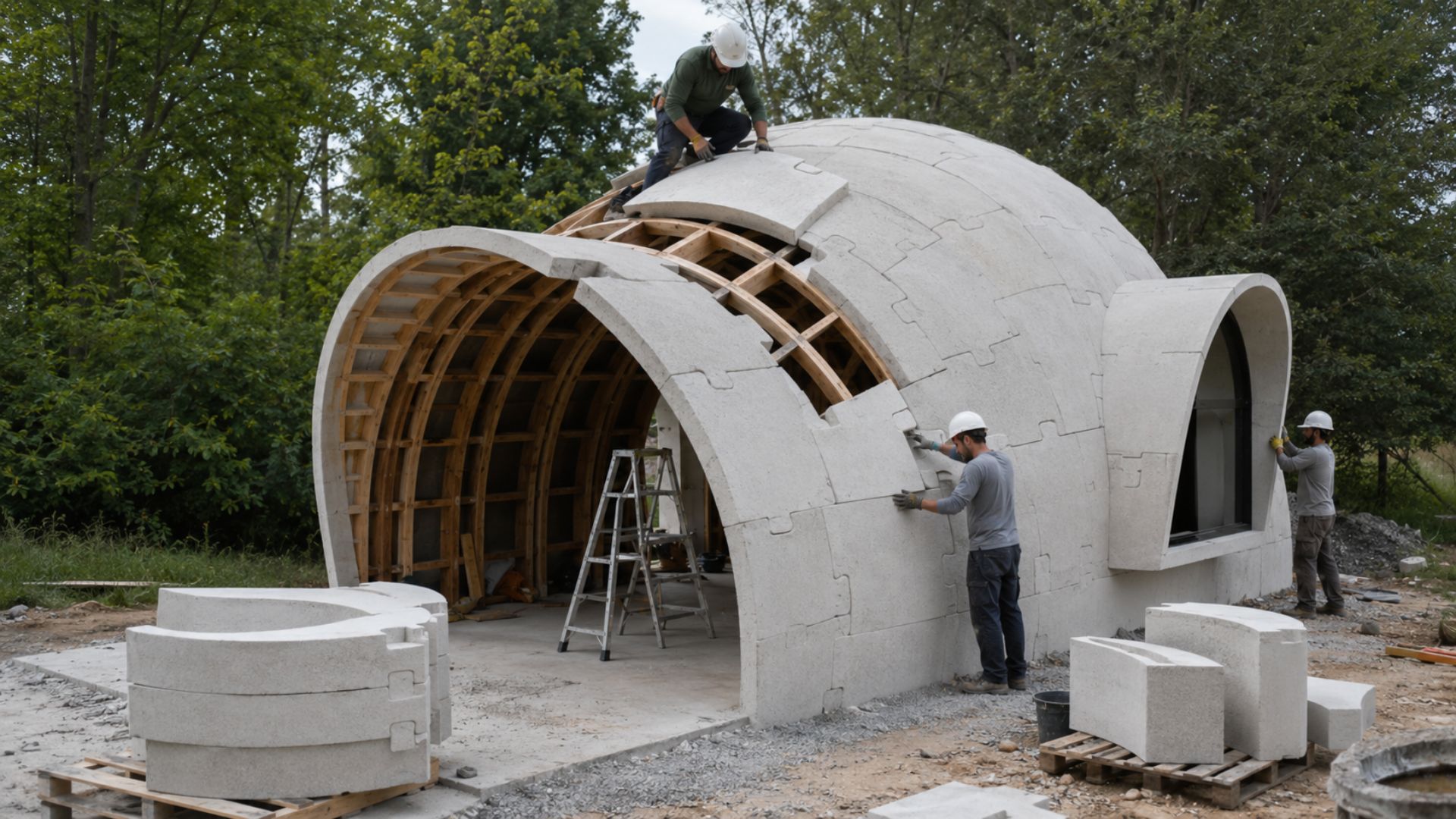


A team of builders erected a dome-shaped house entirely from scratch, using concrete blocks specifically molded for curved surfaces, fitted over a central wooden structure that defines the shape and height of the construction. According to the Popular World channel, the process, documented in video, begins with waterproofing the ground and progresses block by block until the complete closing of the dome, including smooth internal finishing, arched entry, and natural lighting that transforms the livable space into a work of alternative architecture.
The construction caught attention on social media for combining an ancient technique, the dome shape used for millennia in different cultures, with contemporary concrete blocks and finishing that delivers a modern and functional house. The ground was leveled, covered with plastic sheeting for waterproofing, and prepared to receive the curved wooden structure that functions as the central guide of the dome. From this backbone, the concrete blocks were positioned one by one over the curved surface, fitting like pieces of a three-dimensional puzzle that gains stability as each ring is completed. The result is a house that seems to have been built on another planet but uses accessible materials and a replicable construction method.
The foundation that supports everything: waterproofing and leveling

No dome-shaped house stands without a well-prepared foundation. The first step of the team was to completely level the ground and cover it with a large plastic waterproofing sheet, a step that seems simple but is the backbone of the entire construction. Without adequate waterproofing, soil moisture rises by capillarity and deteriorates the base of the dome over the years, compromising the entire structure.
The precise leveling of the ground is also crucial because any unevenness in the base amplifies as the dome rises. An error of a few centimeters on the ground can turn into a difference of several centimeters at the top of the structure, preventing the blocks from meeting correctly at the closing point. The team worked with measuring instruments to ensure the base was perfectly flat before starting the assembly of the wooden structure.
-
Affordable Housing Project in Brazil’s Mato Grosso Aims for 700 Deliveries and $34 Million in 2026, Outpacing Major Developers in High-Demand Areas

-
Brazil’s Largest Port to Accommodate Bigger Ships by October as Ibama Approves Non-Explosive Removal of Hidden Rocks and Sediments
-
Mexico Develops 3D-Printed Concrete from Corn Waste, Cutting Emissions by 70% and Reducing Construction Waste by 90%
-
Traditional Mortar to Decline by 2026: ACIII-E Solution for Large Porcelain Tiles Offers Better Adhesion and Reduces Risk of Loose Pieces in Floors and Facades


The wooden structure that defines the shape of the house

With the base prepared, the team raised the central piece that determines the entire shape of the dome. A curved wooden panel was positioned vertically in the center of the site, defining the angle and maximum height the house will have when completed. This piece functions as a template: all concrete blocks will be positioned following the curvature it establishes. Both the angle and the height need to be precise because any deviation in the central structure reflects on the entire surface of the dome.
The fixation of the curved wood to the ground required detailed verification of each angle under the sun. The team checked positioning, plumb, and stability before considering the stage complete. From the moment the wooden backbone is in place, the dome-shaped house truly begins to rise, and every construction decision is referenced by this central structure.
Curved concrete blocks: the puzzle that becomes a wall

The most impressive stage of the construction is the positioning of the concrete blocks on the curved surface. Each block was specially prepared to fit the curvature defined by the wooden structure, and the team positioned them one by one, from bottom to top, like pieces of a giant three-dimensional puzzle. With each completed row, the dome gains a new ring of blocks that increases stability and progressively reveals the final shape of the structure.
The craftsmen climb ladders and scaffolding to spread mortar between the blocks, filling the spaces and sealing the gaps. This process strengthens the structure by transforming individual blocks into a monolithic concrete shell where each piece distributes weight to its neighbors. As the rings approach the top, the diameter decreases and the blocks tilt increasingly inward, requiring greater precision in fitting. The closing of the dome at the highest point is the most critical moment of the work.
The arched entrance that defines the identity of the house
With the exterior of the dome covered, the team focused efforts on constructing the entrance. Wooden supports were installed at the front opening to create a structure strong enough to support the weight of the arch, which functions simultaneously as a structural element and as the architectural signature of the house. The line of the arch forms a perfect circle and defines the location of the main door.
The arched entrance is one of the most critical aspects of the construction, both for aesthetics and engineering. A poorly sized arch can concentrate weight unevenly and create a point of weakness exactly where the dome is interrupted by the opening. The team carefully constructed the arch structure to ensure that the distribution of forces remained balanced, ensuring that the door opening did not compromise the integrity of the rest of the dome.
The interior that reveals itself when the dome closes
When the last block is positioned at the top and the mortar seals the dome completely, the interior reveals itself as an impressive acoustic space. The perfect circular shape created by the rings of concrete blocks generates a chamber where sound reverberates uniquely, different from any conventional house with straight walls and a flat ceiling. The team climbed scaffolding to apply mortar to the internal surface, smoothing the blocks and creating a smooth finish that transforms rough walls into surfaces ready for painting or coating.
The natural light entering through the arched opening illuminates the interior of the house and creates a visual effect that changes throughout the day as the sun’s angle shifts. In the morning, the light penetrates directly; at noon, it reflects off the curved walls; in the evening, it casts shadows that follow the curvature of the dome. This play of light was not deliberately designed but is a natural consequence of the circular geometry that no rectangular house can reproduce.
An ancient form with modern finish

Dome-shaped houses have existed for thousands of years, from Arctic igloos to adobe constructions in the Middle East. What makes this construction particular is the combination of the ancestral form and contemporary materials such as molded concrete blocks, industrialized mortar, and plastic waterproofing. The result is a house that maintains the structural advantages of the dome, such as uniform weight distribution and wind resistance, while offering the finish and durability that modern concrete provides.
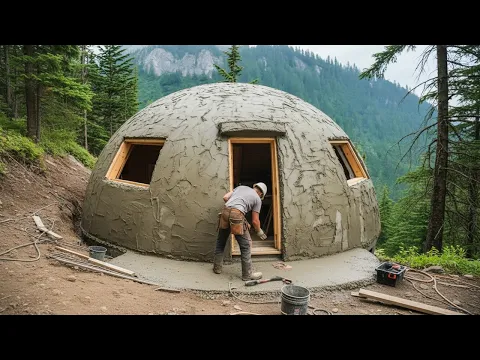

The dome distributes compressive forces evenly across its entire surface, eliminating the need for internal beams and pillars. This means that the entire interior space is free and usable, without columns interrupting the layout. For small houses, this feature maximizes usable area. For those seeking alternative construction with accessible materials, the method documented in this video demonstrates that building a dome-shaped house is within reach of a small team with conventional tools.
A house that looks like it’s from another planet, but is built here
The team transformed a flat plot into a dome-shaped house using curved concrete blocks fitted over a wooden structure, with waterproofing, an arched entrance, and a smooth internal finish. The process demonstrates that dome construction is not a historical relic: it is a viable construction technique that combines structural efficiency, material economy, and an aesthetic result that no rectangular house offers. Each step, from the foundation to the closure, can be reproduced by those who have the necessary materials, patience, and precision.
Would you live in a dome-shaped house? Tell us in the comments what you think of the construction method, if the technique of curved blocks fitted like a puzzle seems viable for Brazil, and which stage impressed you the most: the central wooden structure, the fitting of the blocks, or the internal finish. We want to hear your opinion.