






 Portuguese
  Spanish


The Chinese Economy Faces A Crisis: Young People Reject Manufacturing Jobs. Understand The Change And Its Consequences For The Economic And Social Future Of China And The World.
China is experiencing a perfect storm that shakes its economic, social, and labor foundations. The problem is not new for Europe or the United States: young people and their dislike for the “effort culture” in a society that suffocates them without giving them many future expectations.
The Ups And Downs Of Cyclical Capitalism
Just like people, each economy is a world, and simplification is always perilous. Still, it is easy to recognize in today’s Asian youth the European and North American youth of the 90s, highly qualified individuals who would not settle for the meager pay of an assembly line while holding a doctorate.
During the 90s and 2000s, two factors contributed to transferring “the factories of the world” to the Asian continent: on one hand, the improvement of wage conditions in Western countries and, on the other, China’s entry, and later that of other countries, into the World Trade Organization. “Offshoring” led the world’s industry to countries such as Vietnam, Cambodia, Thailand, Bangladesh, and, of course, China.
-
Chinese Manager Accused of Whipping Worker Sparks Protest by 1,200 Employees at Major Brazilian Factory

-
France Revamps 530 Social Housing Units with Large Balconies and Glass Facades Without Demolishing Existing Buildings

-
10-Year-Old Max Makes History with Paris Fashion Show, Launches Own Brand, Hires Staff, and Sets World Record as Youngest Runway Designer

-
European Parliament Approves Digital Euro, Aiming to Challenge Visa and Mastercard’s Dominance and Transform Payments Across Europe by 2029



The Start Of The Asian Locomotive
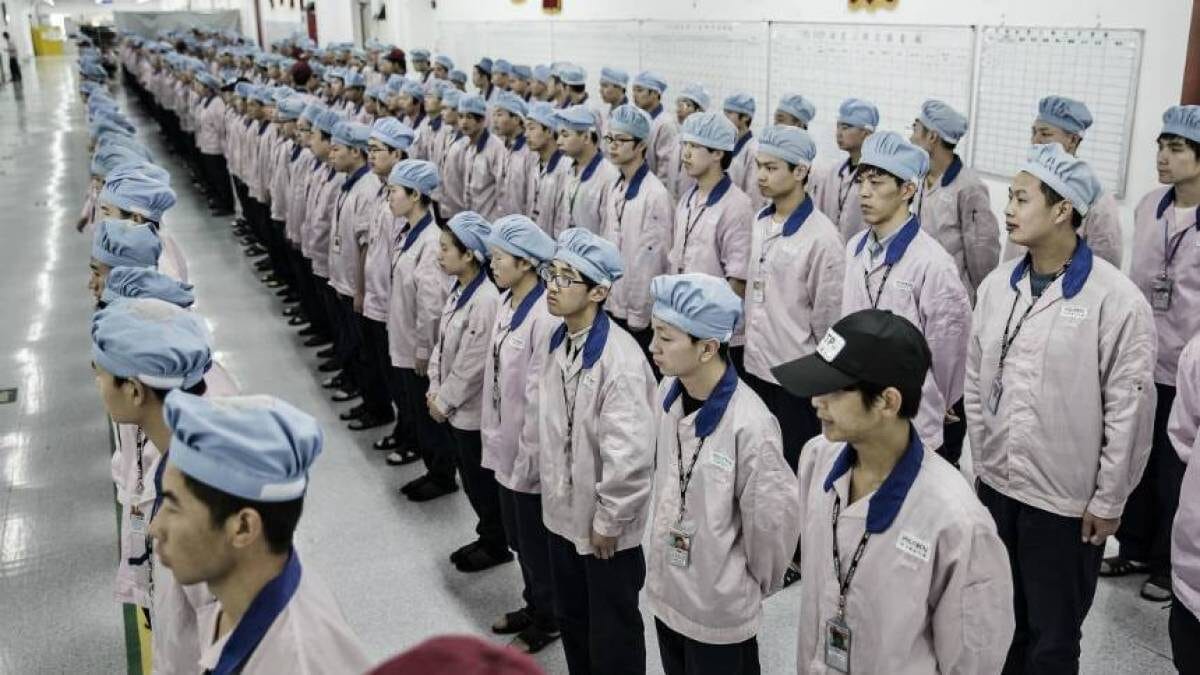
With low wages and limited labor rights, China became the World’s Great Factory. The Chinese manufactured everything at a lower cost. Neither the industry’s emissions nor the training of workers were taken into account. The sole objective was to produce with cheap labor and make the economy grow at a fast pace.
Those early young workers had little education, but they carried the responsibility of earning a salary to support their families. Like any parent, they would not allow their children to live under the same conditions, providing them with a good education.
The Rebellion Of The New Generation In China
With better preparation than their parents, living more comfortably and without the additional responsibility of needing to feed a family, the young people of Southeast Asia no longer want to hold the positions their parents occupied. Even more so after years of witnessing the working conditions their parents endured.
Now the problem lies within Asian companies, which are now on par with those from the rest of the world: a shortage of skilled personnel, increasingly difficult talent retention, rising production costs, and better working conditions. The number of new graduates this year in China is 11.6 million young people ready to enter the job market.
China Copies Western Policies
For decades, Chinese production has been accused of copying Western patents to manufacture lower quality products. This time, what companies are trying to do is copy the business models of large companies like Apple or Google to attract and retain skilled talent in their aging teams.
Work centers throughout Asia are tearing down walls and opening large windows to let in natural light. Daycare centers, cafeterias offering free food for employees, and even leisure and rest spaces are being incorporated. All to attract these new engineers, doctors, and developers, making them feel comfortable in the factory. Some factories have even moved to rural areas to attract young labor that is unwilling to migrate to big cities.
Young People Do Not Want To Work
Youth unemployment in China is a serious problem, reaching a rate of 21.3% last June for those under 25. China has over 96 million young people under 25, and over 33 million have entered the labor market. In Spain, according to the Population Active Survey (EPA) from the last quarter, the unemployment rate among those under 25 was 30.03%.
These numbers indicate that there is a large number of young people seeking employment, and each year a huge number of recent graduates join the labor market. The problem, as in much of the Western world, is low wages and endless hours. Chinese youth have said enough and adopted Joe Biden’s famous words: “Pay them more”.


The Locomotive Now Has To Pay For The Coal
Maintaining the production of the Great Factory in which all of Asia, especially China, has become requires a massive amount of labor. However, unlike their parents, the youth of 2023 are already educated and seek a corresponding salary.
This results in rising costs and brands are already beginning to relocate their production centers. Mattel, creator of the popular Barbie, produced 74% of its toys in China, Indonesia, and Thailand. With rising costs, it transferred much of its production to new factories in Brazil and Mexico. The same example is found in technology, with Apple leading the way, where the blockade of Chinese products provided the final push for the transfer of production to India or other countries.
The Perfect Storm
The demographic crisis, in which China is losing population for the first time in 60 years, combines with the labor crisis and a severely affected economic situation following the aggressive management lockdown of the COVID-19 pandemic. All of this is generating a perfect storm for the country to lose global weight with declines in exports. The Asian Great Factory is taking on water, and producing at a low cost has its days numbered.





Por esse motivo a maioria das fábricas chinesas de trabalhos pesados está se transferindo para a Coreia do Norte. Lá eles não tem escolha.
Aqui o estagiário de jornalista se equivoca ou simplesmente NAO conhece nada de geopolítica. O termo “asiáticos” abrange também aos ricos Japão, Coreia do Sul, Cingapura e Taiwan… correto? Tais países já estão há décadas no primeiro mundo, especialmente o Japão, onde esse “fenômeno” de jovens rejeitarem serviços braçais, os quais estão sendo observados agora na China … Logo, o termo “asiáticos” está totalmente fora de contexto, correto?
Falam sem pensar, aliás não pensan, para cada comentário temos muitas perguntas, a quem serão dirigidas?
Interessante como o uso incorreto de um termo pode ser utilizado para depreciar todo um processo de raciocínio. Independente do equívoco cometido, achei relevante a análise que inicia com “a grande fábrica do mundo”. Se Japão ou Coreia pararem de consumir e comprar o mundo não vai perceber, mas se a China parar o impato será enorme. São realidades completamente diferente. Nenhuma fábrica brasileira fugiu para o Japão, mas muitas foram para a China justamente por conta dessa condição que está sendo alterada. Assim, acho que cabe aprofundar a reflexão sobre os impatos disso
Não acredito nesta história.