






 Portuguese
  Spanish


The government of Santa Catarina sent a bill to the Legislative Assembly that extends the ICMS exemption on the basic basket until December 31, 2026, keeping the tax zero on rice, beans, and flours. The estimated fiscal renunciation is R$ 92.9 million this year, and the compensation will come from the increase in ICMS rates on fuels such as gasoline, diesel, and cooking gas.
The government of Santa Catarina has just sent to Alesc an urgent bill to ensure that the basic basket remains exempt from ICMS until the end of 2026. The proposal amends the state law in effect since 2025 and keeps the tax zero on internal operations intended for the final consumer of essential foods such as rice, beans, and flours from wheat, corn, and cassava. The project also renews the exemption for rice flour throughout the marketing chain, without the addition of other ingredients.
The measure has already been approved by the Finance and Taxation Commission of Alesc this Wednesday (22) and is ready for a vote in the plenary. If approved by the state deputies, the tax benefit will take effect from the publication, with retroactive effects to May 1, 2026, avoiding any interruption in the exemption. The government’s official justification highlights the social nature of the policy, which seeks to reduce the cost of basic foods and ensure access for low-income families in Santa Catarina.
How much the ICMS exemption on the basic basket costs the treasury of Santa Catarina
According to information released by the portal ndmais, the Secretary of Finance estimated that the revenue renunciation with the maintenance of the ICMS zero on the basic basket will be approximately R$ 92.9 million in 2026. For the following years, the fiscal impact increases: the projection exceeds R$ 150 million in 2027 and can reach R$ 160 million in 2028. These amounts represent how much the state fails to collect by waiving the tax on essential foods.
-
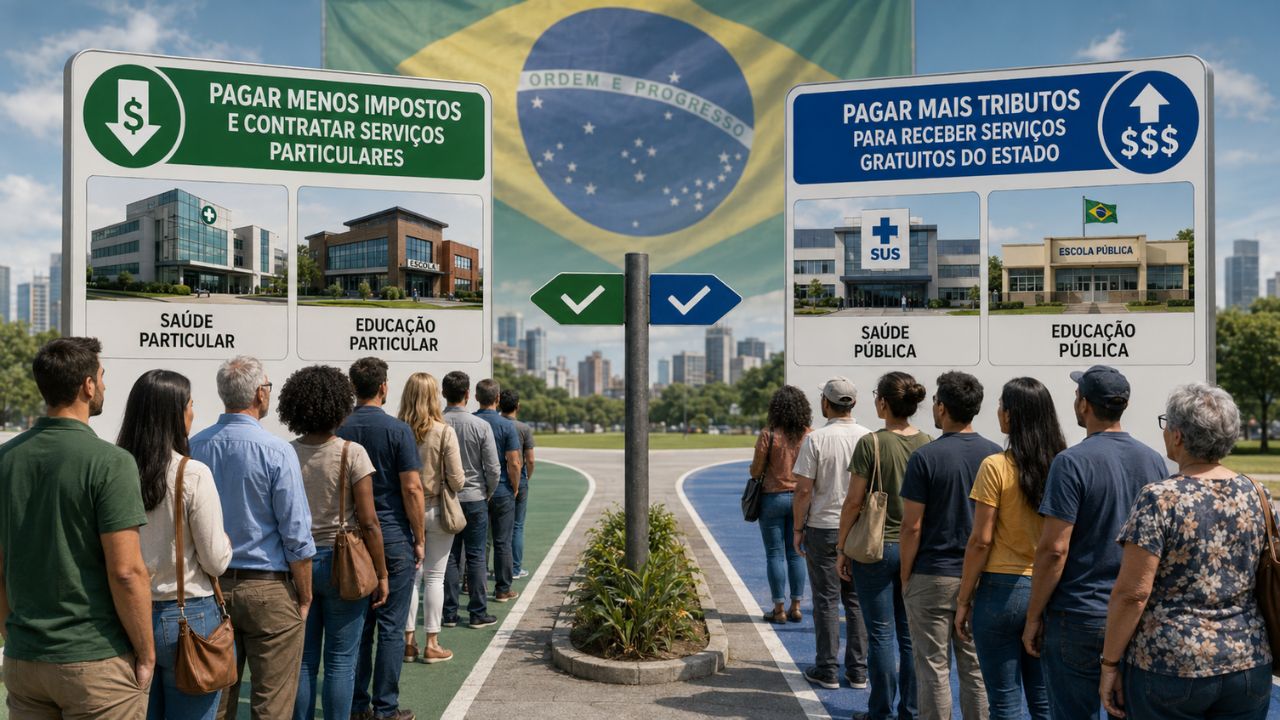
Half of Brazilians Prefer Lower Taxes with Private Health and Education, While 44% Opt for Higher Taxes for State-Provided Services, Datafolha Survey Reveals

-
Brazil’s Most Expensive Toll Rises to R$ 40.60 on Route from São Paulo to the Coast, Nearly Matching Bus Fare to Santos

-
As Brazil Expands Social Welfare, Survey Reveals 40% Blame Poverty on Laziness, While 58% Cite Lack of Opportunities

-
China Tightens Control on Antimony, Driving Prices from $22,000 to Nearly $40,000 per Ton as U.S. Rushes to Bolster Strategic Reserves



The growth of the renunciation over the years reflects both the expectation of increased consumption and the projected inflation for food prices. For the government, the cost is justifiable because the exemption maintains the consumption level of the population and reduces the pressure on the budgets of families that depend most on basic basket items. The issue that divides opinions is how this bill will be paid, and the answer lies in fuels.
How the increase in ICMS on fuels will compensate for the loss
To balance the accounts, the government of Santa Catarina points to the increase in the ICMS rates on gasoline, diesel, and cooking gas as a source of compensation. The projection is that this adjustment in fuel prices will generate an annual increase of over R$ 350 million in state revenue, an amount that comfortably covers the tax waiver on the basic basket and still generates surplus for other expenses.
In practice, the equation works like this: the government removes the tax on rice and beans and transfers part of that cost to the price of gasoline and diesel. The effect for the consumer is mixed, because the same citizen who pays less at the supermarket pays more at the gas station. For low-income families who do not own a vehicle, the balance tends to be positive. For those who depend on a car or ride-sharing services, the benefit in the basic basket may be partially offset by the increased cost of fuel.
Which foods are exempt from ICMS in Santa Catarina until December 2026

The project maintains the exemption on the most essential items of the Brazilian diet. Rice, beans, and flours from wheat, corn, and cassava continue to have ICMS set to zero on internal operations intended for the final consumer. Rice flour is also included throughout the marketing chain, as long as it does not contain the addition of other ingredients.
These products make up the basis of the diet for millions of people in Santa Catarina and represent a significant portion of monthly food spending in the lower income brackets. By keeping the tax at zero, the government ensures that the final price of these foods does not suffer a tax increase, which makes a difference especially in a scenario of food inflation that has pressured the cost of living in recent months. The exemption, however, does not extend to all items in the basic basket defined by Dieese, being restricted to the group of products listed in the state law.
What happens if the project is not approved by Alesc
The urgency in sending the project has a concrete reason. Without the approval of the extension, the ICMS exemption on the basic basket would expire and the tax would be charged again on rice, beans, and flours starting in May. The immediate effect would be an increase in the price of these foods on the shelves of supermarkets in Santa Catarina, passing on to the final consumer a tax that had been set to zero since 2025.
The approval by the Finance and Taxation Committee this Wednesday signals that the project has support to advance quickly in the plenary. The urgency regime dispenses with the conventional processing through all committees and allows the vote to take place in a few days, enough time for the benefit to come into effect before the expiration date of the current law. The government’s expectation is that the deputies will approve the text without significant changes, maintaining the original wording.
The debate that the project raises about tax policy in Santa Catarina
The decision to offset the exemption of the basic basket with an increase in the ICMS on fuels raises a debate that goes beyond the numbers. Critics argue that raising the tax on gasoline, diesel, and cooking gas penalizes the entire production chain, as transportation costs are reflected in the prices of all products, including the food that the government wants to make cheaper. Cooking gas, in particular, is an essential input for the same low-income families that benefit from the exemption on rice and beans.
Proponents of the measure respond that the final bill is still favorable to the most vulnerable consumers. The impact of the ICMS on fuels is diluted across the entire population, while the exemption on the basic basket benefits those who need it the most in a concentrated manner. The balance between these two forces will be evaluated throughout 2026 and will determine whether Santa Catarina will continue renewing the policy in the following years or seek alternative sources of fiscal compensation.
Do you think it is fair for the government of Santa Catarina to remove the tax on rice and compensate by increasing the price of gasoline, or does this trade-off harm more than it helps? Leave your opinion in the comments, we want to know how this policy affects your wallet on a daily basis.


