Portuguese
  Spanish


World diplomacy experienced moments of absolute tension this Wednesday, April 22, 2026. Donald Trump surprised the market by announcing the extension of the ceasefire with the Iranian government. However, the path to this official decision was marked by heated and very dangerous discussions.
In the hours leading up to the announcement, the Oval Office turned into a real war room. Military leaders and economic advisors intensely debated the future of global energy and national security. Certainly, the entire world was waiting for a response regarding the fate of oil routes in the Middle East.
The immediate pressure caused by the attacks in the Strait of Hormuz
First, we need to understand the chaotic scenario unfolding in the Persian Gulf during the early morning hours. Reports of new attacks on merchant ships emerged in the first hours of the day. Consequently, the price of Brent crude oil surged aggressively in international markets.
-
U.S. Establishes Permanent Embassy in Jerusalem, Reigniting International Debate Over Israel’s Capital

-
The world has nearly 12,000 nuclear warheads, with the majority held by the United States and Russia; see the figures for China, France, and the United Kingdom.

-
Venezuela Faces UN Alert for Hunger, Disease, and Service Collapse After Earthquakes Cause Nearly 2,000 Deaths and $6.7 Billion in Damages

-
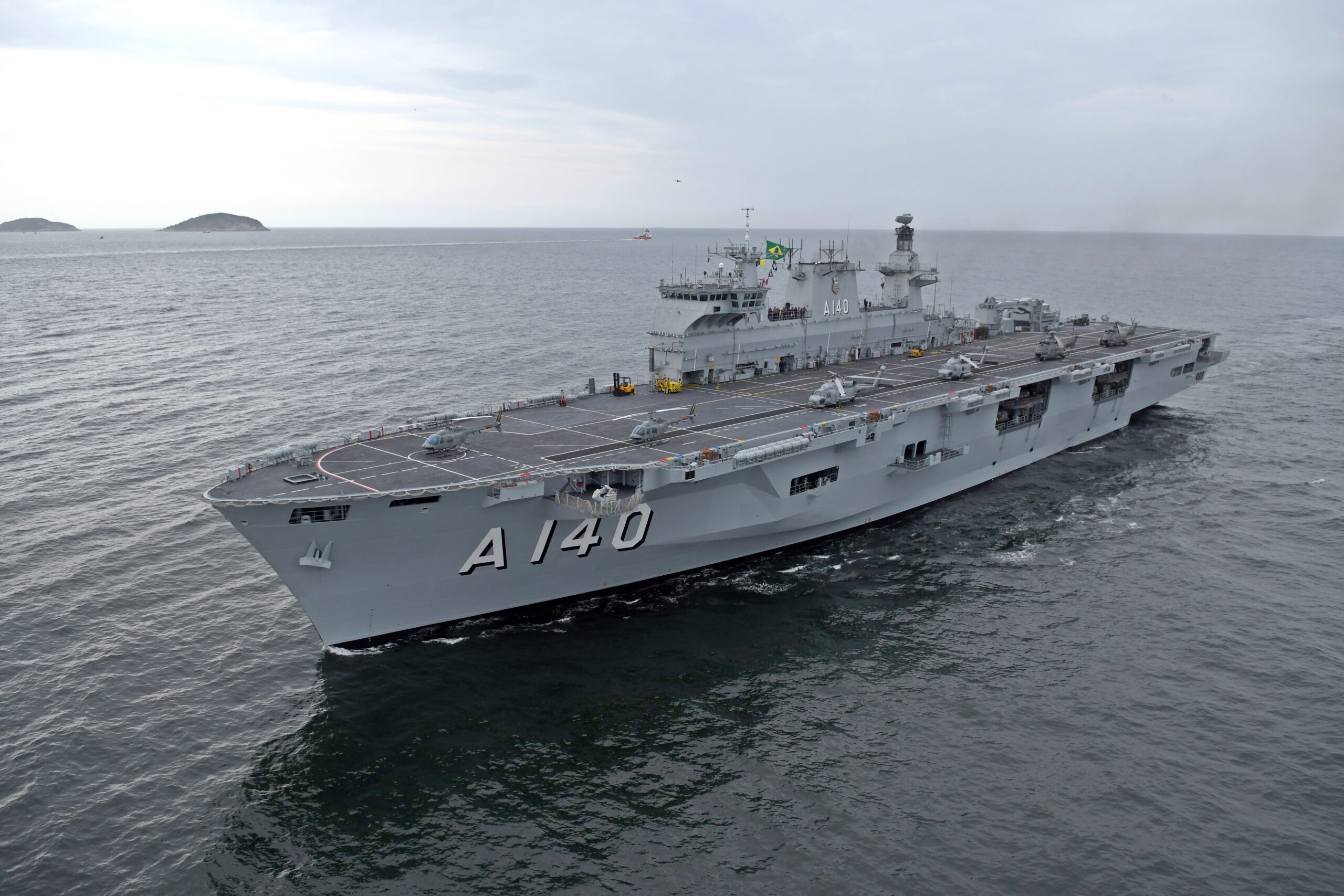
Brazil Deploys Navy Field Hospital with ICU, Orthopedics, Pediatrics to Earthquake-Stricken Area in Venezuela, Offering 30 Beds and 150 Daily Consultations


The threat of a total blockade in the region seemed imminent and brought paralyzing fear to investors. Additionally, the Iranian Revolutionary Guard was holding tankers under official custody in territorial waters. Therefore, the commanders of the American forces were on high alert for combat.

Trump’s ultimatum and the secret negotiations in Oman
While naval fleets faced off, emissaries worked in complete silence to avoid the worst. Diplomatic sources confirm that the country of Oman served as the main intermediary bridge for dialogue. Indeed, this secret communication channel was vital in containing the escalation of military violence.
Moreover, Donald Trump sent a direct and clear message to Iranian leaders through mediators. The president demanded an immediate halt to hostilities against vessels flying international flags. Therefore, the extension of the ceasefire depended exclusively on a strategic withdrawal by Tehran.
“`htmlThe internal divergence between generals and economic advisors
There was a clear division within the American administration during today’s decisive meetings. On one hand, the Pentagon presented detailed plans for surgical strikes against Iranian naval bases. They argued that impunity would encourage new seizures and attacks in the near future.
On the other hand, the White House economic council showed graphs of an impending global recession. They predicted that the price of oil could quickly surpass the $150 mark. Thus, Trump concluded that the financial cost of a war would be politically unacceptable now.
The crucial role of American intelligence in detecting movements
According to recent reports, intelligence detected very specific tactical movements in Iran. The Iranian government signaled a real willingness to resume technical dialogue on exports. However, Tehran’s central condition was the strict maintenance of the truce on airstrikes.
In contrast, the United States demanded total guarantees of free commercial navigation in the strait. This standoff lasted many hours of exhaustive political discussions among the cabinets. Finally, a temporary understanding began to take physical shape within the walls of the Oval Office.
The fear of inflation and the direct impact on gas pumps
Donald Trump fully understands that the average American voter votes focused on their own wallet. Any prolonged instability in the Middle East drastically raises the cost of living in American suburbs. Thus, keeping the Strait of Hormuz open has become an absolute national security priority.
Similarly, the president sought to prevent China from occupying any power vacuum in the region. Beijing has vital interests in the constant flow of oil coming from that specific geographic area. In this sense, Trump acted quickly to ensure that the U.S. remained the main mediator.


Why the ceasefire is considered only a temporary relief
Despite the momentary relief in the markets, Iran maintains its basic demands untouched:
- The immediate end of the naval blockade on major Iranian ports.
- Real guarantees for the export of oil without heavy sanctions. “`
- The strategic withdrawal of warships from areas considered sensitive.
- The immediate release of financial assets that are frozen abroad.
In this way, the current announcement serves only as an “oxygen balloon” for the global economy. However, it does not resolve any of the structural problems of this historical conflict between nations. In this sense, new rounds of diplomatic talks will be necessary in the very near future.
The immediate impact on oil companies and the global logistics sector
Additionally, major oil companies are already adjusting their international shipping routes. The constant uncertainty in Hormuz significantly alters logistics and insurance costs. For example, many ships are now avoiding higher tactical risk zones to protect their cargo.
Similarly, Brazil is observing this entire international scenario with heightened attention and concern. As a major exporter of crude oil, the country feels the global price fluctuations on a daily basis. In short, any decision made in Washington directly reflects on the prices at our domestic pumps.
The reaction of European allies and the search for energy stability
European Union leaders strongly pressured Donald Trump’s government for a cautious stance. They feared an unprecedented energy collapse across the European continent during this semester. Consequently, European diplomacy worked behind the scenes to support the decision to extend the truce.
Moreover, the German government emphasized the importance of keeping dialogue channels always open. They believe that economic pressure should be accompanied by clear diplomatic exits for Iran. Therefore, unity among allies was a decisive factor for today’s military retreat.

What Tehran gained from accepting the American proposal
Iran gained vital breathing room for its internal economy, which is quite weakened by sanctions. With the extension of the ceasefire, Iranian oil exports were not completely interrupted now. Furthermore, the country avoided direct destruction of its most important port infrastructures.
However, Tehran knows very well that Donald Trump’s patience has extremely short limits. Any new incident caused by drones or naval mines could instantly break this fragile agreement. Thus, the Iranian government is walking a very thin and dangerous line at this moment.
The invisible war in cybersecurity systems
While diplomacy was advancing in the offices, a digital war was occurring in the secret defense systems. Reports indicate constant attempts to invade the computers that control global naval traffic. However, the cybersecurity systems of the United States have managed to repel all recent threats.
This “invisible war” remains active even during the official ceasefire period. Therefore, global logistics companies have reinforced their data and corporate software protections. In short, modern geopolitical conflict is no longer limited to just ships and missiles.
Prospects for Brazilian oil and gas production
With international instability, oil extracted from Brazil’s pre-salt layer gains even more commercial relevance. Brazil becomes a safe haven for buyers avoiding the Persian Gulf. Thus, Petrobras may record new revenue records in the upcoming quarters of 2026.
However, the domestic fuel prices will continue to be under constant and inevitable pressure. As the pricing policy follows the international market, the Brazilian consumer will feel the full impact. In this sense, the federal government monitors Washington’s decisions with maximum technical vigilance.
The future of the agreement: A lasting peace or just a temporary truce?
The big question in the corridors of global power is about the real duration of this pact. Most independent analysts believe it is merely an emergency stopgap solution. Indeed, the fundamental problems between the US and Iran remain unresolved.
Donald Trump promised to work on a “Great Final Agreement” to conclude this semester. However, the political conditions for this treaty still seem very far from our current reality. Therefore, the global energy market must prepare to face new geopolitical shocks geopolitical.
Summary of the main points of Trump’s decision today:
- Total focus on maintaining stable prices for American gasoline.
- Strategic use of military threats to force a return to negotiations.
- Tactical alignment with European allies to avoid a global collapse.
- Seeking quick diplomatic results to strengthen internal political image.
- Strict monitoring of all maritime routes for exports in Asia.
In conclusion, the extension of this ceasefire was a clear victory of the economy over war. Donald Trump has once again proven that he prefers to negotiate from positions of strength. However, the world will continue to watch the Strait of Hormuz with great apprehension and caution.