Portuguese
  Spanish


Each blade measures over 150 meters and the complete rotor has the diameter of three football fields — China is building the world’s most powerful wind turbine, with 22 megawatts, and a single unit can power 30,000 homes
Mingyang Smart Energy, one of China’s largest wind turbine manufacturers, announced the development of the MySE 22 MW — the most powerful wind turbine ever designed on the planet.
According to Wind Industry, the turbine has a rotor diameter exceeding 310 meters. To give you an idea: three football fields side by side. The blades, each over 150 meters long, are larger than the wingspan of any aircraft ever built.
A single 22 MW turbine generates enough energy to power approximately 30,000 homes per year. A single machine. In the middle of the ocean.
-
While modern cities rely on pumps and electricity, in Iran, ancient tunnels carried water through the desert using only slope and gravity.
-
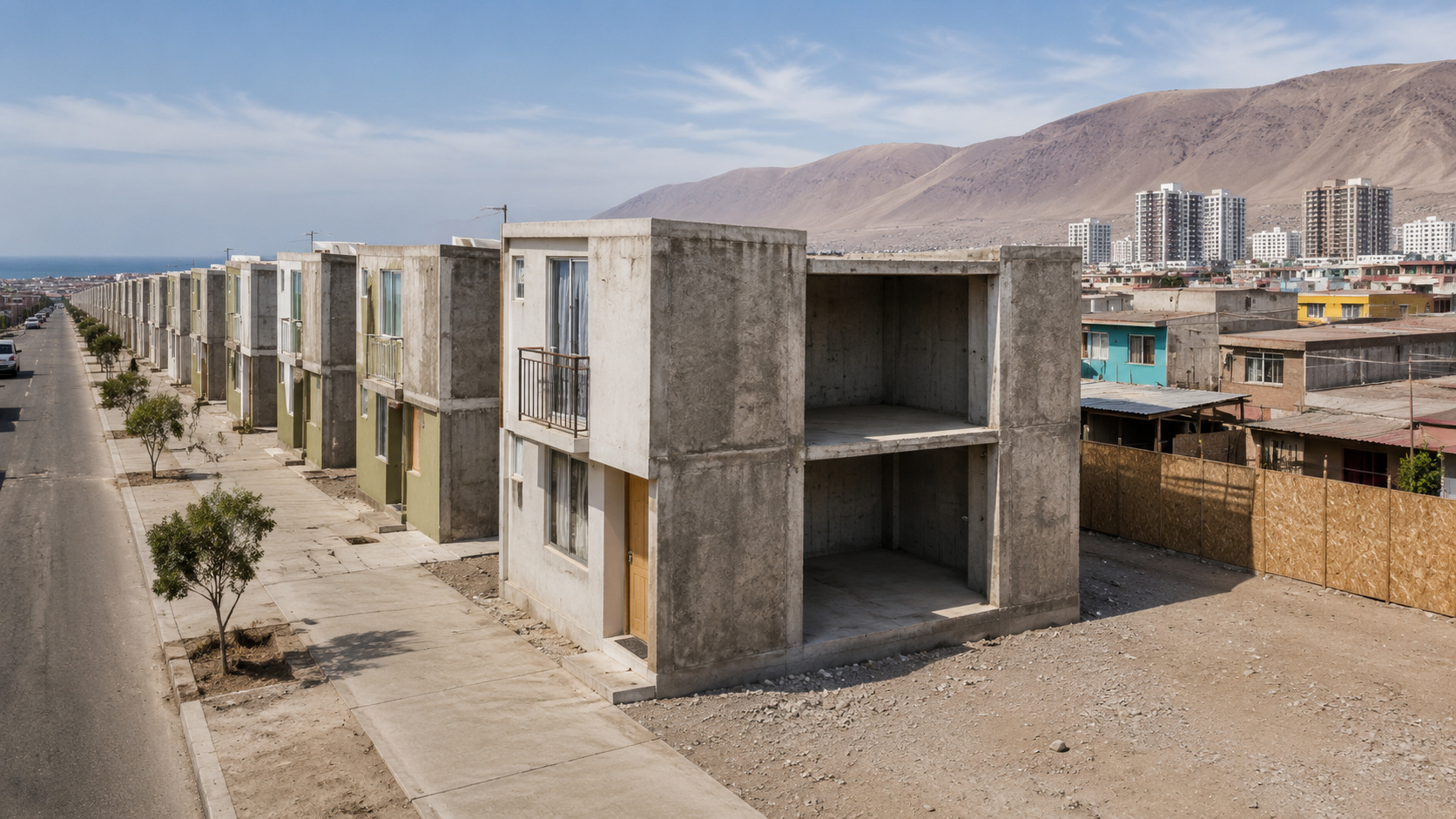
Instead of sending families far from the city, a project in Chile intentionally created incomplete houses on expensive urban land and left technical space for each to grow.

-
Ceará brings together 7 giants and R$ 66 billion to transform Pecém into the largest green hydrogen hub in Brazil, with final decisions expected by the end of 2026.

-
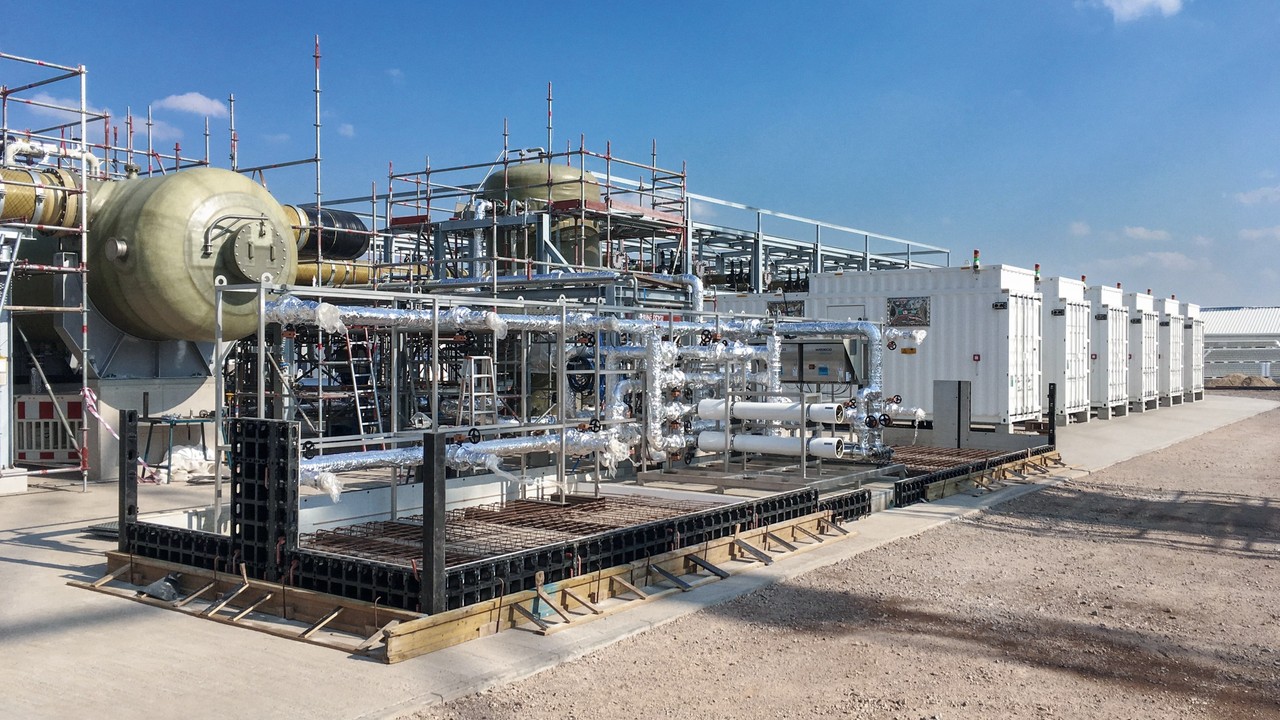
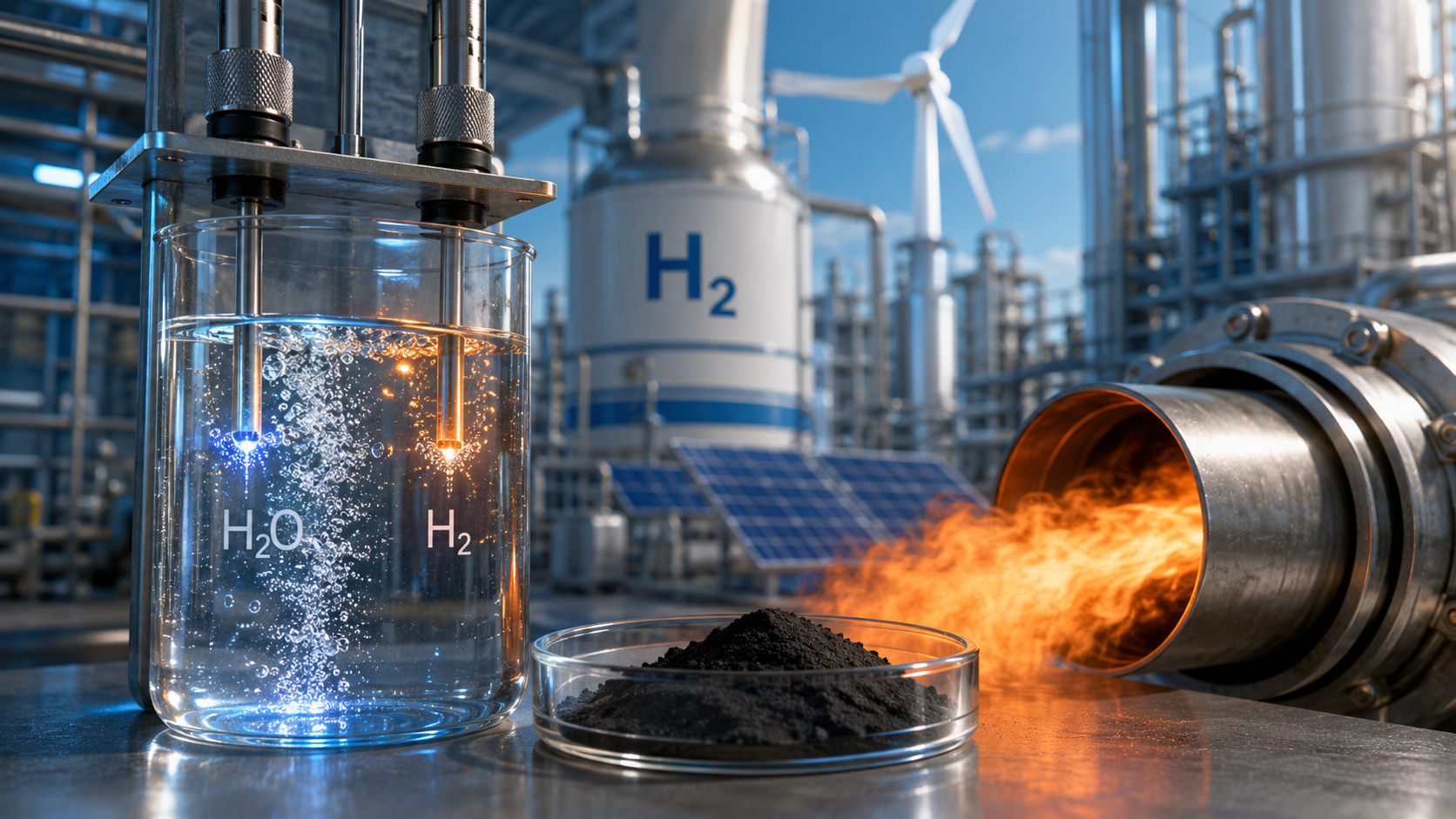
Scientists Convert Factory Waste Heat into Hydrogen Using Perovskite Catalyst at Significantly Lower Temperatures
The MySE 22 MW was specifically designed to withstand typhoons and operate in floating offshore wind farms — two of the biggest challenges in the global wind industry.
The race for the most powerful turbine: who leads and who pursues
The competition for high-power offshore turbines has intensified in recent years. China leads, but Europeans are trying to keep up.
- Mingyang MySE 22 MW — 310m rotor, under development (China)
- Mingyang MySE 20 MW — 292m rotor, prototype installed in 2024 (China)
- CSSC Haizhuang 18 MW — offshore prototype installed in 2024 (China)
- Siemens Gamesa SG 21 MW — prototype under development (Germany)
- GE Vernova Haliade-X 14 MW — in commercial operation at Dogger Bank (USA)
- Vestas V236 15 MW — in commercial production (Denmark)
In 2024, Mingyang installed the 20 MW prototype with a 292-meter rotor, which at the time was proclaimed “the world’s most powerful wind turbine in operation”.
The 22 MW version, with a 312-meter rotor in its most advanced variant, is expected to be the next to be installed. When operational, it will surpass all rivals by a significant margin.

To understand the scale: the rotor is larger than the Eiffel Tower lying down
The rotor of the MySE 22 MW has a diameter of over 310 meters. The Eiffel Tower measures 330 meters in height. In other words, if you laid the Eiffel Tower down, it would almost entirely fit within the circle the blades draw when rotating.
The total height of the turbine — from the sea surface to the tip of the highest blade — exceeds 280 meters. It is taller than practically any skyscraper in Brazil.
Each rotation of the three blades sweeps an area of over 75,000 square meters — equivalent to 10 football fields.
And the entire structure is planted in the ocean, enduring waves, currents, salt, and winds of over 200 km/h in tropical storms.
Designed to survive typhoons — something its rivals don’t do
Asia faces violent typhoons every year. In 2024, Typhoon Yagi destroyed several offshore wind turbines in the region, causing millions of dollars in losses.
Mingyang designed the MySE 22 MW specifically to withstand typhoon winds. The control system automatically adjusts the blade angle and rotor lock when sensors detect winds above the operational limit.
Furthermore, the turbine is compatible with floating platforms — foundations that are not fixed to the seabed but anchored with cables. This allows installation in deep waters where conventional turbines cannot reach.
For countries on the Pacific coast, such as Japan, the Philippines, Taiwan, and China itself, this typhoon resistance is not a differential — it’s a necessity.

China already dominates: from copier to world leader in turbines
Ten years ago, China bought European and American turbines. Today, it leads in power, scale, and speed of innovation.
Mingyang, Dongfang Electric, and CSSC Haizhuang produce turbines that rival — and in many cases surpass — GE, Vestas, and Siemens in capacity.
The Chinese strategy is straightforward: produce larger turbines, faster, and in volumes that reduce unit costs. Mingyang already operates factories in Inner Mongolia to supply onshore projects in the Gobi Desert.
For Europe, which invented the wind industry, seeing China leading the race for 20+ MW turbines is a strategic warning. Dependence on Chinese technology in clean energy could become as problematic as dependence on Russian oil was.
The future: when will one turbine generate more than an entire power plant?
If the trajectory continues — from 14 MW in 2023 to 22 MW in 2025 and perhaps 30+ MW in 2028 — we are approaching a point where a single wind turbine can generate more energy than many small power plants.
Thirty megawatts from one turbine would be equivalent to energy for over 40,000 homes. Ten such turbines = a city of 400,000 inhabitants.
The scale is dizzying. And the speed with which China advances suggests that this future may arrive sooner than Europe and the US would like.

It’s still a project — and the distance between announcement and reality is great
The MySE 22 MW is still under development. No 22 MW unit has been commercially installed as of April 2026.
The 20 MW version has a prototype assembled, but lacks long-term operational history. Cutting-edge turbines suffer from reliability issues in the first years — blades that crack, generators that overheat, bearings that fail.
Siemens Gamesa, which announced a 21 MW prototype, could surpass Mingyang if it is the first to commercially install in this power range.
And there’s an irony: while China breaks power records in turbines, the manufacturing of 150-meter blades depends on materials like carbon fiber and epoxy resins — whose supply chain is concentrated in a few countries.
The race for larger turbines is far from over. But one thing is certain: wind is no longer an alternative energy source. With 22 MW per turbine, it is raw industrial power.