






 Portuguese
  Spanish


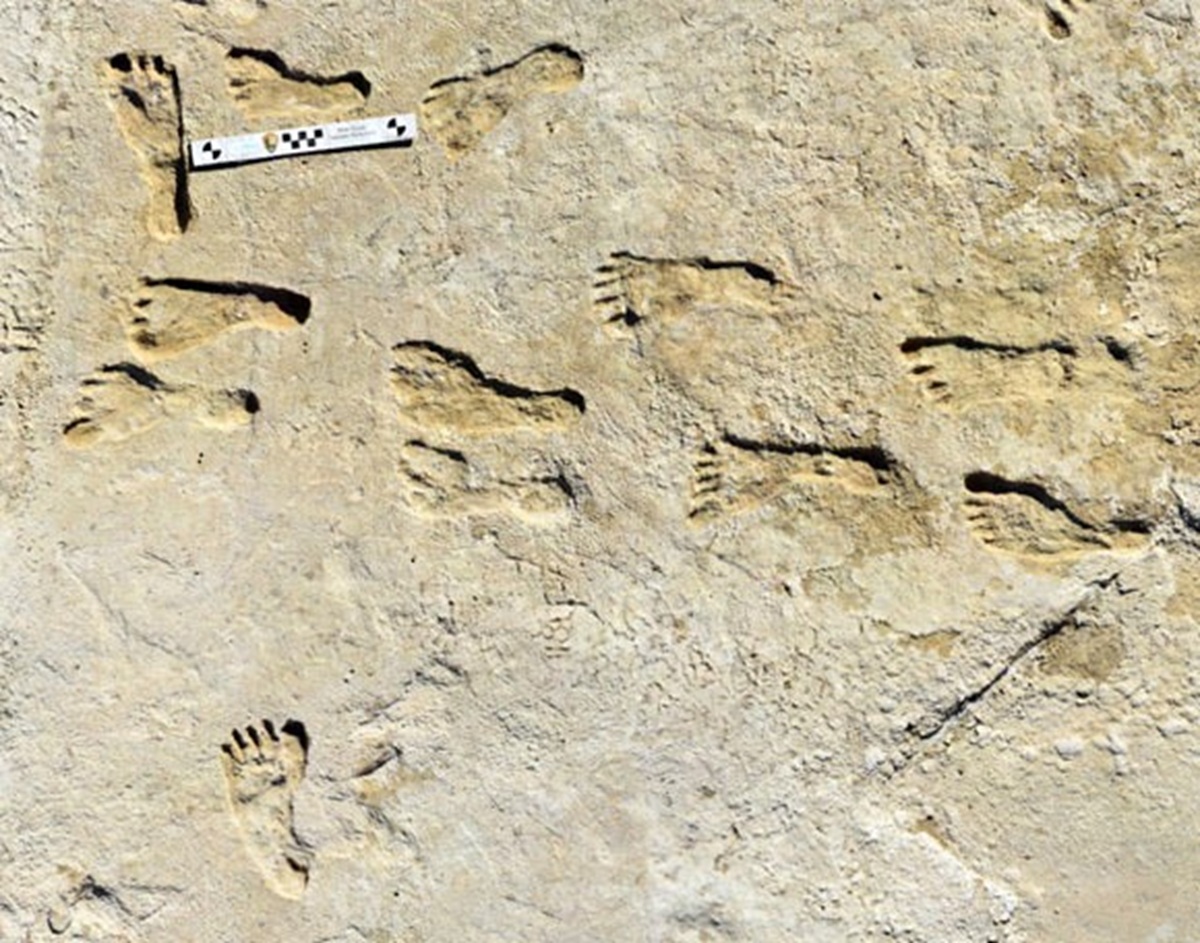


New Analysis of Old Sediment Reinforces That Humans Already Inhabited North America More Than 20 Thousand Years Ago.
The discovery of human footprints in White Sands National Park, New Mexico, is back at the center of scientific debate. New analyses led by researcher Vance Holliday from the University of Arizona reinforce the thesis that humans inhabited the region between 21,000 and 23,000 years ago.
The new evidence, published in the journal Science Advances, is based on a third dating source: ancient sediment from the now-extinct Otero Lake.
Sediment Supports Previous Thesis
The footprints in White Sands were first announced in 2021, based on the analysis of seeds from the aquatic plant Ruppia cirrhosa and pollen grains from conifers.
-
Brazilian Researchers Develop Low-Cost Sensors to Detect Avian Flu in Minutes, Enhancing Global Health Security

-
545 Intact Amphorae Found 370 Meters Deep in Turkey Reveal Ancient Byzantine Trade Routes Connecting the Aegean and Black Sea

-
NASA to Send Astronauts Over 400 km Above Earth for 6.5-Hour Spacewalk to Repair Canadarm2 on the ISS

-
Microsoft Raises Xbox Prices Again Due to Rising Component Costs


Since then, criticisms have emerged questioning the reliability of these materials for radiocarbon dating.
Now, Dr. Holliday’s team presents a new geological analysis of the sediment from the ancient lake, indicating ages between 20,700 and 22,400 years. This adds more support to the previously proposed timeline.
“It’s a remarkably consistent record,” said Holliday. “There comes a point where it’s really difficult to explain all of this. It would be extreme serendipity if all these dates provided a consistent picture that was wrong.”
A Change in the Understanding of History
The discovery challenges the traditional view that humans arrived in North America between 13,000 and 16,000 years ago.
For decades, it was believed that the first inhabitants of the region were linked to the so-called Clovis Culture, identified from artifacts found in New Mexico about 90 years ago. However, the footprints in White Sands are about 10,000 years older than those remains.
The marks were found in an ancient stream bed that flowed into now-disappeared lakes. Over time, wind erosion covered the site with gypsum dunes, preserving part of the footprints. But not all of the history could be maintained. “Wind erosion destroyed part of the history, so that part simply disappeared. The rest is buried under the largest pile of gypsum sand in the world,” explained Holliday.
Recent Excavations Confirm Results
To obtain more solid data, the researchers returned to the site in 2022 and 2023. They dug new trenches and studied the geology of the ancient lake in detail.
The work generated a new round of analyses, which indicated dates consistent with previous studies.
Jason Windingstad, a PhD student at the University of Arizona, participated in the expedition. “It’s a strange feeling when you go out and look at the footprints and see them in person. You realize that this basically contradicts everything you were taught about the peopling of North America,” he stated.
The Absence of Artifacts Is Still Intriguing
Despite the progress, one question persists: why were no objects, tools, or signs of camps found? The authors themselves admit that this doubt is fair.
But they point out that many of the footprints belong to trails that would only last seconds to walk.
“These people live off their artifacts and were far from where they could obtain replacement material,” they explain. “They aren’t just randomly throwing artifacts around. It doesn’t seem logical to me that you would see a field of debris.”


