






 Portuguese
  Spanish


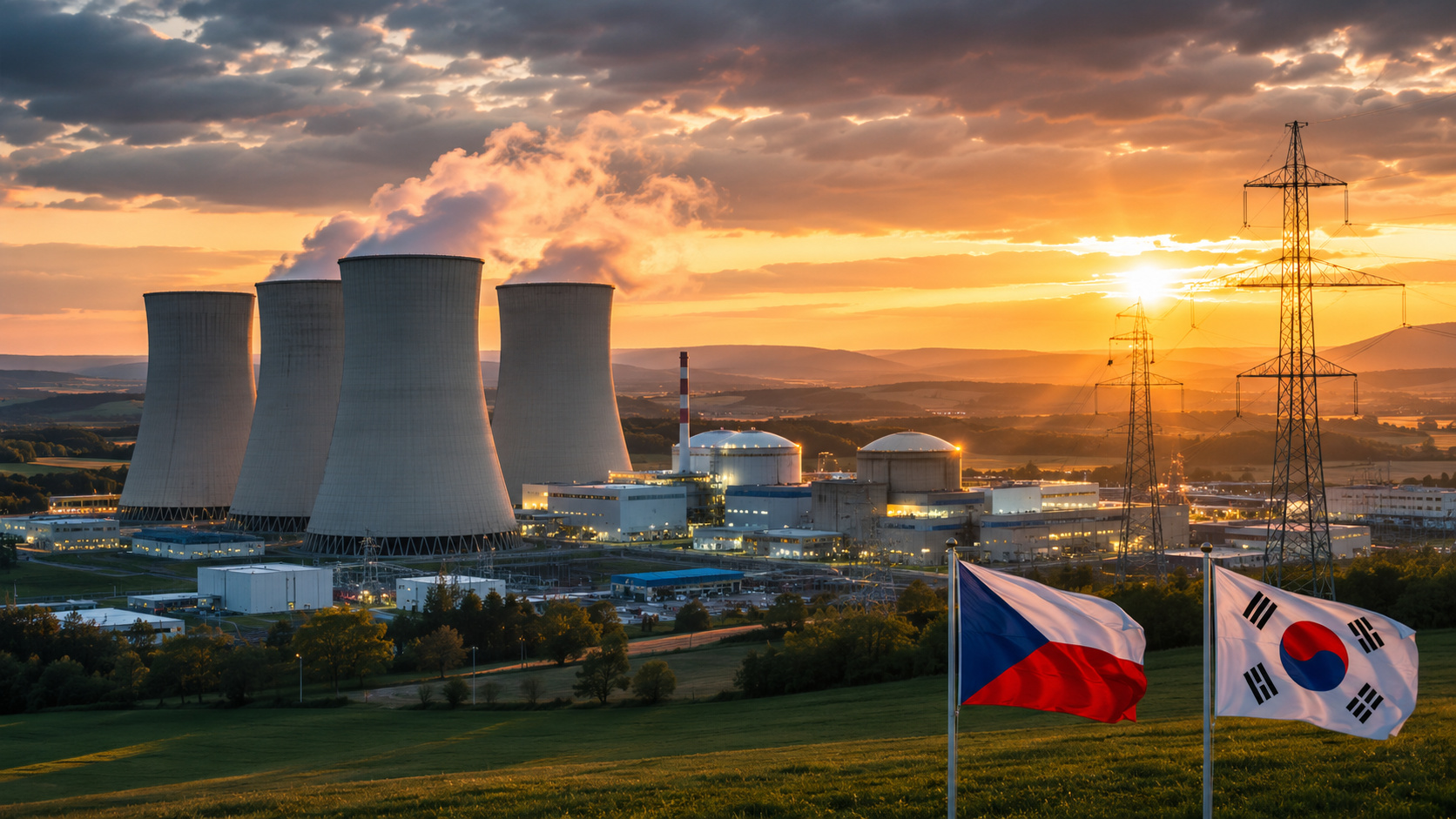

The Dukovany nuclear power plant places the Czech Republic at the center of the European race for nuclear energy, energy security, and reliable electricity to support industry, cities, and long-term strategic decisions
The Dukovany nuclear power plant has become a central piece of an $18 billion project in the Czech Republic, at a time when many European countries are still dealing with expensive, unstable, and highly strategic energy.
The report was published by Power Technology, a site specialized in energy and technology. The project involves the Czech government, state participation, and the selection of KHNP, a South Korean company, to provide nuclear technology.
In practice, the decision shows a strong shift in the European debate. Nuclear energy is once again being treated as essential infrastructure to deliver reliable electricity, reduce supply risks, and provide more predictability to the productive sector.
-
Alabama Family Converts Giant Grain Silos into a 1,750 sq ft Rustic Home, Spending $100,000 to Prove the Impossible

-
Modular ‘Microhouse’ Arrives Ready to Install in Hours Without Deep Foundations or Construction Waste

-
UK Student Develops Solar Water Purification System Using Fresnel Lens, Wins Global Young Scientists Popular Vote
-
Giant Dredger “No Woman, No Cry” Arrived in Brazil in 2010 to Clear 1.8 Million m³ of Sand and Improve Port Logistics


Dukovany nuclear power plant becomes the Czech Republic’s answer to a problem that weighs on all of Europe
The Dukovany nuclear power plant enters the European debate at a sensitive point: the need to produce energy consistently. This type of supply is important because it does not depend directly on the sun, wind, or rain.


For the Czech Republic, reliable energy has strategic value. It helps sustain factories, public services, cities, and sectors that cannot stop due to lack of electricity.
The $18 billion project also shows that the decision goes beyond energy generation. The work involves technology, industrial policy, national security, and the struggle for influence within the European market.
South Korea’s technology places KHNP in a prominent position in the European nuclear sector
The choice of KHNP, a company from South Korea, gives the project international weight. The company assumes an important role in an area where few countries can deliver large-scale nuclear technology.
The presence of South Korea shows how nuclear energy has also become a competition for technical knowledge. Whoever provides this technology gains space in billion-dollar contracts and expands influence in strategic regions.
In the case of the Dukovany nuclear power plant, South Korean technology is linked to a clear European need: ensuring stable electricity in a scenario of pressure on costs, supply, and energy security.
Power Technology detailed the value of US$ 18 billion, state participation, and the choice of KHNP
Power Technology, a site specialized in energy and technology, detailed the central points of the project, including the value of US$ 18 billion, state participation, and the choice of KHNP.
The participation of the Czech government reinforces the magnitude of the decision. Nuclear projects usually depend on strong public involvement because they involve long-term planning, safety, and critical infrastructure.
This helps explain why the Dukovany nuclear power plant is not just an energy project. It is part of a strategy to strengthen internal supply and reduce vulnerabilities in a vital sector.
Nuclear energy returns to the center of decisions because it delivers steady electricity
Nuclear energy has regained space in Europe because it can operate continuously. For the average consumer, this means a source capable of helping the electrical system function with more stability.
This characteristic is crucial in countries that need to keep factories, hospitals, transportation, and public services running every day. When energy becomes unstable or expensive, the impact can reach production, prices, and business planning.
Therefore, the Dukovany nuclear power plant has become an example of how European governments have started to view nuclear energy again as a strategic structure, not just as a technical alternative.
Energy security transforms the Dukovany nuclear power plant into a geopolitical issue
The energy dispute in Europe has ceased to be just a discussion about electricity bills. It now involves autonomy, international suppliers, technology, and the ability to make decisions without relying so much on external factors.
The Dukovany nuclear power plant encompasses all these points. The project involves a European country, a South Korean company, state participation, and an investment of US$ 18 billion.
This set shows that energy has become a central part of industrial policy. Those who control stable sources of electricity can better plan their economy and protect important sectors during times of pressure.
Czech project shows why nuclear energy is once again seen as state infrastructure
Nuclear energy requires long-term decisions, high investment, and strict control. Therefore, projects like the Dukovany nuclear power plant are often treated as state infrastructure.
In the case of the Czech Republic, the project points to a clear choice: to seek a source capable of delivering reliable energy and thus support the country in a European scenario of energy uncertainty.
The presence of KHNP also reinforces South Korea’s role as an exporter of nuclear technology. For Europe, this movement broadens the debate on who will provide the most important energy solutions in the coming decades.
An $18 billion project that goes beyond energy generation
The Dukovany nuclear power plant brings together billion-dollar value, state participation, South Korean technology, and a concern that spans Europe: ensuring reliable electricity in times of energy pressure.
The $18 billion project shows that nuclear energy has returned to occupy space in major public decisions, especially when the topic involves security, industry, and national autonomy.
Do you believe that nuclear energy should grow again in Europe as a solution to ensure reliable electricity, or do the cost and complexity of this type of project still weigh more in the decision?


