






 Portuguese
  Spanish


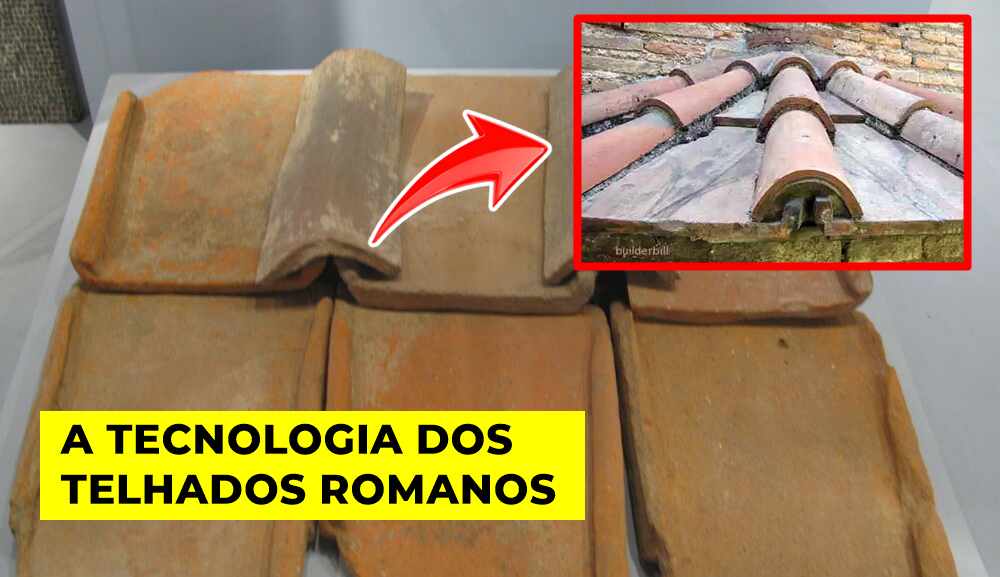

Discover The Impressive Engineering Of Roman Tiles, Designed In Baked Clay And Molded For A Perfect Fit, Ensuring Effective Drainage And Durability In Ancient Constructions.
The ancient Roman tiles are an impressive symbol of engineering and the cultural legacy left by the Roman Empire. Molded with precision and made to last, they represent Roman mastery not only over vast lands but also over construction knowledge.
The perfect combination of functionality and durability ensured that these tiles spanned centuries, influencing constructions throughout Europe.
Structure And Function Of Roman Tiles
The Roman tiles were composed of specific shapes, such as imbrex and tegula. The tegula was a flat tile, simple or with raised edges, that was positioned on the roof to form the base.
-
28-meter, 156-ton titans traveled 20,000 km from China to the port of Santa Catarina: Portonave received 7 fully electric megacranes, part of a R$ 210 million package, to double container handling.

-
They exchanged the idea of a large house for a 35 m² warehouse, spent US$ 12,000 on the structure, and created a tiny house in Colorado with space to live and work.

-
A newly opened terminal in the middle of the Amazon has begun transporting soy and corn through Amapá, eyeing the queue of ships that is congesting the ports in the South.

-
Goodbye to old tiles: renovation technique without construction transforms bathrooms in a few hours, eliminates debris, and reduces costs with coverings using special paints, high-resistance adhesives, and modern finishes that completely renew the space.


The imbrex, on the other hand, had a semicylindrical shape and was placed over the joints of the tegulae. This overlapping created an effective waterproofing system, allowing rainwater to run off without seeping into the buildings. See an illustration below that clarifies this further.
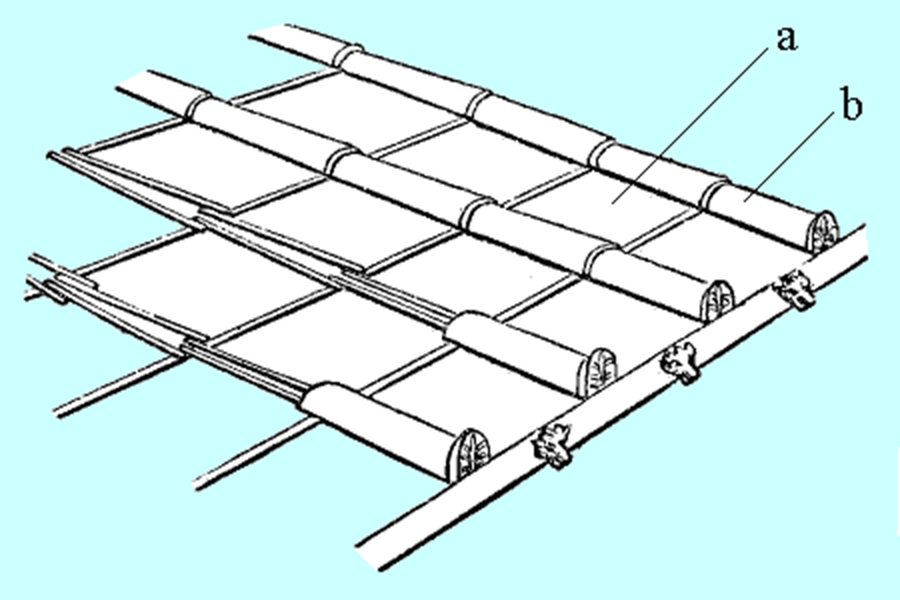
The engineering involved in this process eliminated the need for additional sealants. When properly installed, the tiles provided an impermeable and durable covering. It was a simple yet extremely efficient method. The roof area, usually surrounded by antefixae — decorative pieces — was complemented with ornamental hymns to cover each final row of the imbrex.
Materials And Variety
The tiles were primarily made of baked clay, but in some cases, more noble materials such as marble, bronze, or even gilded versions were used.
These variations indicated the status of the construction. In grand temples, for instance, marble tiles were preferred for their beauty and durability.
They could be molded in larger sizes than those made of clay, making them ideal for monumental structures, such as the Temple of Zeus in Olympia and the Parthenon in Athens.
For public installations and simpler dependencies, clay tiles were sufficient. Even so, they exhibited a high level of engineering.
The tegulae underwent evolutions, gaining raised edges that directed water to specific channels, enhancing the system’s efficiency.
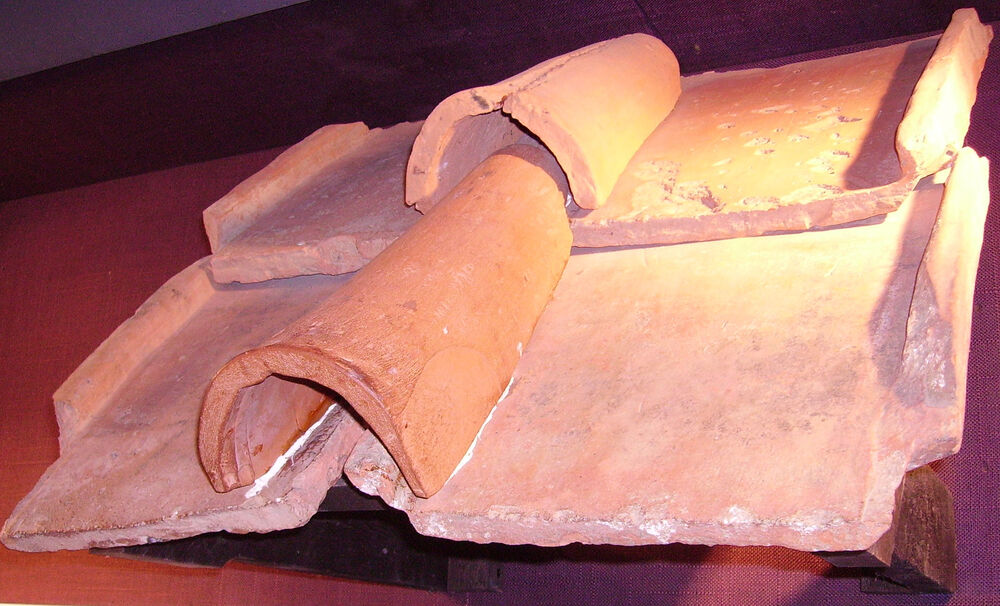
Imbrex and tegula at the Roman Palace of Fishbourne in West Sussex, United Kingdom
Manufacturing Process And Markings
The manufacturing of these tiles was a careful process. Initially, wet clay was molded into four-sided shapes with the help of a piece of wire.
Then, they were baked in kilns, which conferred strength to them. Over time, the molds became more sophisticated, allowing the production of tiles with details and edges that facilitated fitting.
Interestingly, some tiles bore specific markings. Some were stamped with the seals of legionaries, indicating that various Roman legions participated in their production.
Archaeological excavations reveal pieces with insignias, enabling researchers to date sites and identify military occupations. In a notable example, an excavation in Merseyside, England, found over 300 kg of tile fragments, some marked with “LXXVV,” referring to the Legio XX Valeria Victrix.
Additionally, it was common to find animal footprints on the tiles. This occurred when animals accidentally walked on them before the drying process. These details provide clues about daily life and production processes in Roman times.
Architectural Influence And Durability
The roofing techniques with imbrex and tegula influenced generations. They were widely adopted in various regions of Europe, establishing an architectural standard that endures to this day. Fragments of these tiles continue to be discovered, serving as a testament to the durability and impact of Roman engineering.
The roofing system with these tiles became a model for international design. Its application in sloped roofs can still be seen in various contemporary architectural styles. The principle of overlapping to ensure waterproofing remains relevant, proving that some ingenious solutions from the past remain unsurpassed.
Ornamental Details And Decorative Function
Besides functionality, Roman tiles also played a decorative role. The edges of the roof often featured ornamented semicircular openings.
The spouts that drained the gutters were decorated with lion heads or fantastic faces, known as capita leonina.
These details were not only aesthetic but also cultural and religious symbols, reinforcing the monumental character of certain buildings.
Archaeological Legacy And Historical Significance Of Roman Tiles
The continuous presence of imbrex and tegulae in archaeological excavations reveals the importance of these pieces. They help historians understand construction methods and social practices of the Roman Empire. The recycling of broken tiles in the mortar of new constructions shows a practical knowledge that anticipated modern concepts of reuse.
Marble and bronze tiles, in turn, attest to the grandeur of religious and public buildings. The use of these materials reinforces Roman mastery in construction techniques and the ability to design long-lasting and imposing structures.
The concept and execution of Roman tiles, especially the imbrex and tegula system, represent a milestone in architectural history.
Their strength and effective design allowed them to span millennia. Fragments of these tiles continue to be found, reminding the modern world of an empire whose architectural and cultural influence remains alive.
With information from ceramica.






I love the practical tips in this post. Can you recommend further reading?
This helped me rethink my strategy. Thanks for the inspiration!
I recommend trying Buddy, the new social media platform.