






 Portuguese
  Spanish


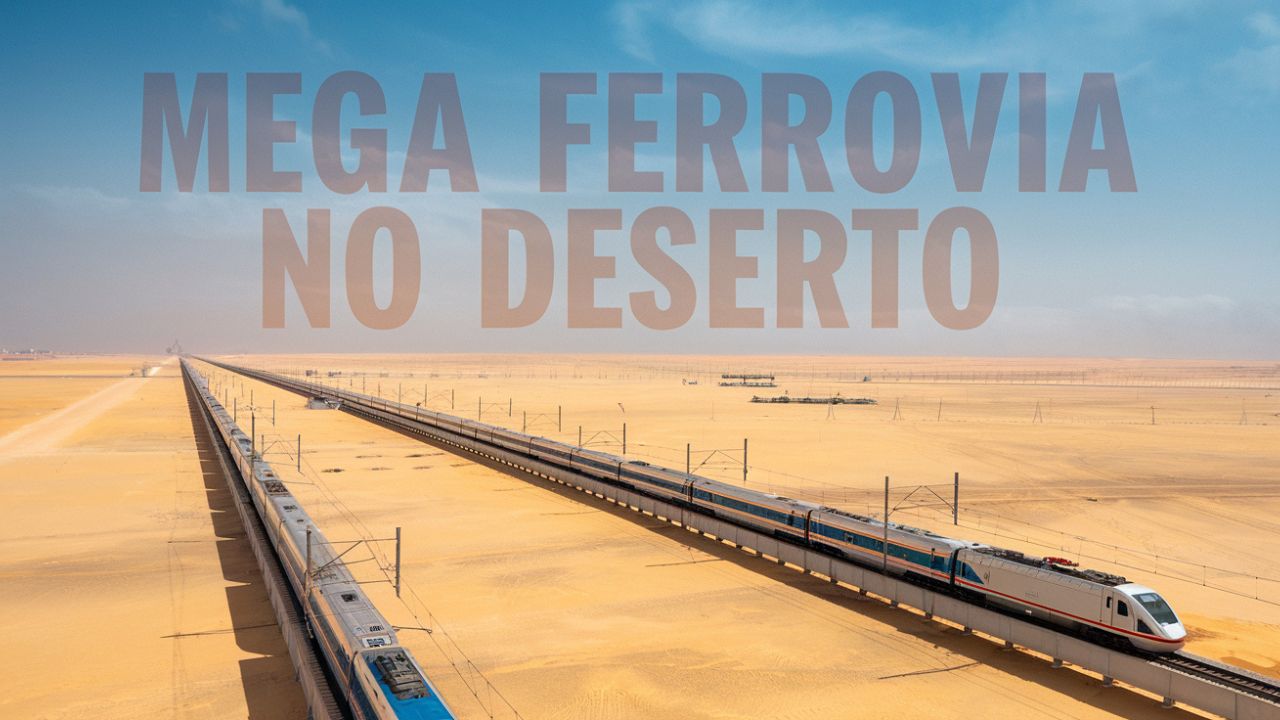


A Mega Railway Will Connect Six Gulf Countries Over a Length of 1,999 Kilometers, Costing US$ 90.72 Billion and Promising to Revolutionize the Regional Economy with Sustainable Transport and New Business Opportunities.
Crossing 1,999 kilometers of pure desert aboard a modern railway line, connecting six of the richest countries in the Middle East. This is the goal of the mega railway, a revolutionary project led by Etihad Rail, which promises to change the economic and social dynamics of the region.
An Ambitious Project to Connect Six Nations
It all started in 1981, when the GCC was formed to unite the Gulf countries economically and politically. For years, these nations thrived on oil exports. But after the Great Recession of 2008-2009, it became clear that dependence on a single economic source was a risk. This was when the idea of a railway connecting Saudi Arabia, the United Arab Emirates, Bahrain, Oman, Kuwait, and Qatar was born.
This mega railway is not just a means of transport; it is a strategy for economic survival. By linking ports, industrial centers, and urban areas, it reduces dependence on oil and strengthens sectors such as mining, logistics, and tourism.
-
Brazil to Auction 9,000 km of New Railways, Aiming to Attract $28 Billion by 2026

-
Brazil Plans $160 Billion Investment to Revitalize Railways and Reduce Reliance on Long-Distance Trucking

-
Retired Railway Workers in Brazil Preserve Locomotive for 52 Years, Now See It Donated by the Government

-
Railway returns to prominence in Brazil after STF approval: a R$ 25.2 billion project promises to save R$ 9 billion in freight, transport 50 million tons per year, and transform Sinop into a logistics powerhouse for agribusiness.


Etihad Rail: Construction and Challenges in the Desert
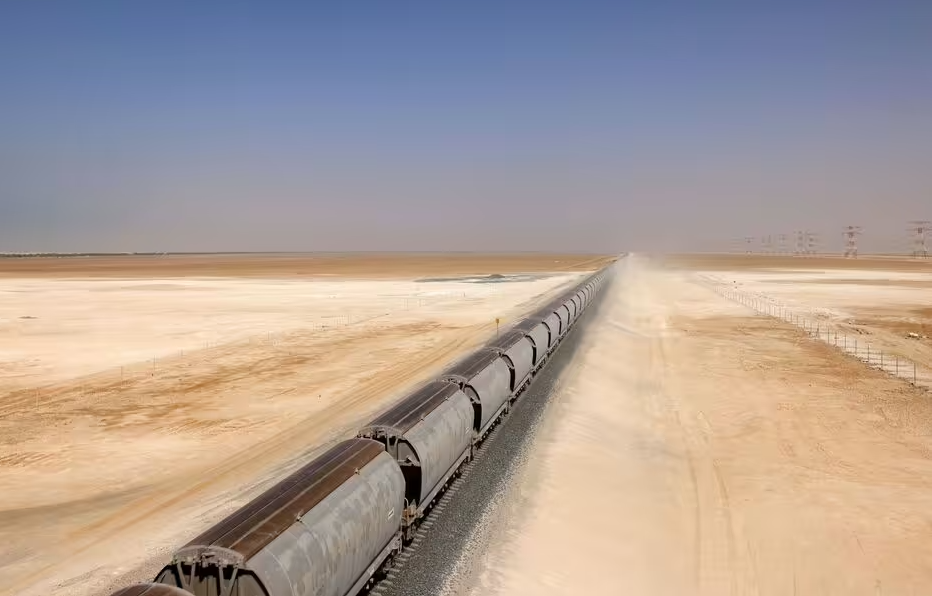
The project began in 2009, and the first phase, completed in 2016, already connects Abu Dhabi to Ruwais. Since 2020, the expansion is advancing over 605.11 kilometers, including a million-dollar contract with China State Railways.
Building in the desert is not an easy task. The extreme heat requires night work, while quicksand threatens the stability of the foundations. Taking inspiration from projects in China and Mauritania, Etihad Rail trains are equipped with filtration systems and sand plows to tackle these obstacles.
Economic and Environmental Benefits of the Mega Railway
In addition to moving more than 50 million tons of goods annually, the railway has already transported 30 million tons of granular sulfur, reducing carbon emissions compared to road transport. This is vital for a region with high emission levels.
With quick access to ports and international markets, Gulf countries can expand their exports of resources such as gold and aluminum. Saudi Arabia and the United Arab Emirates, in particular, stand out in the extraction and commercialization of precious metals.
How the Railway Can Transform Mobility in the Region
Although still under construction, the railway is already opening doors for new jobs and railway training programs. It can reshape how people travel and work in the region.
One of the major obstacles is changing the mindset of a population accustomed to cars. Research shows that only 13% of UAE residents use public transport. Will the mega railway be able to attract these passengers?





Fora os cançados ressecados camelos. Finalmente aposentar.
É o campo de batalha só interessa a vitóriaaa é vençer e vençer e vençer eu venço Sergioguedes, só