Portuguese
  Spanish


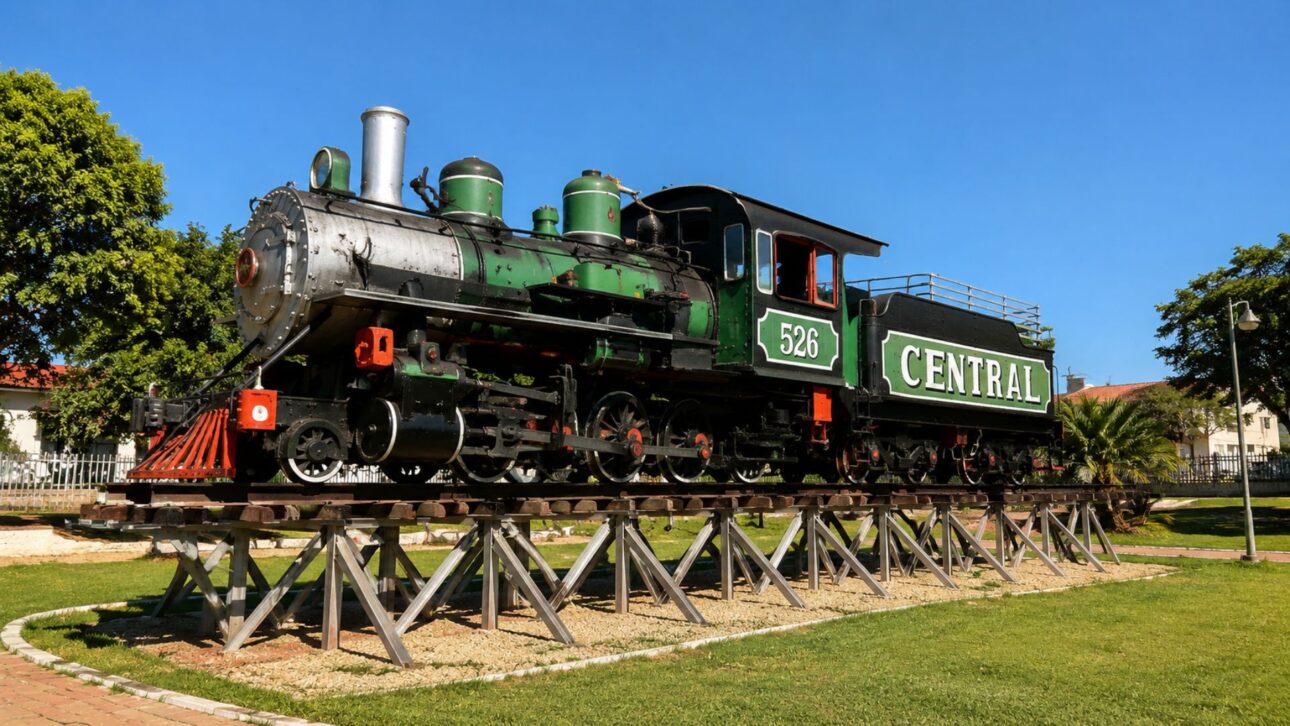
In Corinto, in the center of Minas, a group of retired railway workers diverted the steam locomotive 526 from the tracks in 1973 and placed it on a pedestal. After 52 years of taking care of the city’s symbol, they saw the Maria Fumaça finally donated by the Union to the municipality, becoming an official railway heritage.
In almost every city that grew up with the train whistle, there is a locomotive stopped in the square. In Corinto, however, this machine was not just a decoration: it was hidden, saved, and kept for decades by those who loved it the most. The story of the steam locomotive 526 mixes stubbornness, memory, and a happy ending that took half a century to arrive.
According to Rádio Itatiaia, the locomotive 526 was taken off the tracks in 1973 and placed on a pedestal by the city’s railway workers. In July 2025, after 52 years, the machine was officially donated by the Union to the municipality of Corinto. The act ended a half-century wait and secured the future of the Maria Fumaça, the greatest local symbol.
The steam locomotive 526 and the 1973 diversion
In the early 1970s, steam locomotives were being retired and many were becoming scrap.
-
Railway returns to prominence in Brazil after STF approval: a R$ 25.2 billion project promises to save R$ 9 billion in freight, transport 50 million tons per year, and transform Sinop into a logistics powerhouse for agribusiness.

-
Retired trains leave European tracks and become tons of steel, aluminum, and copper in dismantling yards where recycling exceeds 90%, but batteries, composites, and electronics create a new frontier of railway waste.

-
The strategic railway of Santa Catarina will receive R$ 608 million, will undergo historic modernization, and could transform logistics between Mafra and the Port of São Francisco do Sul.
-
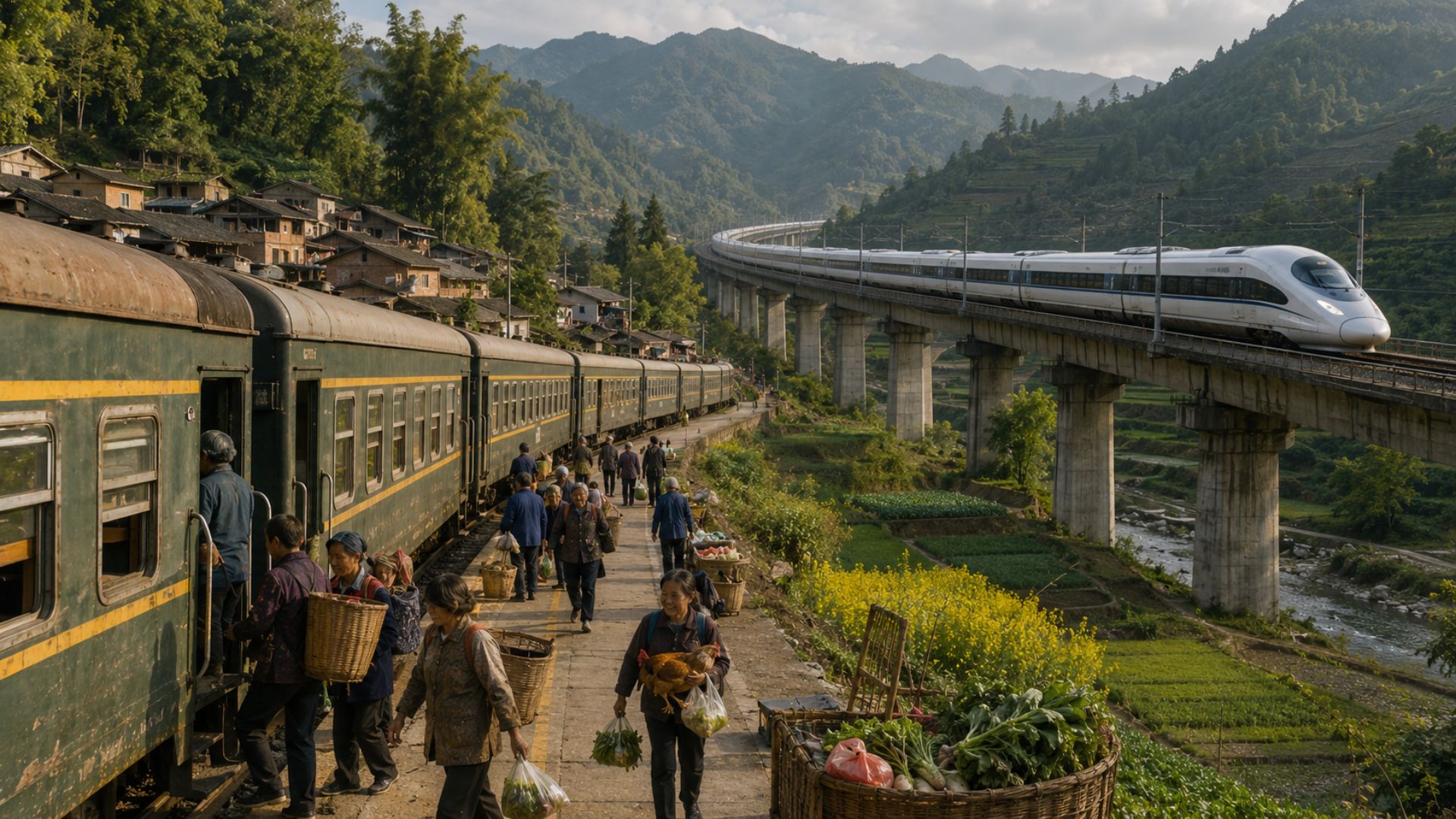
While showcasing bullet trains traveling at over 300 km/h, China maintains about 81 slow train lines that travel at 40 km/h, charge less than R$ 2 for a ticket, and cross remote villages carrying residents, students, and even chickens and vegetables to the market.


To avoid this fate, railway worker Moacir Luiz de Siqueira, with a group, decided to divert the steam locomotive 526 and fix it on a pedestal in the city.
It was a way to ensure that at least one Maria Fumaça was not cut up and sold as scrap metal.
Moacir died in 2016, at the age of 87, but his gesture kept the machine standing for generations.
Without that diversion, Corinto would probably have lost its greatest monument forever.
The steam locomotive became, there, a landmark planted in the heart of the municipality.
Corinto, a Railway Junction of Minas
To understand the attachment, one must go back more than a century.
The railway history of the region began in 1904, when the train arrived at the then village of Curralinhos, now Corinto.
Being in the geographical center of Minas Gerais, Corinto became an important railway junction of the state.
From there, branches departed and passed that connected the region to Pirapora, Montes Claros, Diamantina, and Belo Horizonte.
The city grew around the tracks, the workshops, and the comings and goings of freight and passenger trains.
When the train was king, being a railway worker in Corinto meant having one of the most respected jobs in the city.
It is this identity that steam locomotive 526 helps to keep alive to this day.
Álvaro, 103 years: the living memory of retired railway workers
No document tells the story as well as those who lived it.
Álvaro Marcial da Rocha, 103 years old, is one of the retired railway workers who witnessed all this transformation.
With a sharp memory, he recalls in detail the switch from steam locomotives to those powered by diesel and electricity.
It was a technological shift that changed the work of thousands of railway workers throughout Brazil.
For retired railway workers like Álvaro, the 526 is not just metal: it is their youth and craft stopped there.
Each retired railway worker who is still alive carries a piece of the history that the machine represents.
Preserving the locomotive is, at heart, preserving the very memory of these workers.
From the End of the Steam Locomotives to the Symbol of the City
From the mid-20th century, diesel and electricity replaced steam as they were cheaper and more efficient.
Thousands of Steam Locomotives were decommissioned, and many became scrap before anyone thought to preserve them.
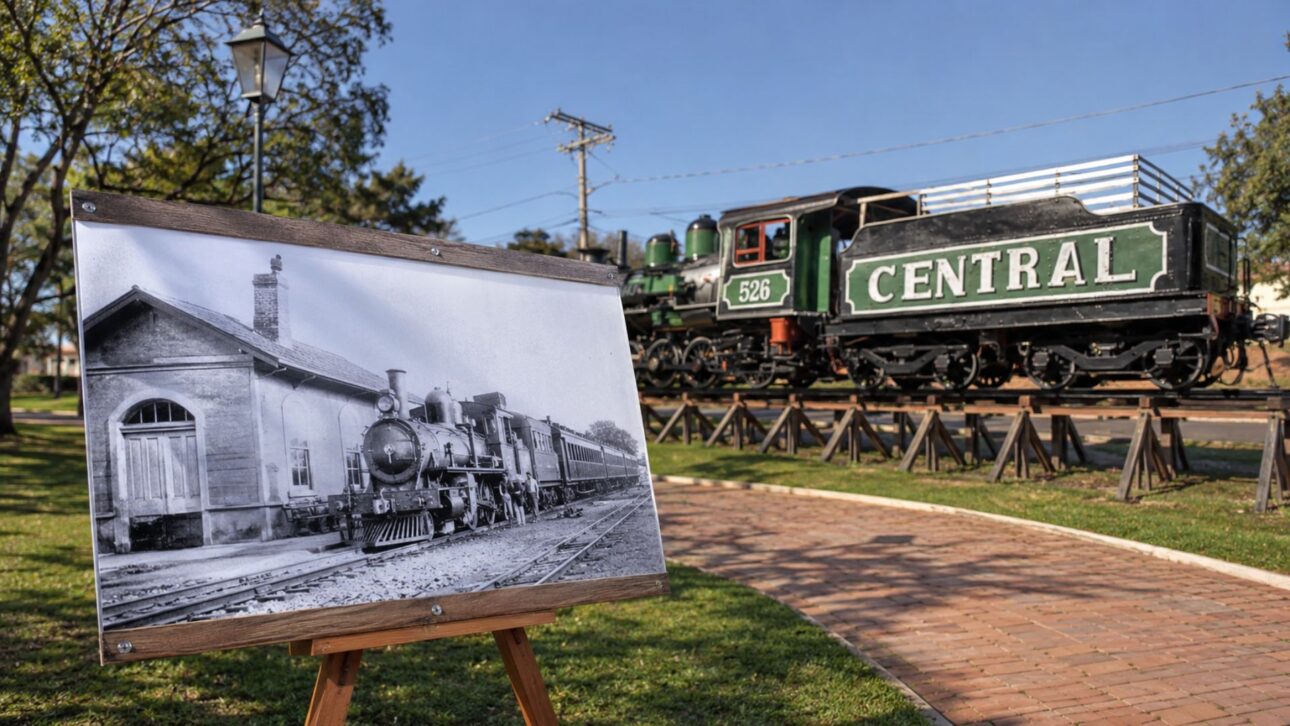
The Steam Locomotive 526 escaped this fate and, over time, became the postcard of Corinto.
The city’s mayor sums up the sentiment by calling the Steam Locomotive the “mother of the municipality.”
For the population, the machine is the physical proof that the city was born and grew because of the train.
It became a meeting point, photo backdrop, and symbol of local identity.
52 years of custody and the donation from the Union
For decades, there was an uncomfortable legal detail: the machine was not officially the city’s.
Like most assets of the old railways, the locomotive belonged to the Union, a legacy of the end of the state network.
This prevented the city hall from investing public money in restoration, as the asset was not theirs.
The official donation, concluded in 2025, resolved this impasse and transferred the Steam Locomotive 526 to the municipality.
With ownership regularized, the city hall is already talking about building a cover, protecting, and painting the machine this year.
The location where the locomotive is, once a landfill, was transformed into a square and is expected to receive new improvements.
It was the missing step to transform 52 years of informal custody into definitive preservation.
Why preserving railway heritage matters
The case of Corinto connects to a larger discussion in the country.
Brazil has a vast railway heritage spread across stations, workshops, and locomotives in the interior.
According to the IPHAN, these assets tell the story of industrialization and the occupation of the national territory.
When a locomotive is scrapped, the memory of the work of those who made the country move on tracks also disappears.
Preserving railway heritage has historical, educational, and even tourist value for small towns.
A restored machine becomes an open-air classroom and an attraction for those who enjoy memory tourism.
Caring for railway heritage is, in the end, caring for an entire chapter of Brazilian history.
What the case of the steam locomotive of Corinto shows
The saga of the 526 is a beautiful example of how a community can save its own history.
She shows that a stubborn gesture, in 1973, can yield a symbol that spans generations.
But it’s worth keeping your feet on the ground.
The Union’s donation is a symbolic victory, but the promised restoration still needs to materialize.
The locomotive remains a static monument, not a machine operating on tracks.
And the living memory depends on retired railway workers who, like Álvaro, won’t be here forever.
Even so, few cases summarize so well the value of preserving railway heritage and the history of work.
From a detour on the tracks to a regularized pedestal, the steam locomotive 526 continues to tell the story of Corinto.
And you, do you know any steam locomotive stopped in the square of your city that deserves to be preserved? Comment here if your family had any retired railway worker who lived through the era of the steam engines.