






 Portuguese
  Spanish


After decades of relying almost solely on trucks, the country is preparing the largest round of railway auctions in history, with projects that promise to change the way production is transported
Brazil has decided to tackle head-on one of the biggest bottlenecks in its economy: the lack of railways. For 2026, the government is preparing the largest round of new railway auctions in recent decades, aiming to take part of the cargo off the potholed roads and put it on much cheaper and more efficient trains.
The new railway plan foresees eight auctions in 2026, covering more than 9,000 kilometers and with the potential to attract R$ 140 billion in investments. It is a turning point in a country that, being the size of a continent, still transports most of what it produces on trucks.
8 auctions and R$ 140 billion in a single year
The size of the bet is in the numbers. According to the Social Communication Secretariat of the federal government, the project portfolio for 2026 foresees eight railway auctions, totaling more than 9,000 kilometers in length and R$ 140 billion in potential investments just this year.
-
Brazil Plans $160 Billion Investment to Revitalize Railways and Reduce Reliance on Long-Distance Trucking

-
Retired Railway Workers in Brazil Preserve Locomotive for 52 Years, Now See It Donated by the Government

-
Railway returns to prominence in Brazil after STF approval: a R$ 25.2 billion project promises to save R$ 9 billion in freight, transport 50 million tons per year, and transform Sinop into a logistics powerhouse for agribusiness.
-
Retired trains leave European tracks and become tons of steel, aluminum, and copper in dismantling yards where recycling exceeds 90%, but batteries, composites, and electronics create a new frontier of railway waste.


To give you an idea, 9,000 kilometers of tracks is equivalent to crossing the entire country more than once. Concentrating so many auctions in a single year is unprecedented in Brazilian transport policy, and signals that railway infrastructure has finally moved up from the bottom of the national priorities list.
Up to R$ 600 billion over the course of the contracts
The 2026 amount is just the start. According to Secom, the expectation is that the contracts that make up this portfolio will inject, over their duration, up to R$ 600 billion into the Brazilian railway system in the coming decades.
This is the kind of figure that changes the economic geography of a country. New railways connect production regions to ports, reduce freight costs, and make national products more competitive abroad. Investing R$ 600 billion in railways is betting that Brazil can transport its production without relying solely on trucks, an expensive and exhausting model that has predominated for generations.
Why Brazil relies so much on trucks
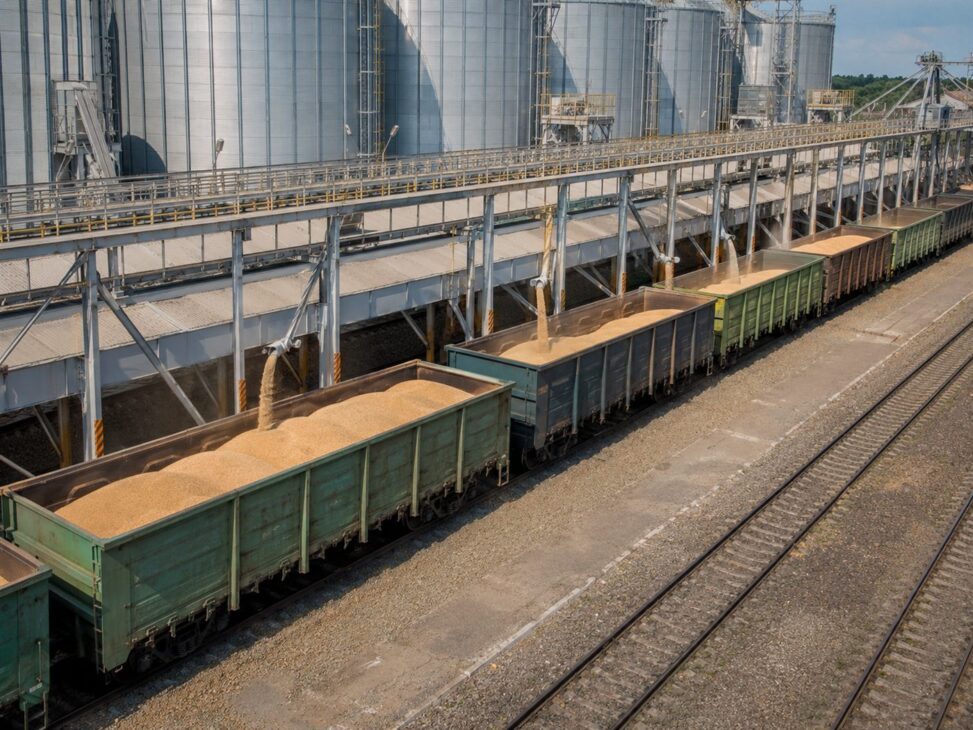
To understand the importance of the auctions, it is worth remembering how the country got here. For decades, Brazil invested heavily in highways and little in railways, resulting in a transportation matrix dominated by trucks, which are more expensive per ton and congest the roads.
The railway, on the other hand, carries much more with less fuel and fewer drivers. A single freight train replaces hundreds of trucks. Switching part of the road cargo to rail is one of the most direct ways to reduce the cost of what the country produces, from grain to ore, and that’s why the railway delay has always been seen as a burden on national competitiveness.
Ferrogrão and the 100 thousand jobs
Among the priority projects, one stands out for its size. Ferrogrão, which will connect Sinop, in Mato Grosso, to Itaituba, in Pará, has the potential to generate more than 100 thousand jobs during the construction, according to Secom, as well as creating a new corridor to flow the harvest from the Midwest to the northern ports.
This route is strategic because it shortens the distance between the country’s largest agricultural frontier and the sea. Today much of this production travels by truck for thousands of kilometers to the ports of the Southeast. Opening an exit through the North changes the logistics of the entire agribusiness, reducing cost and time for one of the largest grain-producing regions on the planet.
The country’s first shortline has already been realized
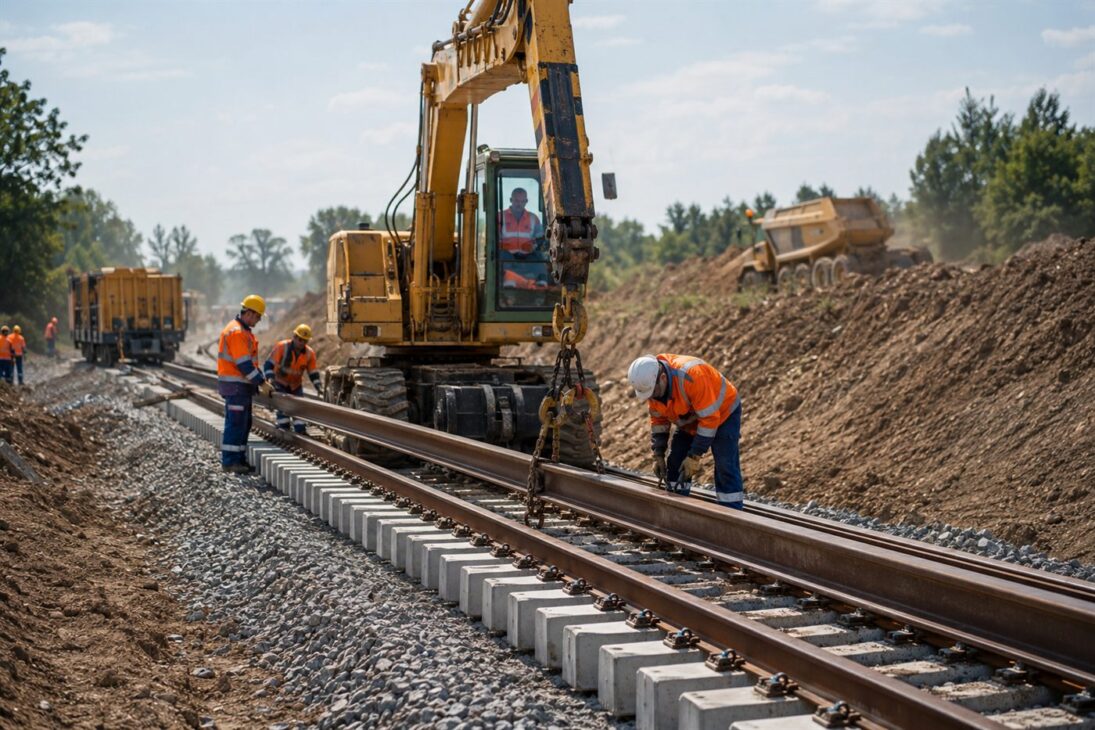
While the major auctions are being prepared, a concrete project has already begun. According to the Ministry of Transport, Mato Grosso do Sul gained in 2026 the first shortline railway authorized in Brazil, with an investment of R$ 2.8 billion and 47 kilometers in length, in the municipality of Inocência.
The new line will connect Arauco’s future pulp mill to the Northern Network, with access to the Port of Santos, and will have the capacity to move 3.5 million tons per year, in trains of up to 100 wagons. The construction is expected to be completed in the second half of 2027 and generate around a thousand direct jobs. It is proof that the model of new smaller and private railways has started to work in practice.
What the railway changes for agriculture and pulp
The case of Mato Grosso do Sul shows the magnitude of what is at stake. According to the Ministry of Transport, the state was responsible for 35% of all pulp export value by Brazil in 2025, with nearly 7 million tons sent to 40 countries, generating US$ 3.11 billion.
Without an efficient rail, all this volume would need to travel by truck, increasing the cost of the product and hindering growth. With the railway, the flow of production becomes cheaper and more predictable. Every ton that goes by train instead of truck is money saved that returns to the producer and the final price, and it is precisely this calculation that justifies the billions in investment.
The priority corridors of the new railways
The portfolio is not limited to Ferrogrão. Among the priority projects are also the Southeast Railway Ring, known as EF-118, the East-West Corridor, the Western Network, and the Southern Network corridors, according to Secom, forming a network that covers various regions of the country.
The idea is not just to build isolated sections, but to weave an integrated network that communicates with ports and highways. Thinking of the railway as a system, and not as an isolated project, is what can finally unlock freight transport in Brazil, connecting the producing interior to the exporting coast in a fluid manner.
Why this time it might be different
Skepticism is understandable, since the country has a history of promised railways that were never delivered. The difference now, according to the Minister of Transport, Renan Filho, is an unprecedented national policy, with project alignment and modern practices in contract structuring, combining public and private resources.
The question remains whether Brazil will really fulfill this gigantic agenda or if it will once again encounter delays and disputes. Do you believe that the country will finally move away from truck dependency and put its production on the rails?


