






 Portuguese
  Spanish



Pedra da Gávea Intrigues Specialists With Rare Optical Illusion Phenomenon and Geological Origins That Remain Enwrapped in Mystery
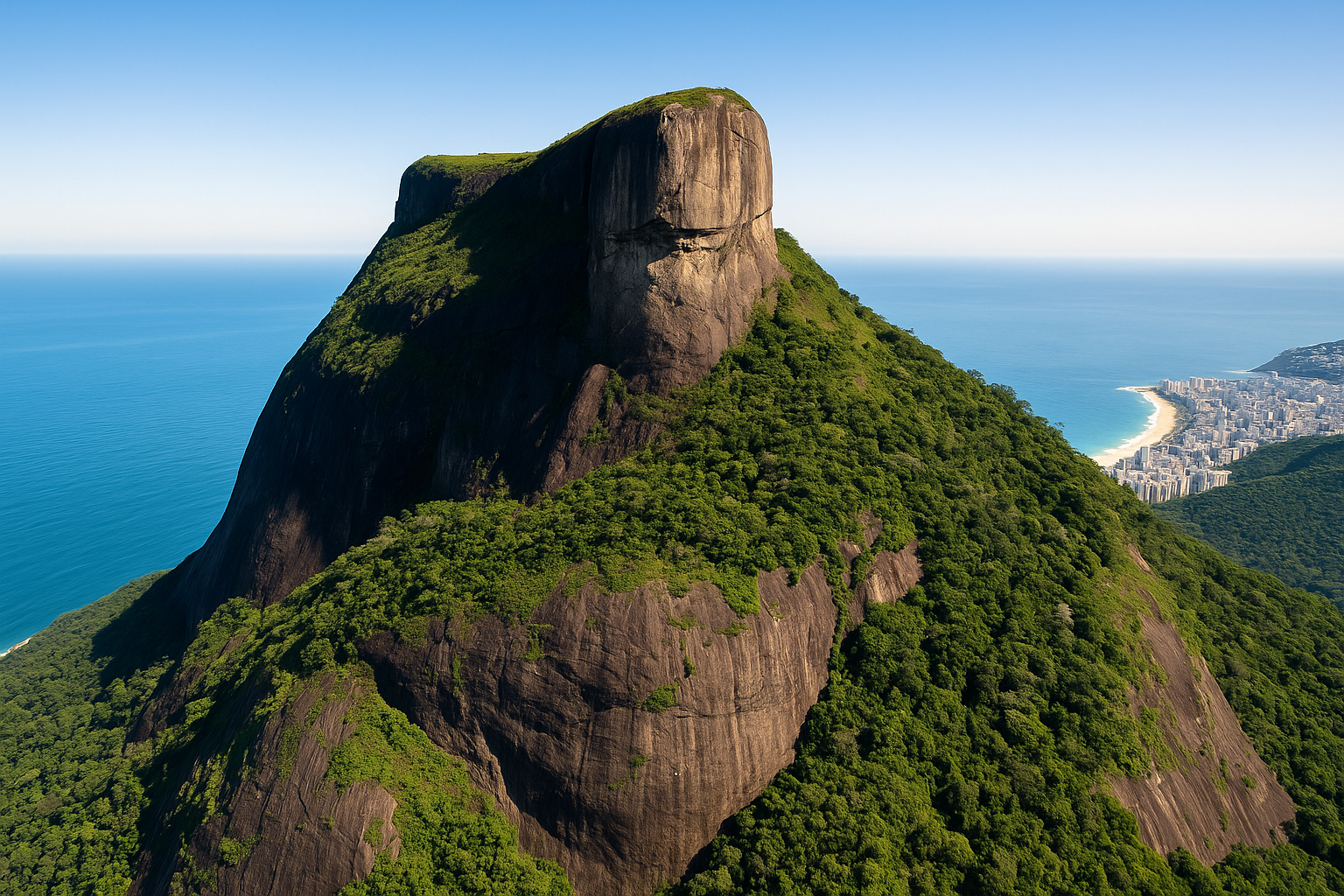
Pedra da Gávea is one of the most emblematic rock formations in Rio de Janeiro, not only for its size and privileged location but for a phenomenon that still intrigues geologists, meteorologists, and the curious: depending on the point of observation and the weather conditions, this mountain “disappears” from human sight. More than a geographic accident, it is a jewel of Brazilian geography that hides layers of science, history, and even unproven theories.
What Is Pedra da Gávea?


Located between the neighborhoods of São Conrado and Barra da Tijuca in Rio de Janeiro, Pedra da Gávea rises 842 meters high and is part of the Tijuca National Park, managed by the Chico Mendes Institute for Biodiversity Conservation (ICMBio). Formed by a massive block of gneiss — an ancient metamorphic rock — the mountain rises abruptly from sea level, contributing to its imposing and unmistakable appearance.
Pedra da Gávea is the largest coastal monolith in the world and can be seen from various parts of the city. However, there are moments when it simply seems to be missing from the horizon.
-
Danger of Technological Hyperstimulation: USP specialists warn that intense use of multiple screens and digital stimuli can gradually reduce essential cognitive abilities, while scientists analyze how technological overload affects memory, concentration, and intellectual performance over the years.

-
After three years living in a van, a couple bought an abandoned historic house and had to deal with mold, damaged plumbing, raccoons, and heavy cleaning before moving in.
-
In the city that the market called “road cockroach,” between Balneário Camboriú and Florianópolis, he launched a planned neighborhood worth R$ 1 billion with a marina for 90 boats and sold 80% of the lots in the first phase in 1 week.

-
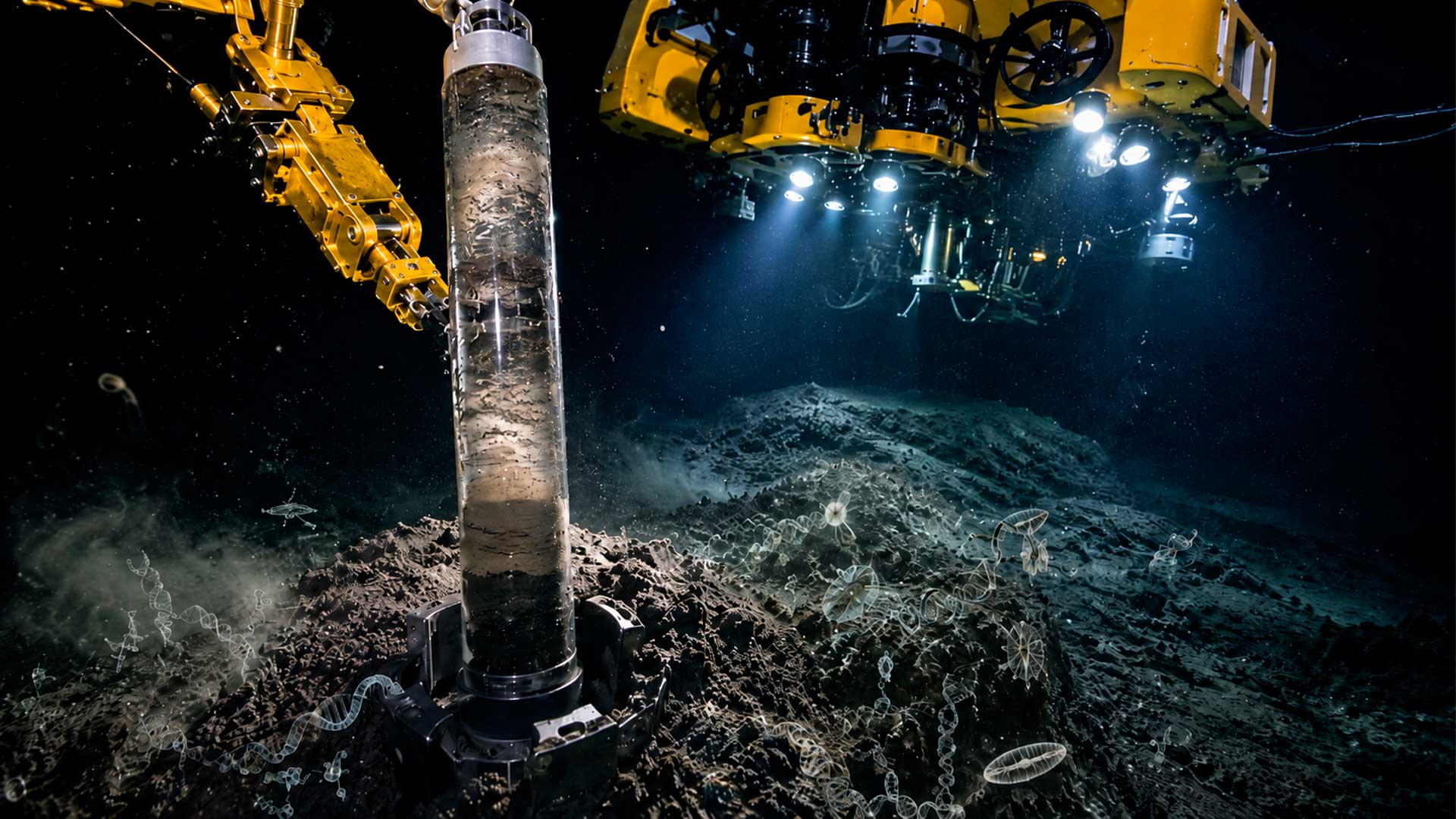
At a depth of 5,000 meters, where there is no sunlight, researchers found ancient DNA preserved in the mud of the South Atlantic and discovered signs of organisms that did not match known records.




The Mountain That Disappears: The Optical Phenomenon
What makes this mysterious mountain of Brazil so intriguing is the visual effect that causes it to disappear depending on the viewpoint, sunlight incidence, cloudiness, or humidity. Residents of the southern zone of Rio de Janeiro report that on certain days, the mountain simply “vanishes” from the horizon.
According to the National Institute of Meteorology (INMET), this visual disappearance occurs due to meteorological phenomena such as:
- Marine Mist: dense vapor rising from the ocean, partially covering the coastal mountains.
- Atmospheric Refraction: distortions caused by the curvature of light passing through layers of air with different densities.
- Light and Shadow Contrast: at dawn or dusk, the incidence of grazing light can hide the outlines of the rock.
According to the Federal University of Rio de Janeiro (UFRJ), these effects are common in tropical coastal regions, but the uniqueness of Pedra da Gávea — isolated and vertical — accentuates this illusion.
Pedra da Gávea is considered one of the greatest icons of Brazilian geography and plays a central role in the landscape and environmental configuration of Rio de Janeiro. It delineates important ecosystems of the Atlantic Forest and has rich biodiversity, being home to endemic species of fauna and flora, many of which are threatened with extinction.
The State Institute of the Environment (INEA-RJ) and ICMBio classify the area as a priority for conservation. The trail to the top of the mountain, considered highly difficult, is monitored to prevent degradation and ensure the safety of tourists and trekking enthusiasts.
Pedra da Gávea and the Sculpted Face: Myth or Coincidence on the Mountain That Disappears?
Another element that transforms Pedra da Gávea into a mysterious mountain is the rock formation that many believe resembles the face of a giant or an ancient king. The most widespread theory is that the contour of the face was sculpted by ancient civilizations — including the Phoenicians.
The Phoenician Theory and Archaeological Investigations
Independent researchers, such as engineer Bernardo Azevedo da Silva Ramos, argued throughout the 20th century that inscriptions and carved shapes in the rock would be evidence of a Phoenician passage through Brazilian lands long before the arrival of the Portuguese.
However, archaeologists from the University of São Paulo (USP) and the Institute of Historical and Artistic Heritage (IPHAN) refute these claims, arguing that the so-called “inscriptions” and shapes are the result of natural erosion and the typical fissuring of gneiss over millions of years.
Geology of Pedra da Gávea: What Does Science Say?
Formed about 600 million years ago, Pedra da Gávea is composed of facoidal gneiss and migmatite, both resulting from deep geological processes under high pressure and temperature. Its formation dates back to the Precambrian era, a period before the emergence of complex life in Brazilian geography.
Geological Processes Explain Its Shape
According to the Geological Service of Brazil (CPRM), the peculiar shape of Pedra da Gávea is the result of:
- Differential erosion between layers with varying hardness;
- Natural fissures amplified by the action of rain and wind;
- Physical and chemical weathering over millennia.
There are no technical indications of large-scale human intervention that would justify the shapes resembling a face, reinforcing the naturalistic explanation in Brazilian geography.
A Sacred Mountain for Indigenous Peoples
Before the arrival of Europeans, Pedra da Gávea was already known and revered by indigenous peoples, such as the Tupinambás. For them, the mountain was the dwelling of entities and a place of spiritual power.
Historical accounts, such as those recorded by travelers in the 16th century, indicate that the indigenous people avoided climbing the mountain, fearing the spirits that would inhabit it. Oral tradition associated Pedra da Gávea with sacred rites of passage and the observation of the stars.
Tourism, Mystery, and Risk
Despite the mystery and beauty, the trail to the top of Pedra da Gávea is one of the most dangerous in Brazil. With sections that require climbing steep cliffs, the route poses serious risks for those lacking technical preparation.
The Fire Department of the State of Rio de Janeiro conducts rescues frequently, especially on weekends and holidays. In 2023, more than 70 incidents were reported due to falls, dehydration, or disorientation of hikers.
Conscious Tourism
Environmental authorities emphasize the importance of sustainable tourism and recommend:
- Use of specialized guides;
- Proper equipment;
- Visiting only in favorable weather conditions.
In addition to the spectacular view of the city and the ocean, many hikers ascend in search of answers to the enigma of the “mountain that disappears.”
Why Does Pedra da Gávea Fascinate So Much?
The combination of imposing shape, strategic location, ancient legends, optical phenomena, and geological complexity makes Pedra da Gávea a point of intersection between science and mystery. It is a unique example of how Brazilian geography houses landscapes that not only enchant but also challenge human understanding.
It is natural for mountains and rock formations to inspire myths and interpretations — and Pedra da Gávea may be the most powerful symbol of this phenomenon in Brazil.
Even after decades of studies, Pedra da Gávea continues to surprise. Science explains its composition, shape, and even its apparent disappearance as a result of natural optical illusions. But the fascination surrounding it goes beyond geology: it is also cultural, historical, and symbolic.
While scholars seek technical answers, the public continues to see, or fail to see, the most mysterious mountain in Brazil — a true masterpiece of nature.
Official Sources Consulted:
- National Institute of Meteorology (INMET)
- Chico Mendes Institute for Biodiversity Conservation (ICMBio)
- State Institute of the Environment of Rio de Janeiro (INEA-RJ)
- Geological Service of Brazil (CPRM)
- Federal University of Rio de Janeiro (UFRJ)
- Institute of Historical and Artistic Heritage (IPHAN)
- University of São Paulo (USP)







Ao lado da importância da Pedra da Gávea, temos o Monte Roraima! Além de ser tríplice fronteira, o bioma é peculiar, a composição da massa rochosa de níveis de quartzo, todas as características geomorfologicas únicas e a cultura dos povos tradicionais num sistema riquíssimo de atributos sobrenaturais para explicar o natural, é o que faz nosso Brasil ser o país mais rico e sortudo da Terra!
Não fosse os Funcionários Publicos seus sindicatos, os politicos, os Juízes e a prag@ do STF, né?
Boa noite a todos, aqui na região dos lagos temos uma montanha que em certo ponto da rodovia Amaral Peixoto em unamar é visto uma grande montanha, e ao chegar mais perto ela se distancia ficando pequena e distante. Gostaria de saber o por que dessa distorção de ótica?