






 Portuguese
  Spanish
  4 min of reading
  0 comments


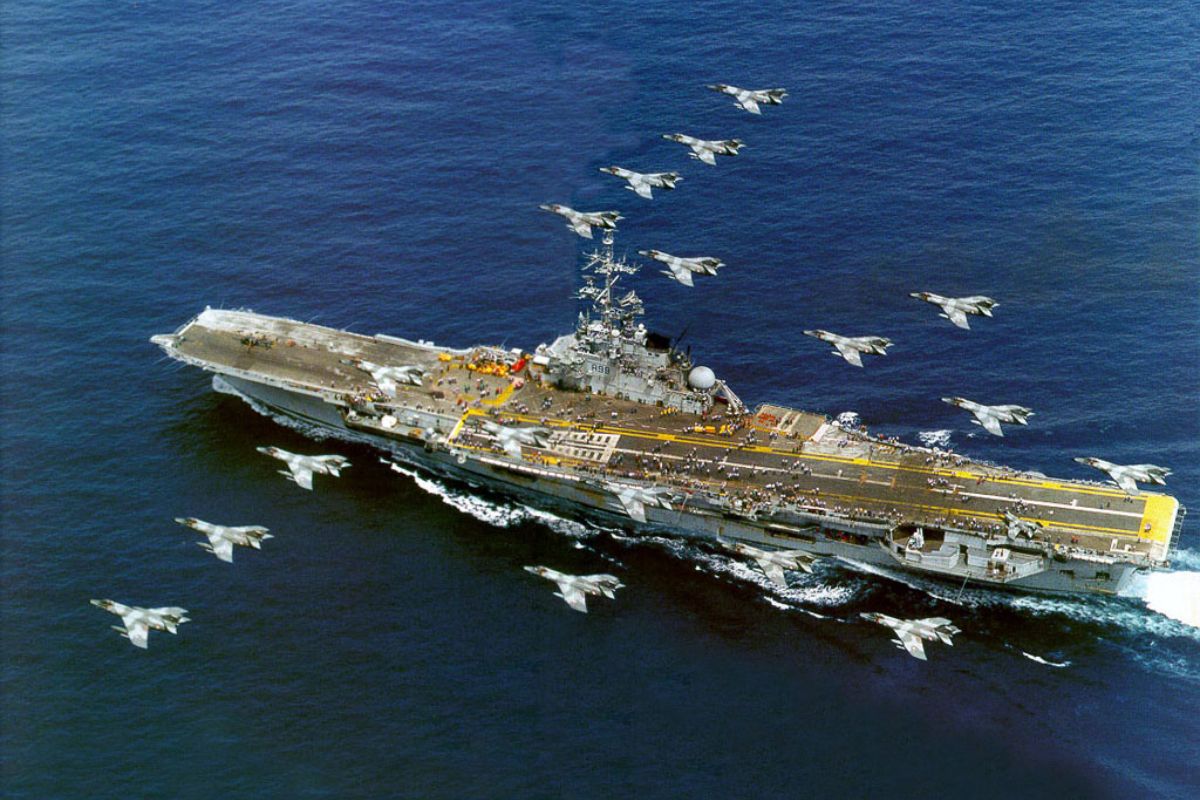
An Analysis of the Controversial Purchase of the Aircraft Carrier São Paulo, Its Career of Failures and the Sinking That Generated an Environmental Crisis and a Million-Dollar Loss.
The story of the Aircraft Carrier (NAe) São Paulo in the Brazilian Navy is an epic of ambition, controversies, and frustrations. The aircraft carrier acquired to be the new flagship of the Navy was marked by operational issues that culminated in a tragic and controversial end at the bottom of the Atlantic Ocean.
Discover the journey of the aircraft carrier São Paulo. We will analyze the decision to purchase it, its troubled operational life, the saga of its disposal, and the serious environmental, financial, and strategic consequences its legacy left for Brazil.
The Purchase of the “French Hulk”: The US$ 12 Million Bet of the Brazilian Navy
Before becoming the aircraft carrier São Paulo, the ship was the FS Foch of the French Navy, commissioned in 1963. After 37 years of service, it was acquired by Brazil in November 2000 for the amount of US$ 12 million. The purchase aimed to replace the obsolete NAeL Minas Gerais.
-
North Korean Fiasco: Launch of the Largest Warship Ends in Sinking

-
While giant ships still burn heavy fuel and the maritime sector races against climate targets, Maersk and Vale are starting to bet on ethanol as a new route to reduce emissions at sea.

-
China begins construction of the world’s largest LNG ship, a 344-meter giant capable of supplying 4.7 million homes for a month, carrying 271,000 m³ of gas, and placing QatarEnergy in the largest naval order ever recorded in world history.
-
China is designing a container ship with a thorium nuclear reactor that will operate for 40 years without refueling, and the 25,000-container giant from Jiangnan Shipyard will cross oceans without emitting carbon in an industry that burns 300 million tons of fuel per year.



The arrival of the São Paulo represented a qualitative leap. It was larger, faster, and more suitable to operate the A-4 Skyhawk jets of the Navy. The expectation was that, after modernization, it could operate until 2039. However, the low purchase price could already have been a sign of the high future maintenance costs of such an old vessel.
A Career of Failures: Accidents, Inactivity, and the Modernization That Never Happened
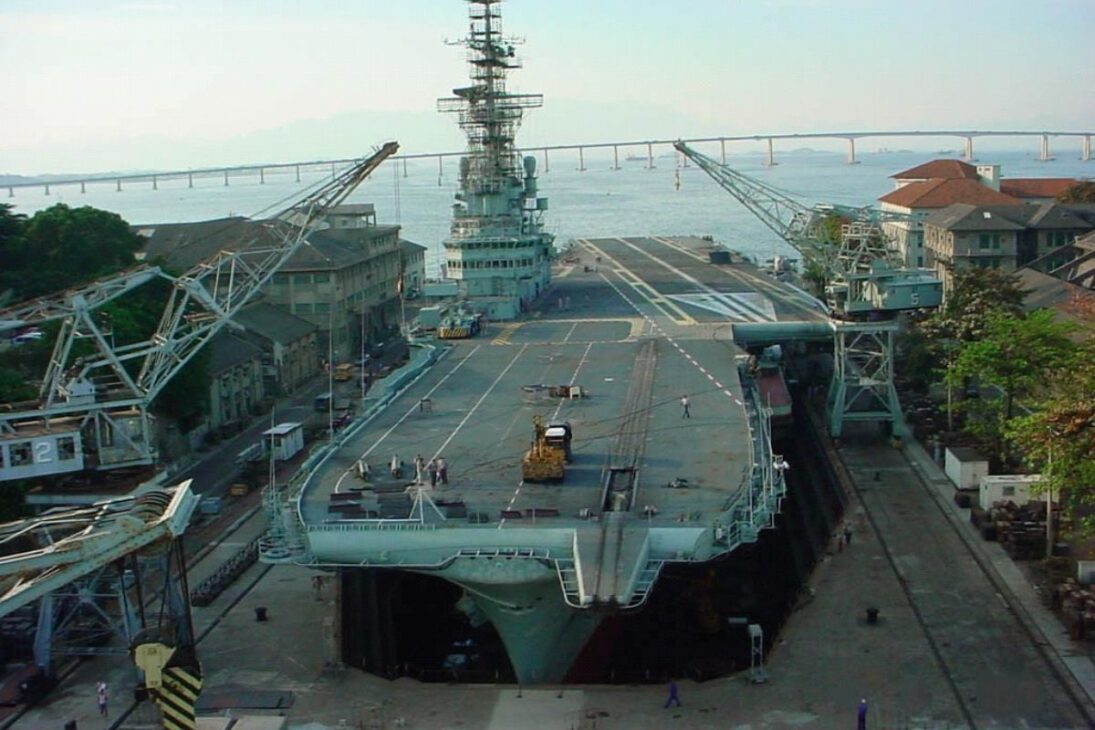
The operational history of the aircraft carrier São Paulo in the Brazilian Navy was disappointing. In 17 years of service, the ship spent only 206 days effectively at sea. It never managed to operate for more than three months without needing repairs.
In May 2005, a serious accident on board, an explosion in a steam pipe, killed three sailors and injured others. The incident was a severe blow to the ship’s operational capability. In 2014, the Navy announced an ambitious modernization plan of over R$ 1 billion to extend its lifespan. However, in 2017, the plan was abandoned due to exorbitant costs and technical uncertainties, and the deactivation of the ship was decided.
The Last and Tragic Voyage: International Rejection and Limbo at Sea
After being decommissioned, the hull of the aircraft carrier São Paulo was auctioned in 2021. It was purchased by the Turkish company Sök Denizcilik for around US$ 10.5 million to be dismantled in Turkey. In August 2022, the ship left Rio de Janeiro under tow.
However, the voyage was interrupted near Gibraltar. The Turkish government revoked the import authorization, citing concerns over the amount of asbestos and other toxic materials on board. The Brazilian inventory noted 9.6 tons of asbestos, but NGOs and the Turkish government suspected that the actual amount was much higher, similar to the more than 600 tons on its sister ship, Clemenceau. Forced to return, the aircraft carrier São Paulo was prohibited from docking in Brazilian ports and drifted for months off the coast of Pernambuco.
Environmental Crime or Necessary Evil? The Debate Over Sinking
Facing the threat of the hull being abandoned by the Turkish company and an “inevitable sinking,” the Brazilian Navy took control of the ship in January 2023. The final decision was to carry out a “planned and controlled sinking.” The operation took place on February 3, 2023, 350 km off the coast, in an area with 5,000 meters of depth.
The Navy justified that this was the only alternative to prevent a greater environmental and logistical disaster. However, IBAMA experts and international NGOs like Greenpeace and Sea Shepherd condemned the act. They classified the ship as a “toxic package of 30 thousand tons” and the sinking as a violation of three international environmental protection treaties: the Basel, London, and Stockholm Conventions. The ship took to the seabed tons of asbestos, PCBs, lead, mercury, and other pollutants.
The Legacy of the Aircraft Carrier São Paulo: Financial Losses and Lessons for National Defense


The aircraft carrier São Paulo proved to be a significant financial loss. In addition to the acquisition and maintenance costs, the final saga generated more expenses, leading the Attorney General’s Office (AGU) to file a lawsuit seeking R$ 322 million from the companies involved in the towing.
Strategically, the frustrating experience raised questions about Brazil’s capacity to operate large aircraft carriers. The Navy’s priorities were realigned towards submarine programs and the construction of the new Tamandaré Class Corvettes. The story of the “French Hulk” serves as a harsh lesson about the risks of acquiring used defense material and the importance of planning the complete life cycle of an asset, including its safe and responsible disposal.








-

1 person reacted to this.