






 Portuguese
  Spanish
  3 min of reading
  0 comments


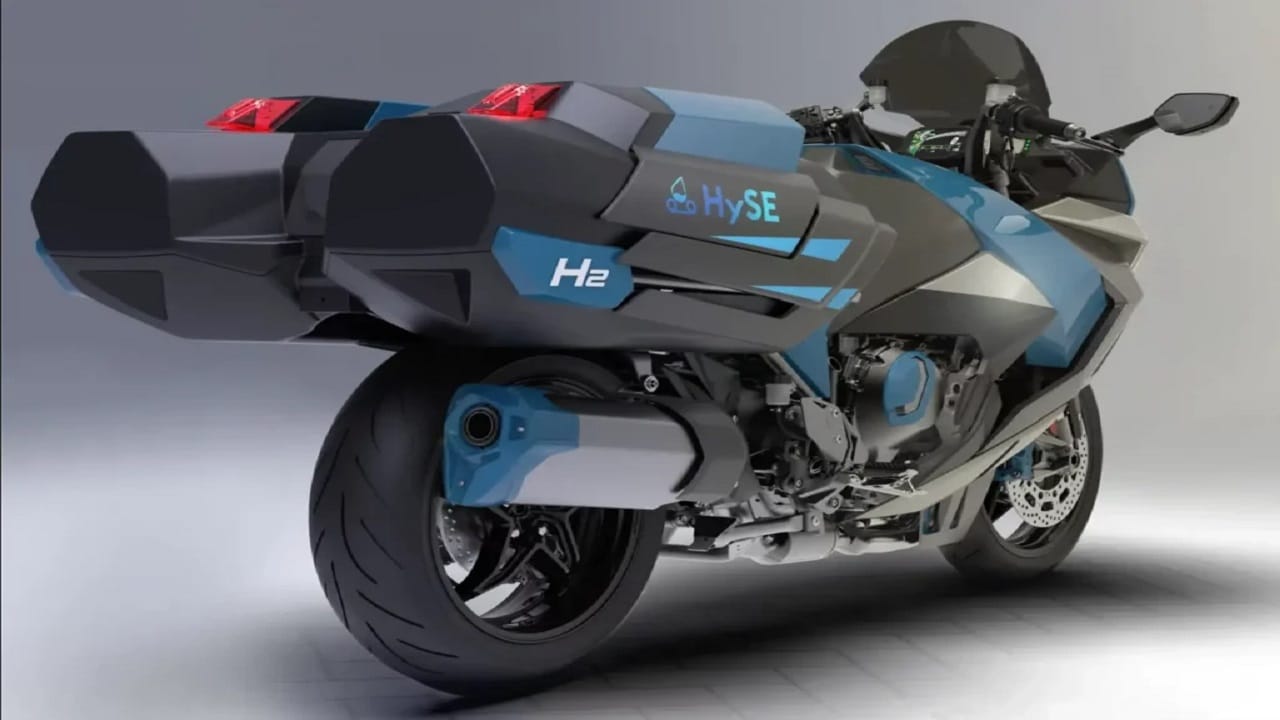
The Hydrogen-Powered Kawasaki Ninja, With Its Futuristic Design and Advanced Technologies, Is Set to Enter Testing Phase in 2024, Promising to Revolutionize the Motorcycle Industry.
Kawasaki is striving to transform the motorcycle market with an approach focused on decarbonization. The latest innovation from the Japanese brand is the Kawasaki Ninja H2 SX, a hydrogen-powered sports motorcycle that stands out for its zero emissions. This new type of hydrogen motorcycle promises to be a landmark in the future of mobility, offering several advantages compared to electric models.
Testing of the Hydrogen-Powered Kawasaki Ninja Will Begin in 2024


Among the advantages of this hydrogen-powered motorcycle compared to a regular electric motorcycle is its ability to travel longer distances without having to stop to recharge the batteries, as well as refueling much more quickly.
Although there are still few stations, Japan has one of the largest concentrations of hydrogen fueling stations in the world. The prototype of the hydrogen-powered motorcycle, called the Ninja H2 HySE, is expected to begin its testing phase in 2024, marking a significant step in the manufacturer’s futuristic vision.
-
Chinese Giant Uses Metal Structures and Cranes to Deliver Over 700 Electric Cars to Brazil

-
Uber Faces Shareholder Scrutiny as Board Accused of Ignoring Safety, Compliance, and Harassment Warnings Amid Over 3,500 U.S. Lawsuits

-
Ferrari’s First Electric Car Divides Fans, Priced at $630,000, Amid Concerns Over Limited Editions; Brand Clarifies It’s Not Just for Future Perks
-
BYD Dolphin Mini: The Electric Car That Defies Depreciation, Losing Only 3.58% in a Year and Becoming the Best-Selling Retail Model Under $22,000


Based on the acclaimed Kawasaki Ninja H2 structure, the model catches attention not only for its technology but also for its appearance. The hydrogen-powered Kawasaki Ninja features two gigantic fuel compartments at the rear, which even resemble a type of trunk.
According to Hiroshi Ito, president of Kawasaki Motors, testing will begin in 2024, although the technical details of the hydrogen-powered motorcycle have not been disclosed. The model is only expected to reach the vehicle market by the early next decade, in 2030.
Challenges to Be Faced by Kawasaki
The acronym HySe, visible on the sides of the hydrogen-powered motorcycle, represents Hydrogen Small Mobility & Engine Technology, a partnership between Japanese giants Kawasaki, Honda, Yamaha, and Suzuki in the development of hydrogen engines for small vehicles.
Beyond the motorcycle segment, the Japanese brand announced an ambitious global plan to implement this technology in various sectors, including airplanes. The Kawasaki Ninja represents a milestone in the pursuit of sustainable mobility methods, powered by a H2 Supercharged engine, a four-cylinder inline engine with a centrifugal supercharger.
The challenge now lies in adapting the engine to use hydrogen, requiring a specific injection system for the fuel, which has a lower combustion point than gasoline. Despite the challenges related to hydrogen storage, the Japanese brand highlights the environmental benefit of the technology, evidenced by the emission of polluting gases.
The hydrogen motorcycle promises to be a revolution in the automotive landscape, releasing only water vapor and a minimal amount of NOx through the exhaust.
Advantages of Using Hydrogen as Fuel
Hydrogen is a perfectly clean fuel, as the only waste it produces is water vapor. In its free state, it consists of two atoms that, when combined with oxygen during use, generate water.
These conditions, according to scientists, are sufficient to address the environmental emergency, something that can no longer be postponed. The gasoline engine uses only between 20% and 25% of the introduced energy and, consequently, 75% to 80% of the fuel is lost, generating heat.
In the hydrogen engine, the fuel is not immediately and directly exploited within a car engine, as it must be converted into electrical energy to power the engine. This process consumes 50% of the energy, thus reducing that 80% by half, resulting in the amount of energy used being 40%, which is double that of a gasoline engine.
With studies and experiments already underway, the expectation is that this percentage can be significantly increased, while gasoline or diesel engines can no longer be optimized.


Be the first to react!