Portuguese
  Spanish


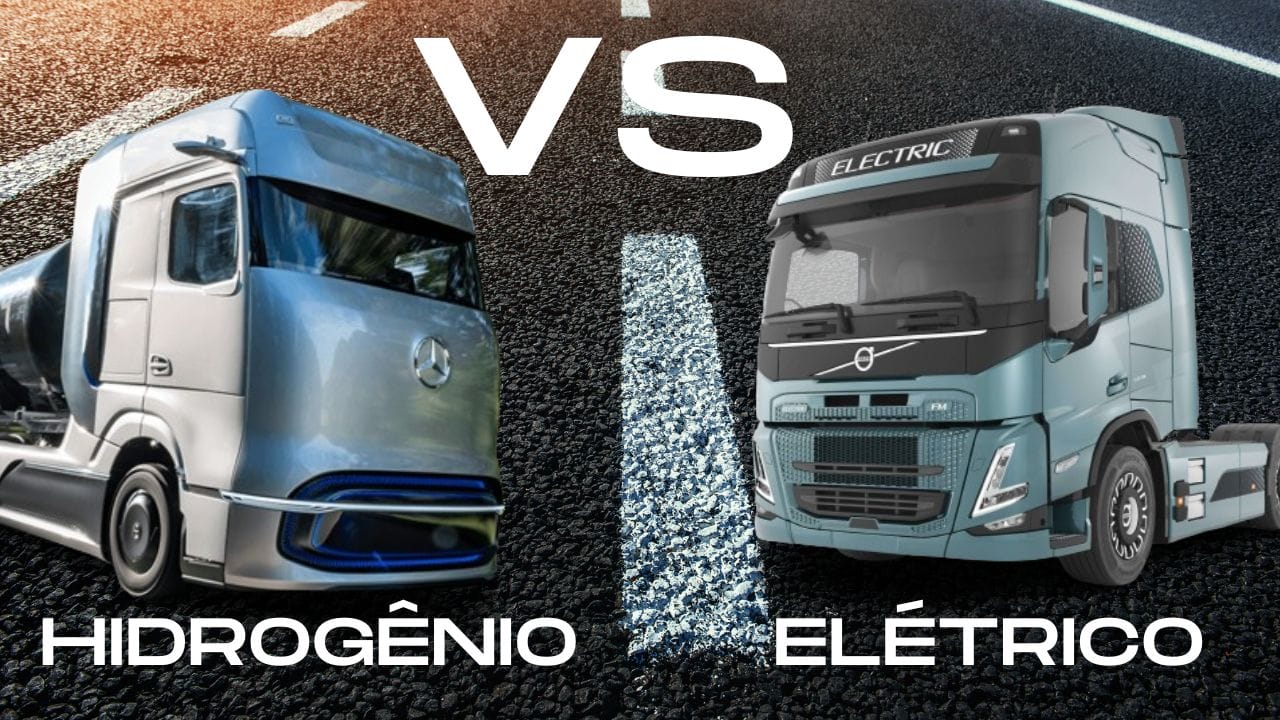


The Search For Sustainable Solutions In The Transportation Sector Has Led To A Growing Focus On Hydrogen As An Alternative For Trucks. A Recent Study Presented By DW Planet A Highlights How Hydrogen Is Positioning Itself At The Forefront Of Innovation For Zero-Emission Trucks.
Currently, trucks and buses represent a large fraction of vehicles on Brazil’s roads, and are responsible for a significant part of transportation emissions. This is due to the fact that more freight needs to be moved, increasing the demand for more sustainable transportation solutions, such as hydrogen or 100% electric vehicles.
Solutions In Sight: Electric Engines Powered By Batteries And Hydrogen
The solution to reducing these emissions lies in the adoption of electric engines, which can be powered by batteries or hydrogen. Trucks face unique challenges, such as the need to travel long distances and carry heavy loads, which makes hydrogen a promising option.
Hydrogen offers several advantages for heavy transport, as hydrogen fuel cells act like batteries that use hydrogen and oxygen, producing enough electricity to power a truck, with heat and water as the only byproducts. Furthermore, hydrogen-powered trucks can be refueled quickly, similar to diesel trucks, providing a practical solution for long-distance transport.
-
Hilux’s little sister: Toyota relaunches the Land Cruiser 70 in the 2027 lineup with over 40 years of production, a 2.8 turbo diesel engine with 201 hp and 51 kgfm, a six-speed automatic transmission, and a renewed retro look.

-
Automatic, economical, and known for reliability: with a 1.5 engine of up to 110 hp, CVT transmission, seven airbags, and fuel consumption of up to 15.9 km/l, this used hatchback appears as a rational alternative to Polo, HB20, and Onix; meet the Toyota Yaris XLS 2020.
-
He surpassed the Tera, Creta, and Tracker: With a TSI engine of up to 150 hp, 6-speed automatic transmission, and a 373-liter trunk, the Volkswagen T-Cross was the best-selling SUV in June, with 11,753 registrations.

-
It looks factory-made, but it came out of a workshop: a mechanic from Pernambuco builds a handcrafted “mini Toyota,” drives it through the streets, and the video goes viral on social media, leaving residents astonished.



Challenges And Progress In Batteries
Although batteries were initially seen as costly and heavy for trucks, recent advancements have improved their energy density and reduced costs. Megawatt charging systems are being developed to reduce charging time to just 15 minutes, making battery electric trucks an increasingly viable option. Trucks take much longer to charge than a regular car, you can learn more about charging times and innovations in charging stations at Canary Media.
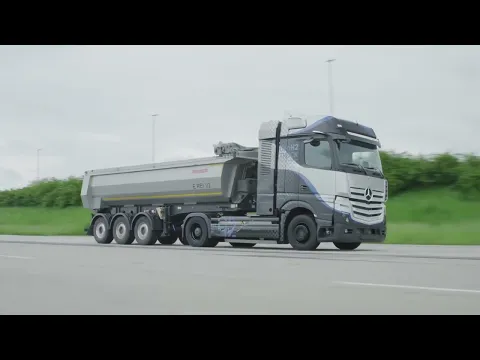
Battery-powered trucks are more efficient than hydrogen trucks. While green hydrogen requires the transformation of electricity into hydrogen and then back into electricity, resulting in a loss of about 60% of energy, battery electric trucks have only about 20% energy loss. Despite this, several automakers are investing in green hydrogen, such as Mercedes-Benz, see below.

Total Cost Of Ownership
Considering the total cost of ownership, battery-powered trucks are more economical and may become cheaper than diesel trucks before 2030. This is due to large-scale investment in electric vehicles, which is reducing the cost of batteries.
Infrastructure needs to expand significantly for both types of technology. Hydrogen fueling stations are scarce, and high-power charging infrastructure for trucks is almost non-existent. Moreover, the price of hydrogen fuel is a challenge, with the need for large-scale commercialization to reduce costs.
Although battery electric trucks are ahead in the race for more sustainable transport, hydrogen offers a complementary solution, particularly for extremely heavy loads and long journeys. Both technologies are contributing to the common goal of decarbonizing the transportation sector and achieving global climate targets.