Portuguese
  Spanish


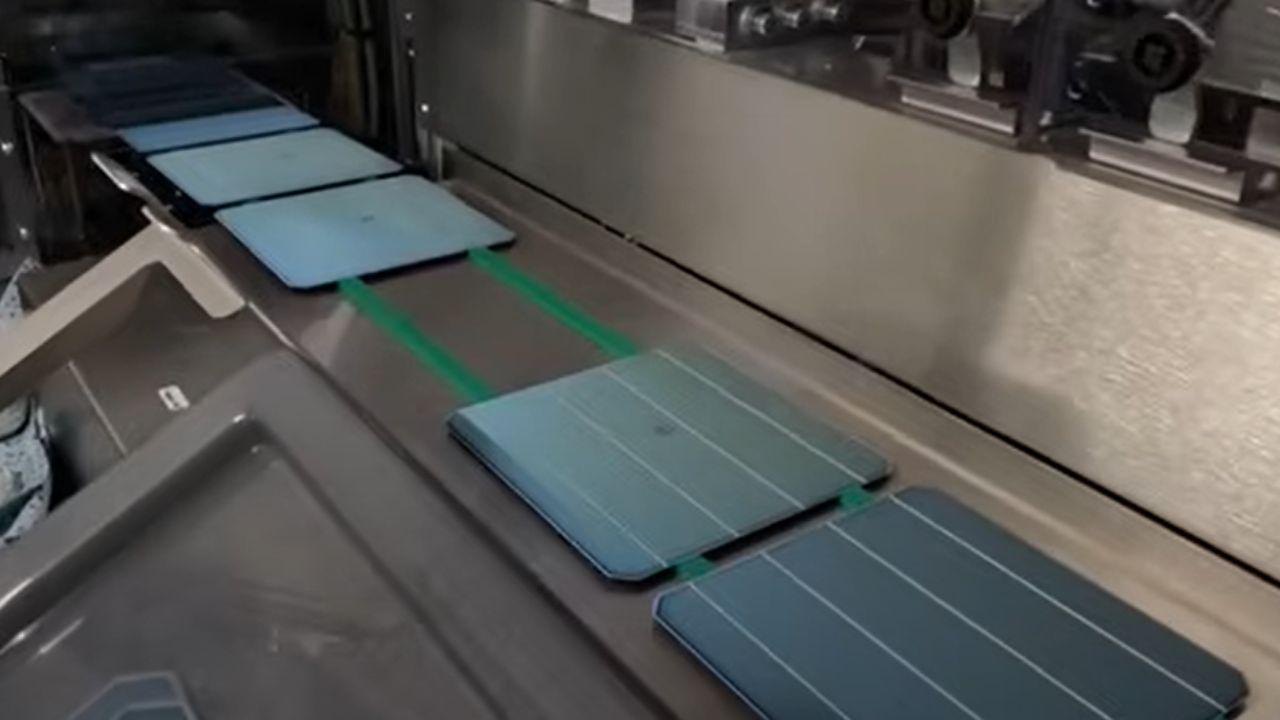

The Current Silicon Solar Panels Are Close to Their Efficiency Limit. A New Technology, Called Tandem Cell, Promises to Revolutionize the Energy Sector by Overcoming This Barrier.
The solar panels we use today are approaching their maximum generating capacity. However, a new technology called tandem solar cell is emerging and could change everything. By combining different materials, it promises a leap in efficiency and is already starting to leave the labs for the market.
What Are Tandem Solar Cells?
The tandem technology promises to revolutionize the solar sector. The word “tandem” basically means one thing behind another. In the case of solar cells, there are two or more layers of semiconductor materials working together.
Currently, the most promising tandem cells combine silicon with a layer of perovskite applied on top. By putting these two materials together, it is possible to better utilize sunlight. This significantly increases the efficiency of each cell. In other words, in the same rooftop space, a module with tandem cells can generate more energy than a traditional module.
-
Giant Batteries Take Center Stage in Chile Auction as Company Offers 960 GWh of Solar Energy for Nighttime Use, Aiming to Stabilize Solar Power Supply

-
World’s Largest Engie Solar Plant in Brazil Highlights Billion-Dollar Energy Waste Issue: Company Considers Batteries and Bitcoin Mining to Avoid Wasting Production

-
Over 60 Tractors Take to the Streets in Lopera as Solar Parks Compete with Olive Groves, Affecting 13,000 to 100,000 Trees According to Conflicting Reports
-
Brazil’s Vitória Airport to Launch Solar Plant Covering Area of 10 Soccer Fields, Boosting Clean Energy and Cutting Costs



The Efficiency of the New Solar Panels
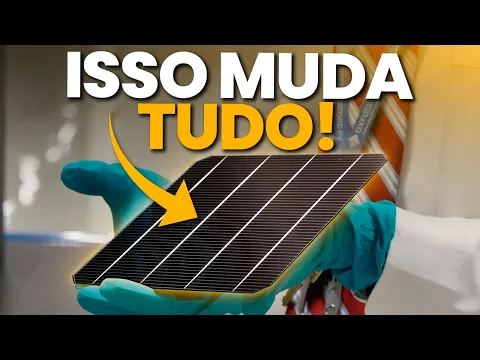

Solar cells made solely of silicon have a theoretical efficiency limit of 33.7%. In practice, current modules with this technology already achieve an efficiency between 20% and 23%. In other words, we are approaching the maximum that can be extracted from silicon with current technology.
It is important to remember that there is a difference between the efficiency of the cell alone and that of the complete module. There are some losses, such as reflections on glass and electrical losses in connections. In the case of the tandem cell, studies show that the theoretical limit can reach 43% efficiency, a value well above that of silicon cells. In practice, this could mean much more efficient modules, taking solar energy to a new level.
Advances and Records in the Industry
This new generation of cells is already leaving the laboratories. Longi, one of the largest solar technology manufacturers, set a world record of 34.85% efficiency with a tandem cell made of crystalline silicon and perovskite. This number already exceeds the theoretical limit of conventional cells.
Innovations do not stop there. Trina Solar unveiled the first tandem solar module with a power exceeding 800 W. Oxford PV also announced, at the end of 2024, the beginning of the commercialization of solar panels with tandem cells, which deliver 24.5% efficiency, a performance well above traditional panels. Oxford PV’s factory in Germany proves that industrial production is already a reality.
Challenges for the Popularization of Tandem Solar Panels
Despite the advancements in solar panels, there are challenges to overcome. The main one lies in the scale of production. Unlike silicon modules, which have giant factories, tandem modules still rely on a supply chain under construction. This keeps costs higher.
In addition, the solar market is very competitive and price-sensitive. Even with the extra efficiency, these new modules need to prove their economic viability, especially in the residential segment, where the final cost is decisive.
When Will the Technology Dominate the Market?
The good news is that all of this seems poised to change. With industry giants investing in the technology, the expectation is that production will scale up in the coming years. Consequently, costs should start to fall, as happened with silicon in the past. The question now is no longer if this technology will dominate the market, but when it will happen.