Portuguese
  Spanish


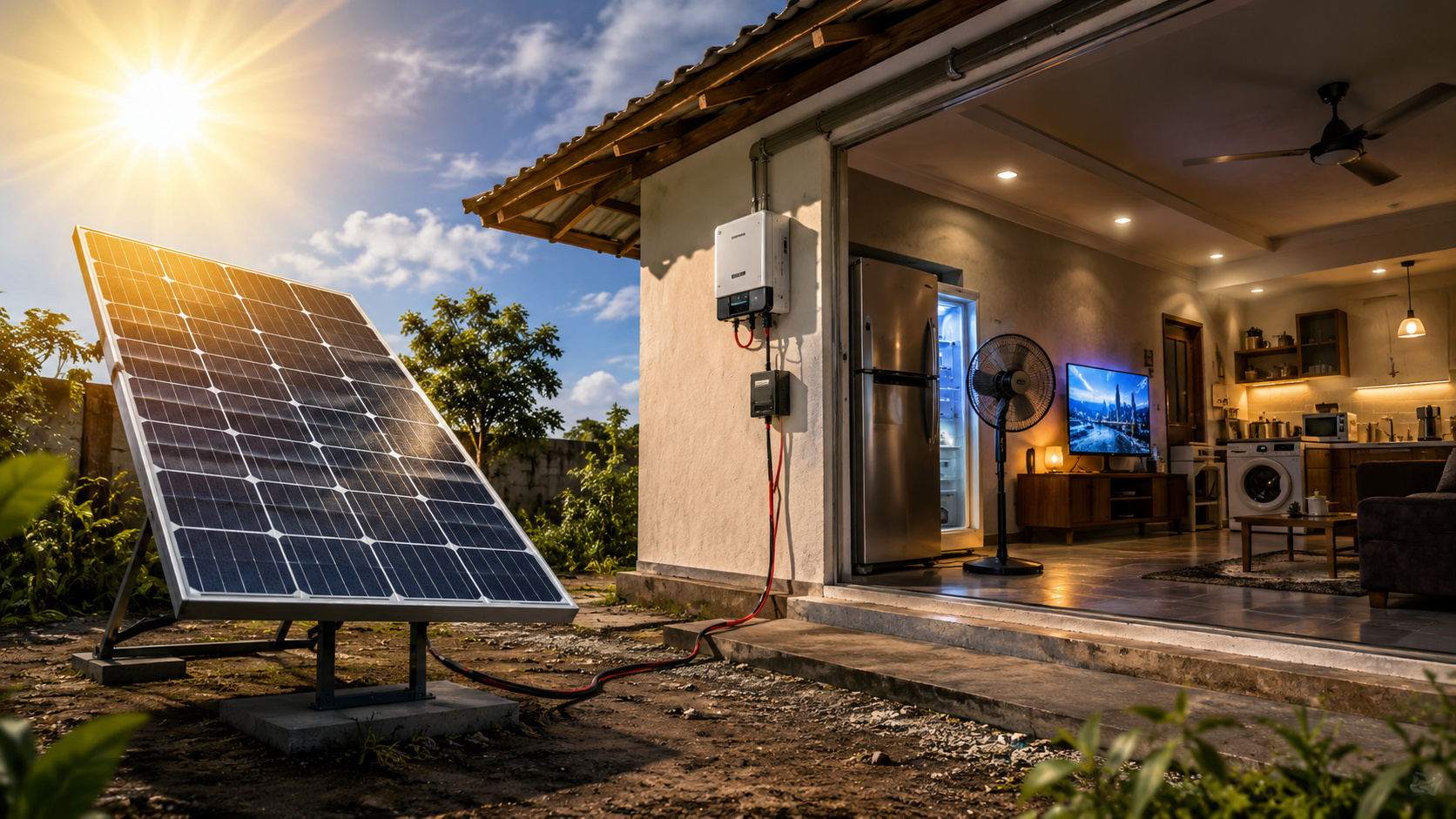


560W solar panel tested to find out how much it can power a house and which appliances it truly supports.
In recent years, solar panels have become larger, more powerful, and more affordable. Among the models that attract the most attention are the 560W modules, equipment capable of generating enough energy for residential, rural, and even small off-grid systems. But a question has increasingly appeared on social media: can a single 560W panel power an entire house?
To answer this, practical tests and information from Portal Solar began comparing the real energy generation of these modules with the daily consumption of household appliances. The result is surprising because a single modern panel produces much more energy than many people imagine, but it still runs into significant limitations when demand increases.
Next, see how much a 560W solar panel actually generates per day, which appliances it can power, and why the test shows both the progress and limitations of residential solar energy.
-
Solar energy reaches 55 GW, becoming the second largest power source in Brazil’s energy mix

-
Solar energy can increase property value by up to 10% and become a selling point.
-
Solar and wind energy surpass natural gas for the first time in the world and accelerate energy revolution

-
Africa has about 500,000 cell towers and most still burn diesel to operate, while companies rush to cover antennas with solar energy and avoid signal blackouts.
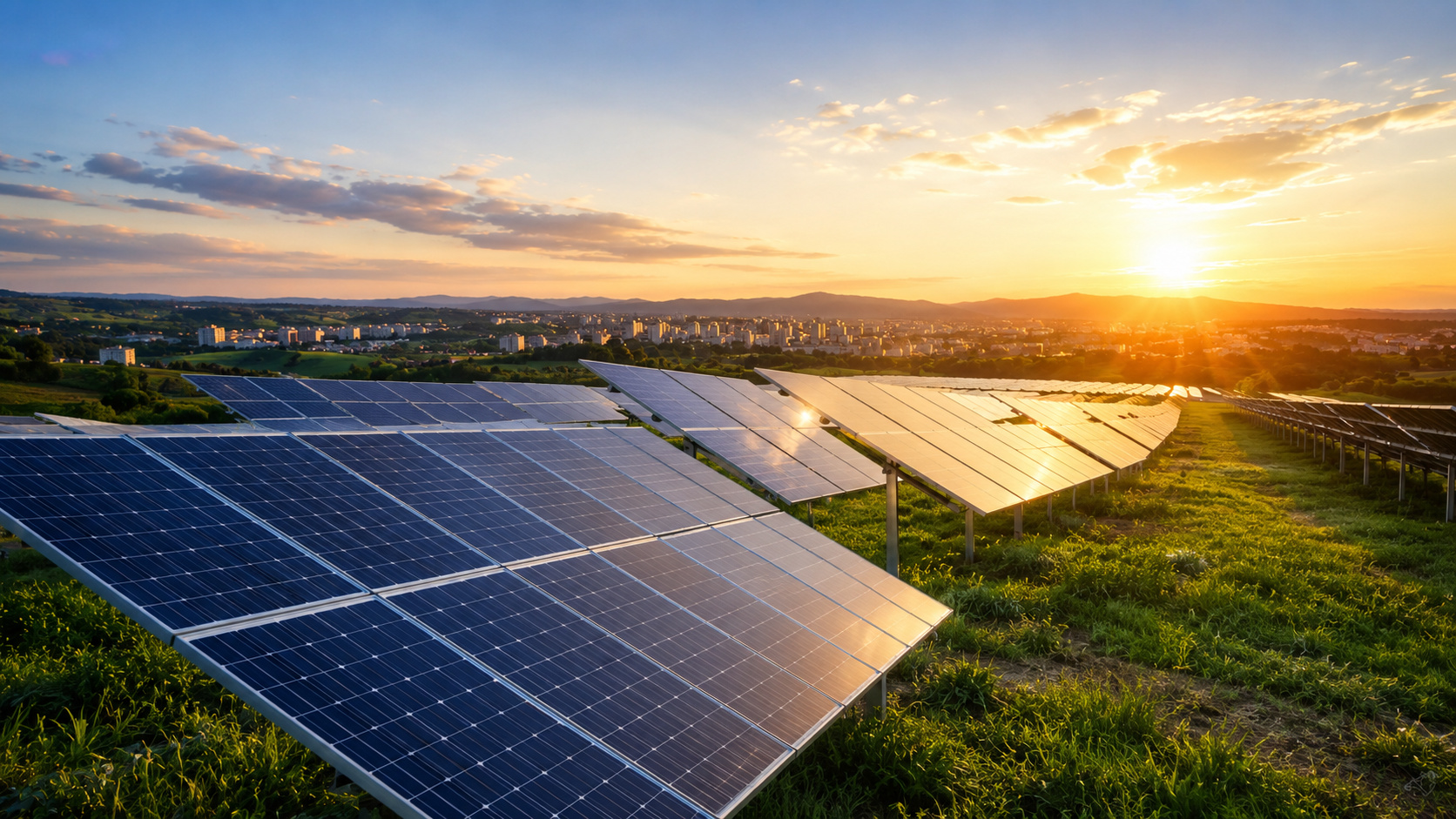



560W solar panel is among the most powerful residential modules sold today
560W modules belong to the high-power photovoltaic panel category. Brands like Canadian Solar and Resun market Half-Cell monocrystalline models in this range, with efficiency above 21% and voltages close to 42V.


These panels were developed to generate more energy using less roof area, which is important in homes with limited space.
How much a 560W solar panel actually generates per day in Brazil
The 560W power represents the panel’s maximum generation under ideal laboratory conditions. In practice, daily generation depends on the region’s solar incidence, temperature, tilt, and system losses.
In much of Brazil, a 560W panel can produce between 2.2 kWh and 3.5 kWh per day, depending on local conditions and the number of full sun hours.
The test showed that a common refrigerator already consumes a significant portion of the energy produced by a single panel.
According to Portal Solar, a duplex refrigerator can consume about 48.24 kWh per month, equivalent to approximately 1.6 kWh per day. This means that, depending on the region, a single 560W panel can practically power a refrigerator during the day, but leaves little margin for many other appliances simultaneously.
TV, fan, and LED lighting enter the scene with relatively low consumption
Some household appliances consume much less than people imagine. A modern LED television typically consumes between 80W and 150W during use, while fans generally stay below 150W.
LED lamps are even more economical. In many cases, a 560W panel can power basic household lighting without major difficulties during solar generation periods.
Limitations begin to emerge with high-power equipment. Electric showers frequently exceed 5,000W. Microwaves, air fryers, and air conditioners also require high loads.
This means that a single 560W panel cannot independently power a complete house with all appliances connected as in a conventional grid-tied installation.
Off-grid system needs batteries to operate at night
Another important point of the test involves storage. The panel generates energy mainly during the day. At night, without batteries, there is no continuous supply in off-grid systems.
Therefore, off-grid systems require battery banks, charge controllers, and inverters to maintain operation outside of solar hours.

The panel does not directly power household appliances in most cases. The energy generated is direct current, while homes use alternating current. Therefore, an inverter is necessary.
This equipment converts the energy and allows its use in common outlets, but it also generates system losses.
Test shows that solar energy works better with planned consumption
The experiment reinforces an important characteristic of residential solar energy: it works much better when consumption is rationalized. Instead of trying to power everything at once, small systems work better by prioritizing essential loads.
Refrigerators, lighting, internet, and fans can be maintained more easily than high-consumption appliances.
Despite the limitations for an entire house, a single module can be extremely useful in smaller applications. Solar water pumps, rural lighting, internet, electric fences, and small off-grid systems can function relatively well with this power. In areas far from the electrical grid, this already represents a significant difference.
Efficiency of modern panels has grown significantly in recent years
The 560W models show how photovoltaic modules have evolved. Older panels frequently ranged between 250W and 330W. Today, models above 550W have become common in the residential and commercial markets.
In addition to higher power, technologies like Half-Cell and Multi-Busbar help reduce losses and improve energy generation.
The final result of the test shows an intermediate scenario. A 560W solar panel alone does not replace all the energy of a common residence, especially when there are high-consumption appliances.
On the other hand, it can significantly reduce dependence on the electrical grid in specific applications and power an important part of daily domestic routines.
Residential solar energy continues to advance with larger and more efficient modules
The advancement of solar modules is gradually reducing the number of panels needed to generate the same amount of energy. This makes smaller systems more viable and expands access to self-generation.
In regions with good solar incidence, a few modules can already produce considerable amounts of electricity throughout the month. The most interesting aspect of the experiment is precisely separating expectation from reality.
The idea of powering an entire house with just one panel seems exaggerated at first glance, but the test shows that the generation obtained is already sufficient for several practical applications. At the same time, it makes clear that high consumption continues to require larger systems, with multiple modules and adequate storage.
Did you believe that just one 560W solar panel could power so many appliances daily, or did the test show much greater limits than you imagined?