Portuguese
  Spanish


Developed in Denmark, New Construction Material with Living Bacteria Works as a Supercapacitor That Can Be “Fed” to Recover Its Energy Capacity.
Researchers at Aarhus University have created an unprecedented innovation. They developed the world’s first living cement. This material goes beyond just supporting walls. By incorporating living bacteria, the cement transforms into a supercapacitor capable of storing electricity. Unlike lithium batteries that wear out, this cement can live, die, and be reanimated.
What Is Living Cement and How Does It Work?
Concrete was considered inanimate for a long time. The Danish team challenged this idea by adding Shewanella oneidensis, a bacteria known for its ability to move electrons out of its cell. Once inside the cement, these microbes create a network of charge carriers. This network stores and releases energy effectively.
Initial tests suggest that the approach already outperforms traditional cement-based storage devices. Even more impressive is the resilience of the material. The cement continues to function even after the microbes die, and researchers are able to bring it back to life with nutrients.
-
Giant 3,600-ton Crane Breaks Two World Records by Installing World’s Largest Single-Piece Forged and Welded Hydrogenation Reactor, Weighing 3,037 Tons, in Chinese Petrochemical Plant in Just Six Days

-
$80 Million Bridge in Brazil Cuts Travel Time from 30 Minutes to 1 Minute, but Audit Reveals Major Flaws
-
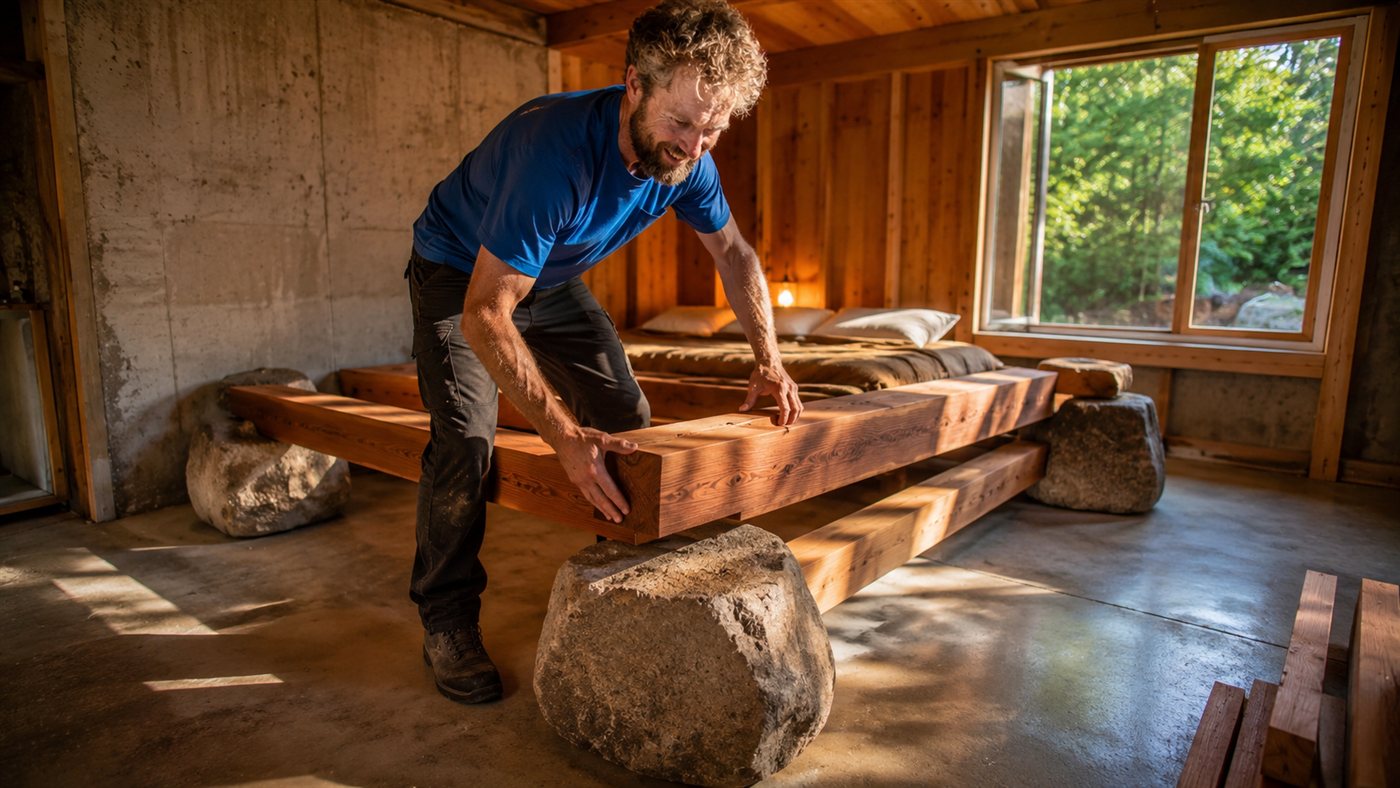
Man Builds Stone Bed with Granite Rocks and Hand-Sawn Cedar Beams, Home Extension Garners Over 437,000 Views on Bonus Bolts Channel

-
Brazilian Researcher Develops Color-Changing Roof Tile to Reduce Air Conditioning Use by Up to 15%



A Recoverable Energy System Within the Walls
Naturally, microbial activity tends to diminish when nutrients are depleted. To address this issue, scientists integrated a microfluidic system into the cement. This system provides proteins, vitamins, salts, and other growth factors. The goal is to keep the bacteria alive or, if necessary, reanimate them.
This innovative approach recovers up to 80% of the material’s original capacity. In practical terms, the team claims that buildings could become recoverable energy materials. This reduces the need for battery replacements or costly repairs in the future.
From Lab to Construction: Applications and Real Potential
The research showed promising results under extreme conditions. The cement stored and discharged energy in both freezing and hot environments. In a practical test, six blocks of the material connected produced enough electricity to light up an LED bulb.
“This is not just a laboratory experiment”, said lead researcher Qi Luo. He envisions the technology integrated into real buildings, such as in walls, foundations, or bridges. In these locations, the cement could support renewable energy sources like solar panels. The impact could be significant, as a room made with the material could store about 10 kWh, enough to power a standard corporate server for a day.
Toward a Self-Sustaining Infrastructure
With the expansion of renewable energy, the demand for affordable and sustainable storage is growing. Current batteries rely on scarce resources like lithium and cobalt, in addition to degrading over time. The cement-based system avoids these problems by using abundant, low-cost materials and natural bacteria.
Although still in its early stages, research indicates a future where buildings function as their own batteries. This could mean bridges powering their own sensors or homes storing daytime solar energy in their walls. The findings suggest that the next generation of infrastructure could be both structural and electrical.