Portuguese
  Spanish


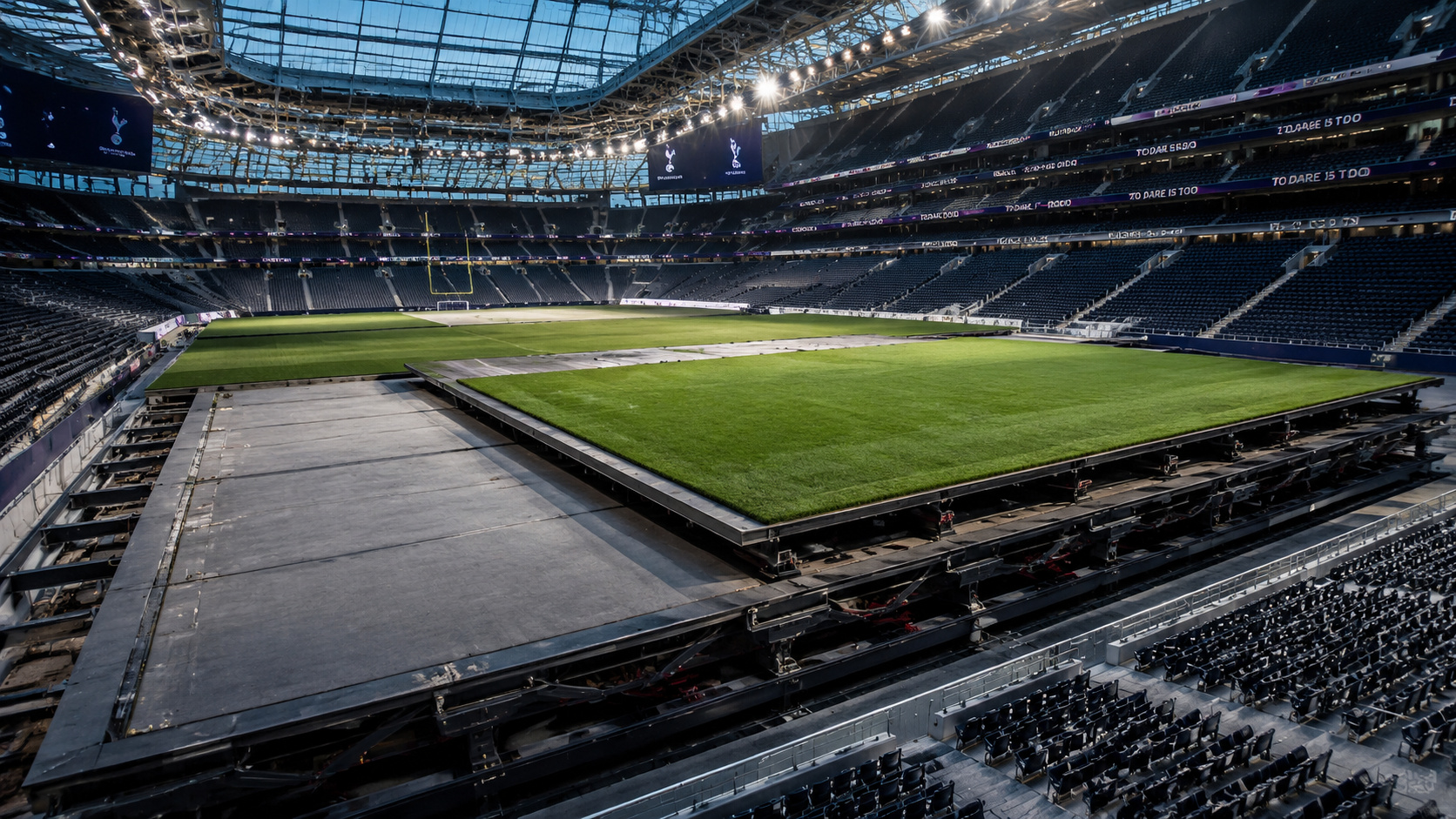

What happens to the field when it is stored
The Tottenham Hotspur Stadium in London features an engineering innovation that attracts global attention. The natural football field, divided into three large steel trays, slides under the stands in just 25 minutes, revealing a space ready for NFL games and international events. Each tray weighs more than 3,000 tons, totaling about 9,000 tons, and is carefully stored under the stadium’s South Stand.
This solution allows the natural field to be preserved even during events that require a synthetic surface. The audience watches football matches, American football games, or shows without the original field being damaged, ensuring maximum quality for athletes and organizers.
How a field of thousands of tons moves
The retractable field was designed to slide mechanically over tracks in three reinforced steel trays. Populous, a sports architecture company, detailed that each section weighs more than 3,000 tons, and the complete process takes about 25 minutes.
-
U.S. City Builds Tiny Home Village on Water Company Land to House 136 Homeless People: Inside the Social Housing Units

-
Woman Turns Shipping Container into Home, Embraces Rural Life to Cut Monthly Expenses to Just Over $330
-
France Revamps 530 Social Housing Units with Large Balconies and Glass Facades Without Demolishing Existing Buildings

-
Facing high rent, couple transforms parents’ garage into a fully functional apartment, creating a complete home at a fraction of the market cost.




The mechanism quickly transforms the stadium into a multi-purpose arena, allowing the synthetic surface to be used for NFL games, cultural presentations, or shows without any manual intervention on the natural field.
Why the stadium needed two fields
Tottenham Hotspur FC, an English football club, presented the numbers and logistics of the movable field, proving that it would be impossible to alternate between modalities without compromising the natural field. The retractable field allows the stadium to function as two arenas in one, maintaining the quality of professional football and offering space for events of different sports.
This configuration increases the durability of the field and reduces the preparation time between events, ensuring safety and comfort for athletes and the audience.
What happens to the lawn when it is stored
While the natural field is stored, lighting, ventilation, and irrigation systems simulate ideal grass growing conditions. This prevents the lawn from wilting or losing quality, keeping it ready for important matches.
The care ensures that the stadium is always prepared for official football matches, reinforcing the efficiency of the model adopted in London compared to conventional stadiums.
How the NFL influenced the project
The presence of the NFL in the stadium’s schedule required innovative solutions. The Institution of Civil Engineers, a British engineering institution, provided the numbers and deadlines mentioned, confirming that the movable lawn weighs about 9 thousand tons and is considered one of the largest movable systems in the world.

The retractable field allows American football games to take place on a synthetic surface without affecting the natural football lawn, showing that sports engineering can completely transform the stadium experience.
Why this model is almost impossible in conventional arenas
The complexity of the system makes it difficult to apply in traditional stadiums. The movement of thousands of tons of natural grass requires space, investment, and advanced engineering. Common stadiums use only temporary plates or covers, which limits the alternation of uses and compromises the quality of the field.
Tottenham has become a global reference, showing that it is possible to combine technology, sports, and entertainment in the same arena, offering unique experiences and preserving the natural field.
The Tottenham Hotspur Stadium quickly transforms the space, maintaining the integrity of the natural lawn, alternating between football and NFL, and allowing international events without compromising the quality of the field.
Do you think this technology could work in Brazilian stadiums or is it still impossible to adapt here?