Portuguese
  Spanish


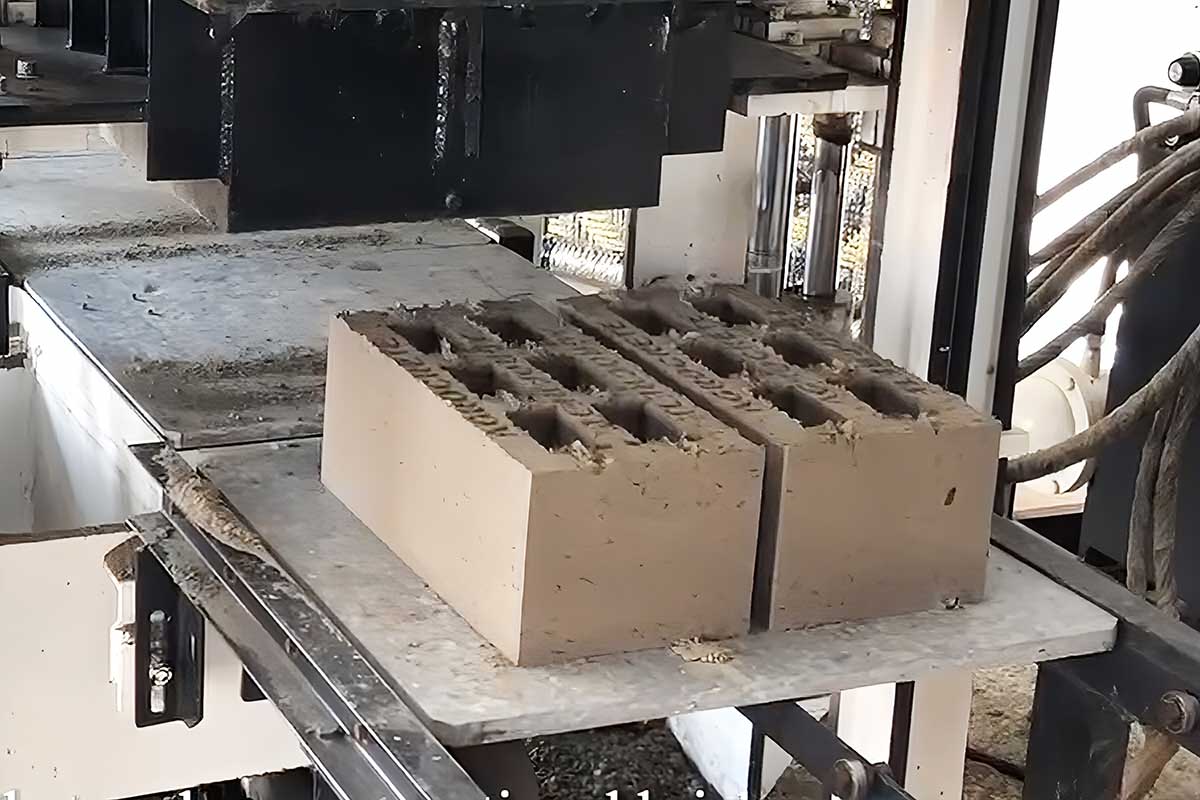

Agrocrete, by GreenJams, transforms agricultural waste into a carbon-negative brick that reduces construction costs, improves thermal insulation, and captures CO2.
In 2019, civil engineer Tarun Jami was driving through New Delhi when he encountered toxic fog, low visibility, and physical discomfort. In an interview with The Better India, he reported that the episode led him to investigate the source of the smoke and link the problem to the burning of agricultural waste after harvest.
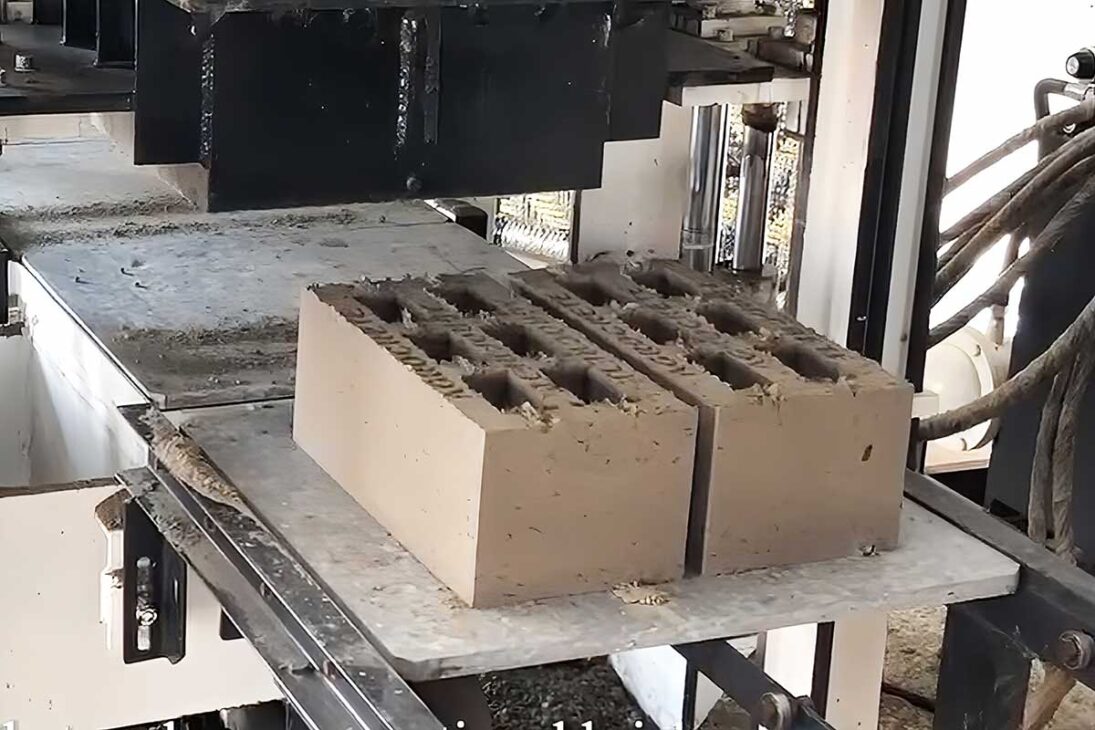
From this crisis, Agrocrete was born, a material developed by GreenJams to transform agricultural waste and industrial by-products into construction blocks with carbon negative. On GreenJams’ official website, the company claims that the product is stronger, lighter, cooler, and more durable than conventional bricks, while an official company statement informs that each ton of the material can retain about 140 kg of CO2.
Agricultural waste and cement found themselves at the center of the same climate solution
The invention gained traction because it tackled two problems at once. On one hand, the burning of straw and agricultural stalks, a practice that worsens air quality in regions of India; on the other, the climate weight of the construction industry, highly dependent on carbon-intensive materials.
-
A Japanese governor single-handedly stalled the construction of the world’s fastest train for nine years, and only now has he agreed to allow a tunnel excavated at a depth of 1,400 meters.

-
A 180-meter ship with a deck the size of a football field was christened to carry 25,000 tons of giant energy modules around the world.
-
While modern cities rely on pumps and electricity, in Iran, ancient tunnels carried water through the desert using only slope and gravity.
-
In the land of soybeans, Sinop’s first 42-story skyscraper will consume 1,900 truckloads of concrete and 350,000 kilograms of steel, with a foundation of 50 meters, deeper than that of the future “tallest building in Brazil” in Balneário Camboriú.


According to The Better India, it was this connection that made Tarun see constructive value in a waste that was previously burned in the field.


GreenJams describes Agrocrete as a block made with reused agricultural waste and industrial by-products. In its statement about the Solar Impulse Efficient Solution label, the company states that the technology replaces conventional masonry with a material designed to reduce emissions and convert buildings into carbon reservoirs.
Idea was born from hempcrete and evolved into a block with agricultural waste
According to The Better India, Tarun Jami discovered hempcrete in 2013, still during his undergraduate studies in civil engineering, and spent years studying its thermal properties and carbon-negative potential.
The same report states that he completed his studies in 2016, founded GreenJams in 2017, and recreated hempcrete in 2019 before moving on to the formulation of Agrocrete.
The turning point came when he decided to replace hemp with agricultural waste that already existed in large volumes and was disposed of by burning. Instead of relying on a more restricted raw material, the solution began to use straw and other plant fibers available in abundance, bringing the technology closer to a real problem in the field and construction.
Agrocrete uses plant fibers and a low-carbon binder to capture CO2 in construction
On the official GreenJams website, Agrocrete is defined as a carbon-negative building block produced from repurposed agricultural waste and industrial by-products. The company describes BINDR in the Solar Impulse label announcement as a proprietary low-carbon binder that replaces cement in its construction solution.
The product’s climate logic lies in the biogenic carbon already absorbed by plants during growth. Instead of returning this carbon to the atmosphere through burning, GreenJams’ proposal is to incorporate it into the building material and keep it trapped in the wall.
In the same announcement, the company states that each ton of Agrocrete retains approximately 140 kg of CO2, reversing part of the emissions associated with the construction.
GreenJams also maintains that its environmental claims undergo third-party certifications and verifications. On its institutional page, the company states that its materials rely on peer-reviewed research and independent certifications, while the main page displays an EPD certificate among the product’s technical downloads.
Block promises cheaper construction, cooler walls, and faster masonry
The practical benefits are prominently featured in the company’s commercial communication. On the GreenJams website, the company reports 350% more thermal insulation, 100% faster masonry, and 50% lower construction cost compared to traditional solutions.
On the same page, GreenJams shows a simulation for 1,000 square feet where the system can save ₹1.25 lakh, capture 4.4 tons of CO2, and save about 25 days of work per mason compared to traditional clay bricks. These are numbers presented by the company itself and used as a central argument to show that the proposal does not rely solely on environmental appeal to gain market share.

The Better India also recorded a practical test conducted by Tarun Jami in an office extension built with the material.
According to the report, the work was completed in 4 days, whereas the conventional method would take about 12, with significant cost reduction and capture of 3.1 tons of CO2 in that small project.
GreenJams attempts to transform field smoke into rural income and industrial scale
Besides the construction itself, the company presents the project as a new economic chain for the countryside.
On its institutional page, GreenJams states that its chain involves farmers who stop burning waste, as well as professionals who start working in the collection, processing, and application of the material in civil construction.
This design helps explain why the innovation attracts attention outside the niche of sustainable materials. Instead of creating a product completely disconnected from the local reality, the proposal links air pollution, agricultural waste, low rural income, and construction emissions within the same business model.
Technology has moved beyond discourse and started accumulating projects in the Indian market
GreenJams states that Agrocrete has already been applied in 16 commercial projects in India, with more than 300 tons of CO2 captured, about 900 tons of emissions avoided, and almost 2,000 m³ of structural bio concrete delivered.
The data appears in the company’s official statement about the achievement of the international label Solar Impulse Efficient Solution.
In the same statement, the company claims that the recognition made Agrocrete the only carbon-negative construction material in India to receive this seal as of the date of the announcement. The validation is used by the company to emphasize that the product aims to position itself not only as an environmental alternative but as a commercially viable solution for a historically conservative industry.
Agrocrete shows how a burnt residue can become a climate asset in construction
The story of Tarun Jami gained momentum because it moved from the realm of beautiful ideas to a much more challenging field: the replacement of conventional materials in real constructions. Instead of treating the straw left over from the harvest as inevitable waste, GreenJams began treating it as a construction input with thermal, structural, and climatic value.
The result is a rare case where the same material promises to reduce construction costs, improve thermal comfort, and retain carbon within the wall. If the scale grows beyond the projects already executed, Agrocrete could cease to be just an Indian innovation and become a global reference for how agricultural residues can become central to low-carbon construction.