






 Portuguese
  Spanish


Couple transformed a napkin drawing into a pioneering geodesic dome company in Mato Grosso do Sul, with faster constructions, lower cost, and personalized spaces
A napkin drawing led Rafaella Féo, 45, and Elieth Lopes Gonçalves, 46, to create Domoself, a pioneering geodesic dome company in Mato Grosso do Sul.


Idea born from a simple question
The change began when the two asked themselves if they could do something that represented who they were.
The answer appeared when Rafaella drew a round, integrated house without rigid divisions.
-
MIT Scientists Develop Method to Transform CO₂ into a Construction Ally, Boosting Cement Strength by 13% in 24 Hours for More Sustainable Infrastructure

-
Canadian City Builds 8 Tiny Homes in 72 Hours for Homeless Youth, Plans 40 Affordable Houses for Female-Led Families Amid Housing Crisis

-
45-year-old Brazilian mother of 9 and grandmother of 12 receives 27 m² house made from recycled plastic, built in 15 hours with interlocking blocks and a recycled roof.
-
Ireland Installs 654 Modular Homes to Shelter 2,640 Ukrainian War Refugees, Offering a 60-Year Guarantee and a Model for Future Housing Crises


The proposal was to create an environment connected with everything and also with people. The initial napkin no longer exists, but the idea turned into research and real construction.
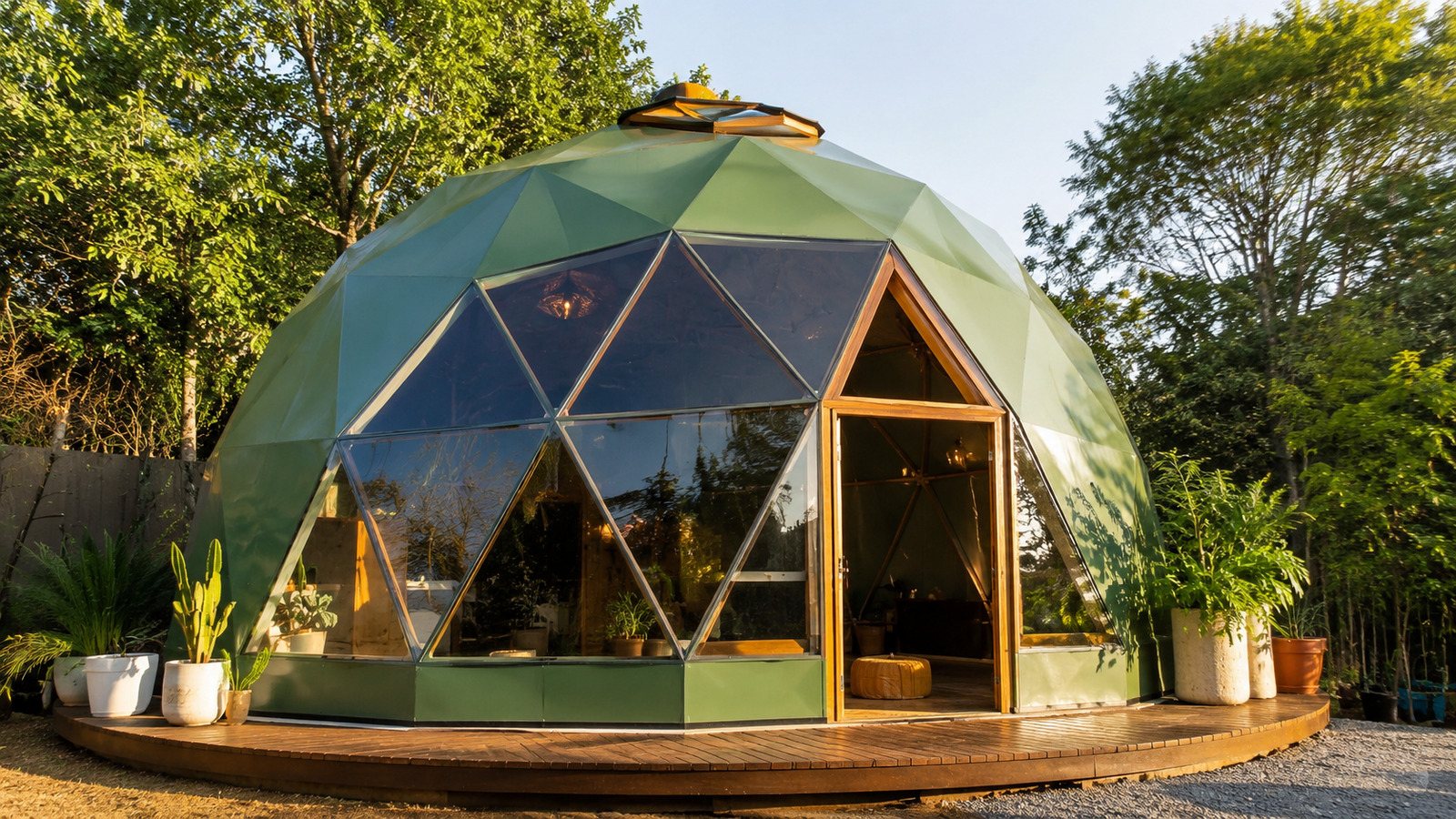
During their search, they came across geodesic domes, houses formed by triangles that create a light and resistant dome. The format caught their attention for its aesthetics and structural strength.
The obstacle appeared soon after. No one was doing this type of construction in Mato Grosso do Sul. Without a local company, Rafaella and Elieth decided to learn, test, and build their own house.
First round house model became a laboratory
The two sought out courses, studied, and conducted tests until they built the first dome in their backyard, in the Carandá Bosque neighborhood. The green space became a living laboratory and showcase.
There, they receive visitors, promote yoga, and show how the structure works. The interior draws attention with its natural light, triangular lines, and sense of spaciousness.
As the assembly progressed, curious people appeared. Many asked what that construction was and asked to come in. Interest grew until the first client emerged.
The first client project was ready in 29 days. Currently, the average is up to 45 days, potentially reaching around 60 days.

Cost can be up to 30% lower
Domoself was born from this process and began serving people interested in living, investing, or creating commercial and tourist spaces. One attraction of geodesic domes is the cost.
Rafaella and Elieth state that such a round house can be up to 30% cheaper than a conventional masonry construction. The value changes according to size, finish, and customization.
Smaller models start from R$ 45 thousand. Medium domes, such as those of 6 meters, are around R$ 68 thousand. With a complete finish, the price can reach R$ 100 thousand or more.
They cite a client who spent 12 months on a construction project and spent R$ 230 thousand. Upon seeing a dome ready in 45 days for about R$ 100 thousand, he was surprised.
Another highlighted point is the almost zero waste. Rafaella presents the construction as clean, with little residue.
Space changes according to use
The backyard dome is no longer just a presentation model. The place hosts meetings, experiences, classes, and visits from people who want to understand the format before using the construction.
Versatility is one of the project’s hallmarks. Each client chooses a bathroom, integrated or external kitchen, simple flooring or sophisticated finish, in addition to its use for housing, tourism, or business.
Rafaella emphasizes that no two domes are alike, because each construction receives the personality of whoever will live or work there. The structure does not impose a fixed standard.
Rounded shape favors comfort
In addition to the different appearance, the rounded shape, without corners, changes the perception of space and creates a welcoming experience. Many people enter and say they want to stay, even without being able to explain why.
The structure also helps with air circulation. Air naturally rises and exits through an opening at the top, called a lantern, which functions as a natural exhaust fan inside the dome.
The lighting follows this effect. With triangular openings and the possibility of glass, light enters throughout the day and rotates through the environment, changing the internal appearance.
New beginnings led to the current business
Before the company, Elieth owned a cafe, tried other businesses, and saw some initiatives fail. Rafaella had been working for years with human development.
For Rafaella, geodesic domes became a purpose, not a sacrificed activity. She states that the work is done with pleasure, after a journey marked by attempts and new beginnings.
Today, in addition to homes, domes are already appearing across the country as glamping accommodations, commercial spaces, therapeutic environments, and communal areas. Demand has grown, including accommodations fully booked until May.
With information from Campo Grande News.





Be the first to react!