Portuguese
  Spanish


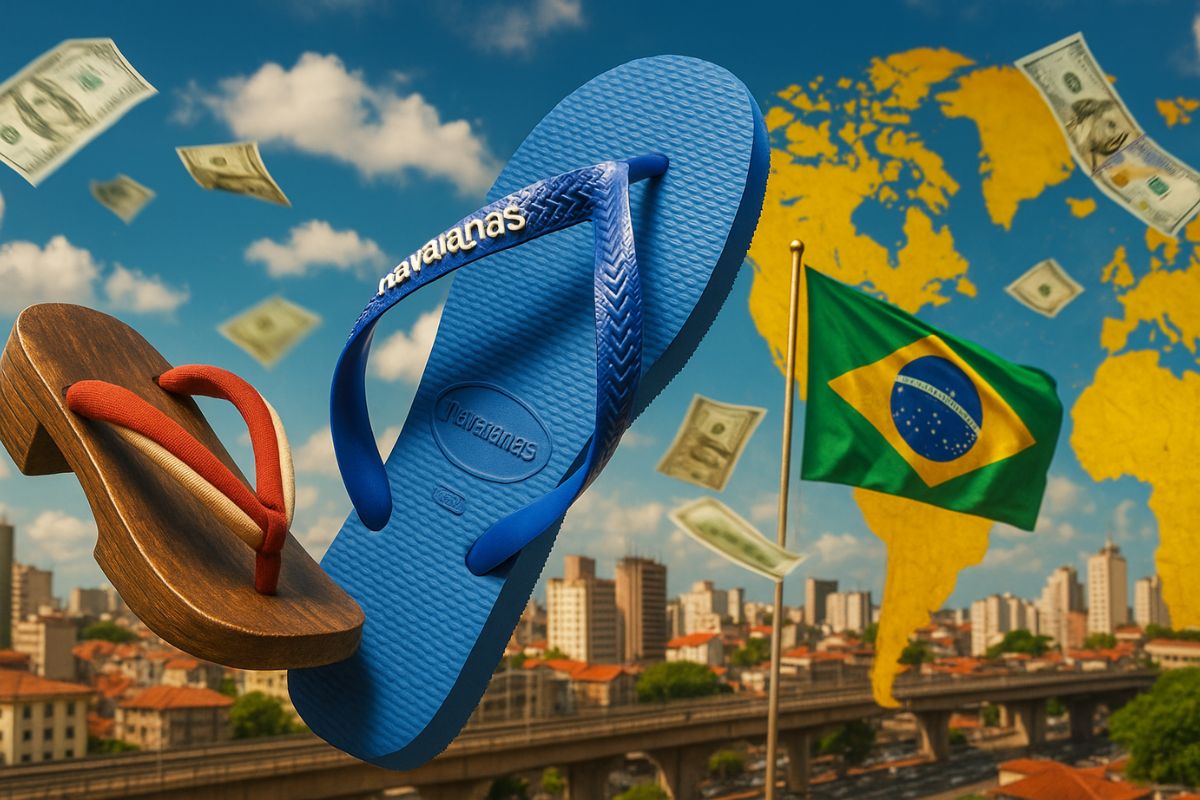


Created in the 1960s and inspired by a Japanese rice straw model, the most famous sandal in Brazil conquered the world, became an international fashion item, and can cost up to R$ 1,000 in luxury versions sold abroad.
The most famous sandal in Brazil was created in 1962 by Alpargatas and was inspired by a traditional Japanese footwear known as zori. The original model was made from rice straw, and this detail directly influenced the Brazilian design. The texture of the insole, which mimics grains of rice, is a tribute to its oriental origin.
The first model, known as Havaianas Tradicional, had a white sole and blue straps, being sold primarily in popular markets. In a short time, the flip-flop spread throughout all regions of the country, becoming a symbol of simplicity, comfort, and accessibility.
From Simplicity to Global Fashion

For decades, Havaianas were seen as a basic product, associated with everyday use and popular classes.
-
15-Year-Old Entrepreneur Malu Lira Publishes 20 Children’s Books on Financial Education, Earns $500,000, and Expands Her Project to the Amazon Rainforest

-
Entrepreneur Turns Rio Cemetery Canteen into a Successful Snack Chain Generating $4.9 Million Annually and Expanding to Metro Stations

-
Rare fox feared “extinct” found alive on Caribbean island after over two decades without official sightings

-
21-Year-Old Brazilian Student Turns Homemade Popsicle Hobby into $100,000-a-Month Business





However, the turnaround began in the 1990s, when the brand decided to reposition the product as a style icon.
The movement started almost by chance: a production error created pairs with inverted soles and colored straps, which inspired the launch of new models.
During this time, celebrities, surfers, and influencers began to wear the flip-flop, transforming what was once a household item into a symbol of fashion and authenticity.
Advertising campaigns focused on humor and diversity, and the brand became associated with light, creative, and democratic Brazilian-ness.
The Leap to the International Market
In the 2000s, Alpargatas intensified its export strategy and solidified Havaianas as a global desire product.
Today, the brand is present in over 100 countries, with stores in places like Paris, New York, Tokyo, and Sydney.
Exports account for about 10% of annual sales, and the name Havaianas has become synonymous with a tropical lifestyle.
In 2023, more than 226 million pairs were sold, with 22 million in the international market.
Since its launch, more than 3.5 billion pairs have been sold worldwide.
The success of the sandal helped strengthen Brazil’s image as a creative and innovative country in accessible fashion.
Luxury and Exclusive Versions
The global rise allowed the brand to create special editions and luxury collaborations.
In London, models adorned with crystals and metals have been sold for £100 (almost R$ 500).
More recently, collaborations with designer brands like Dolce & Gabbana launched versions priced at up to €120 (R$ 700).
Despite the high prices abroad, Havaianas maintain their dual profile: a popular product in Brazil and a premium fashion item worldwide.
This duality reinforces the cultural strength of the brand and its ability to engage with audiences from different classes and continents.
Economy, Culture, and Brazilian Identity
In addition to being a commercial phenomenon, Havaianas represent a synthesis of national identity.
Comfort, color, diversity, and humor are present in every detail of the product and its campaigns.
The brand is also a relevant economic pillar: it generates billions of reais annually, sustains thousands of jobs, and accounts for about 80% of the Brazilian rubber flip-flop market.
Currently, over 200 million pairs are produced annually at the factory in Campina Grande (PB), at a rate of six pairs per second.
The brand’s performance directly boosts Alpargatas’ revenue, which reported R$ 1.1 billion in net revenue in the second quarter of 2024, consolidating its global leadership in the segment.
Comparisons and International Competition
The strength of Havaianas is such that its main competitors, such as Ipanema, Kenner, and Crocs, take distinct strategies to occupy specific niches.
Ipanema, for example, focuses on modern design and affordable pricing, while Kenner bets on durability and premium positioning.
Crocs transformed comfort into a global trend but still faces the challenge of balancing fashion and functionality.
Even in the face of competition, Havaianas maintain a dominant position. No other Brazilian brand has achieved such international recognition while maintaining national essence.
This combination of tradition and innovation is what sustains the flip-flop’s status as one of the most emblematic products of the country.