Portuguese
  Spanish


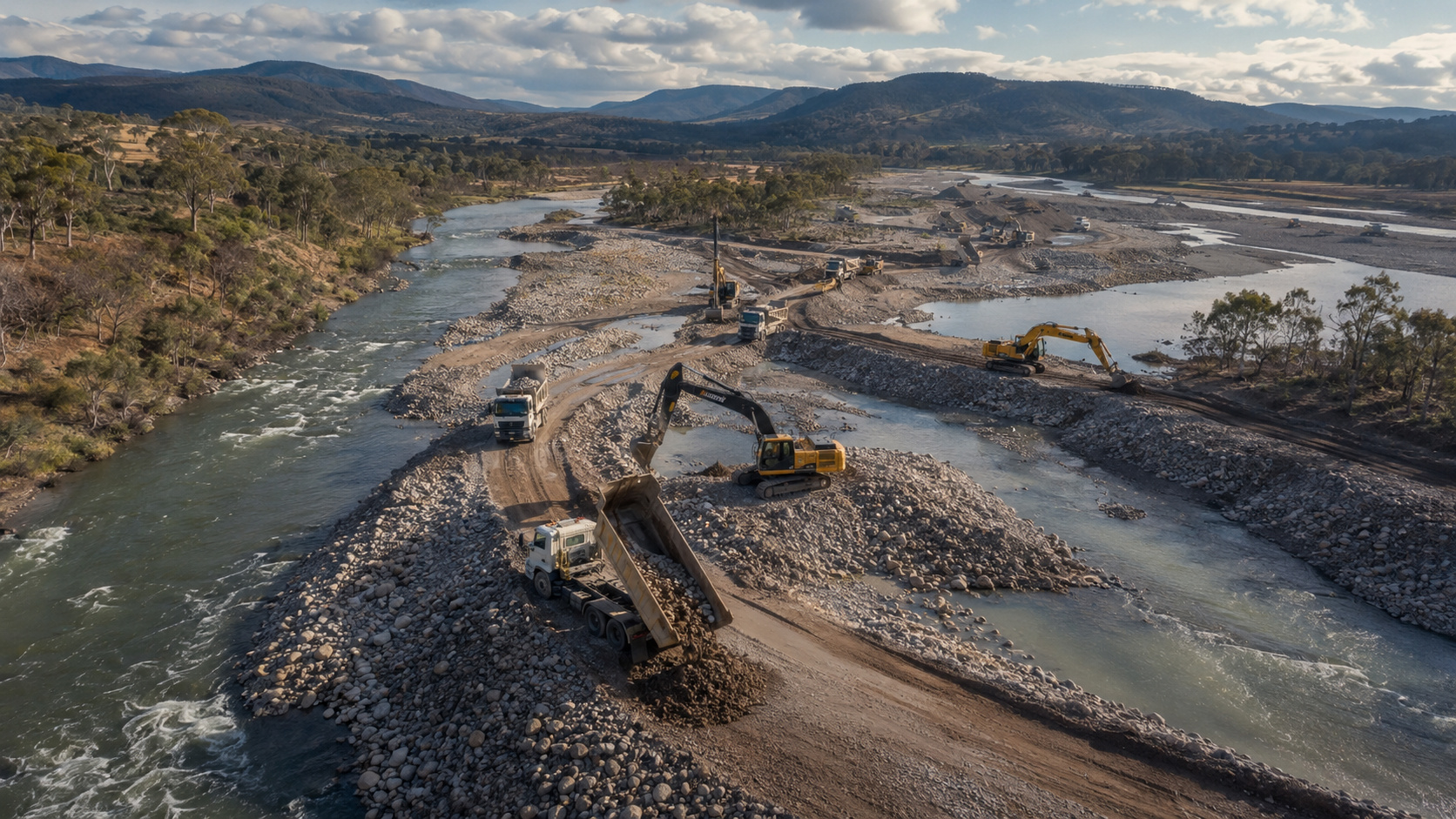

Australia uses gravel replenishment in Murray-Darling rivers to restore habitats and tackle decades of erosion and channel simplification.
In southeastern Australia, parts of the rivers have lost over time the physical complexity that sustained aquatic life. Studies on the legacy of historical mining show that the gold rush left lasting effects on river landscapes, while environmental plans for the Ovens River system indicate that works to reduce flooding, changes in land use, levees, and the historical extraction of gravel from the channel also altered the river’s shape, bed stability, and sediment delivery.
In this context, gravel replenishment has come to be seen as a tool of ecological engineering, not just heavy construction work. The aim is to return to the channel some of the coarse material that helps sustain riffles, bars, pools, anabranches, and shallow areas, elements that, in the Ovens plan itself, appear as central components of the habitat diversity used by native creatures like trout cod, Murray cod, and Macquarie perch.
Gold rush, sediment extraction, and hydraulic works impoverished the natural architecture of rivers
The literature on historical mining in southeastern Australia shows that the gold cycle, concentrated mainly between 1851 and 1914, released enormous volumes of waste into river systems and left a legacy that continues to shape riverbeds and floodplains more than a century later.
-
Rare fox feared “extinct” found alive on Caribbean island after over two decades without official sightings

-
21-Year-Old Brazilian Student Turns Homemade Popsicle Hobby into $100,000-a-Month Business

-
Bird-Inspired Robot Glides on Air Currents up to 10 m/s, Balances Itself, and Aims to Save Energy in Industrial Inspections and Meteorological Balloons

-
Eight Artists Secretly Lived in a Hidden 70m² Apartment Inside a Shopping Mall in Brazil for Four Years



The study published in Environmental Geochemistry and Health summarizes this scenario as a long-lasting impact on riparian landscapes and shows that the disturbance continues even after the end of mining activity.

In the case of the lower Ovens, the environmental plan of the government of Victoria is explicit in listing the pressures that degraded the system. Among them are historical activities of river management to reduce floods, levee construction, land use changes near the channel, and the historical extraction of gravel, factors that altered erosion, sedimentation, channel shape, and bed and bank stability.
The result of this process is a river that is simpler from a geomorphological point of view. Where there was once greater heterogeneity of substrates and microenvironments, official documents now prioritize the maintenance or recovery of cobbles, riffles, pools, bars, anabranches, and littoral fringe, precisely because these elements structure the aquatic habitat and ecological connectivity.
Why dumping gravel became an ecological engineering solution instead of a containment work
The logic of this intervention is to reintroduce a physical input that the river lost. Instead of locking the channel with concrete or trying to redesign everything artificially, the proposal is to return coarse sediment so that the current itself can reorganize forms such as bars, shallows, and more oxygenated stretches.
This approach aligns with what Australian guides and plans refer to as restoration of function, habitat diversity, and reconnection of the channel with its ecological processes.
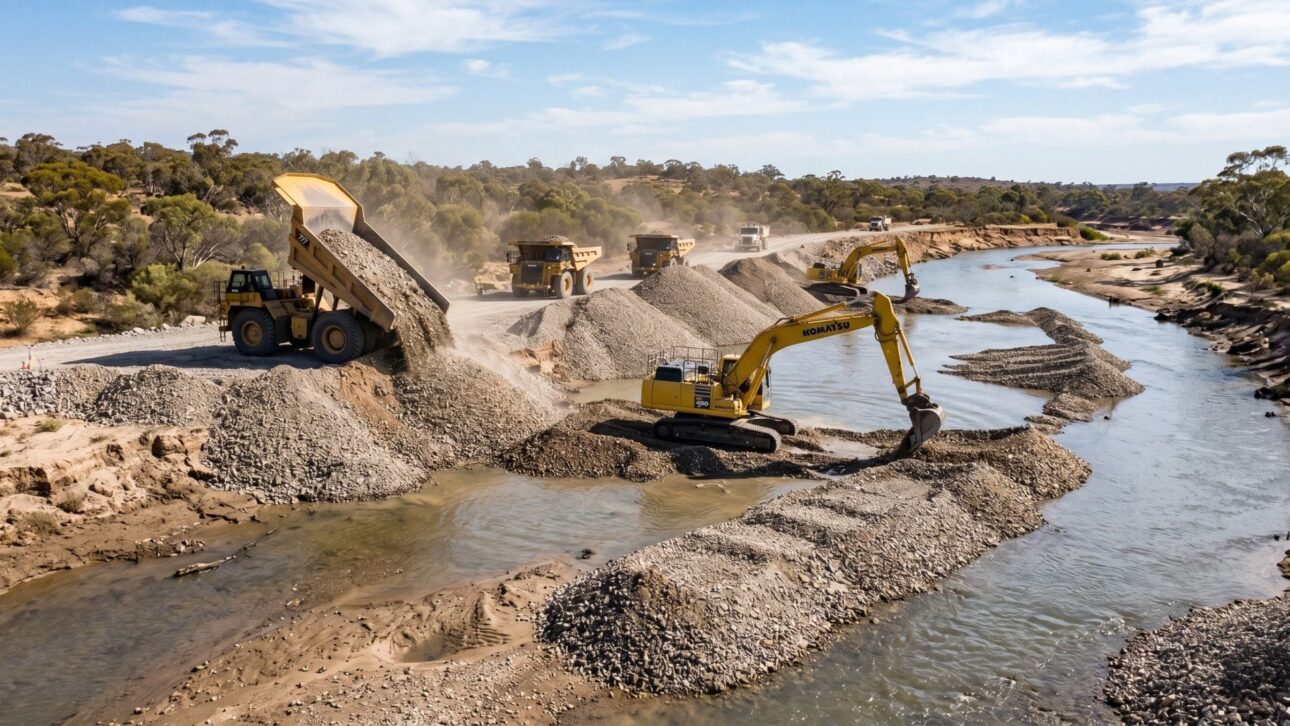
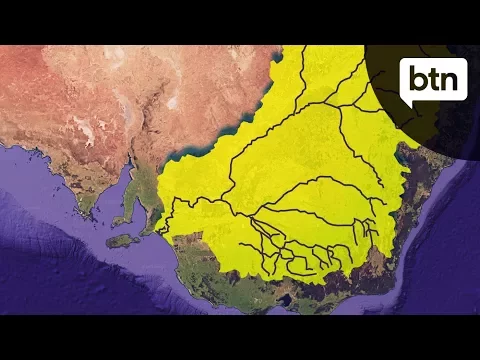
In the south of the Murray-Darling Basin, the Fish and Flows report by the NSW Department of Primary Industries, funded by the MDBA, was specifically developed to translate the ecological needs of native species into flow and habitat management requirements.
The report covers systems such as Murray, Lower Darling, Lachlan, Murrumbidgee, and Goulburn-Broken and emphasizes that ecosystem outcomes depend on hydrological and physical components working together.
Therefore, gravel replenishment acts as a physical complement to a broader restoration agenda. It does not replace flow, connectivity, or bank management, but attempts to reintroduce into the river the raw material that allows the channel itself to produce hydraulic diversity, macroinvertebrates, and early stages of aquatic life.
The focus is not to pave the river, but to make the flow rebuild bars, riffles, and pools
When gravel is reintroduced in selected stretches, the goal is not to create a fixed and immovable surface. The principle is exactly the opposite: to provide material for the water to transport some, retain others, and reorganize the bed according to the energy, flow, and slope of the stretch.
This is why the strategy makes sense, especially in rivers that have suffered sediment deficits and channel simplification.
This reading becomes even clearer when observing how the Ovens River EWMP describes the river itself. The document treats the diversity of habitat as an ecological value in itself and includes among the key elements the cobbles, riffles, pools, bars, anabranches, and flood runners, which shows that the recovery of the riverbed is not a landscape detail, but the basis of the system’s functioning.
In practical terms, this means that the restoration seeks to return roughness, depth variation, and contrast of speeds.
These are exactly the differences that create shelter, feeding zones, larval drift areas, and sections of better-oxygenated water, instead of leaving the river operating as a deep, smooth, and ecologically impoverished channel.
Native species of the Ovens and southern Murray-Darling depend on this physical complexity to survive
In the environmental plan of the Ovens River, the target species for ecological management are trout cod, Murray cod, and Macquarie perch. The document states that these species were chosen not only for their conservation value but because meeting their needs helps cover the broader ecological requirements of the entire system.
The same plan highlights that the maintenance of fish habitats depends on elements such as large submerged wood, anabranches, pools, cobbles, riffles, and bars, as well as connectivity along the system. Meanwhile, the Fish and Flows report is based precisely on the relationship between flow, habitat, recruitment, movement, and persistence of native populations to guide management in the southern basin.
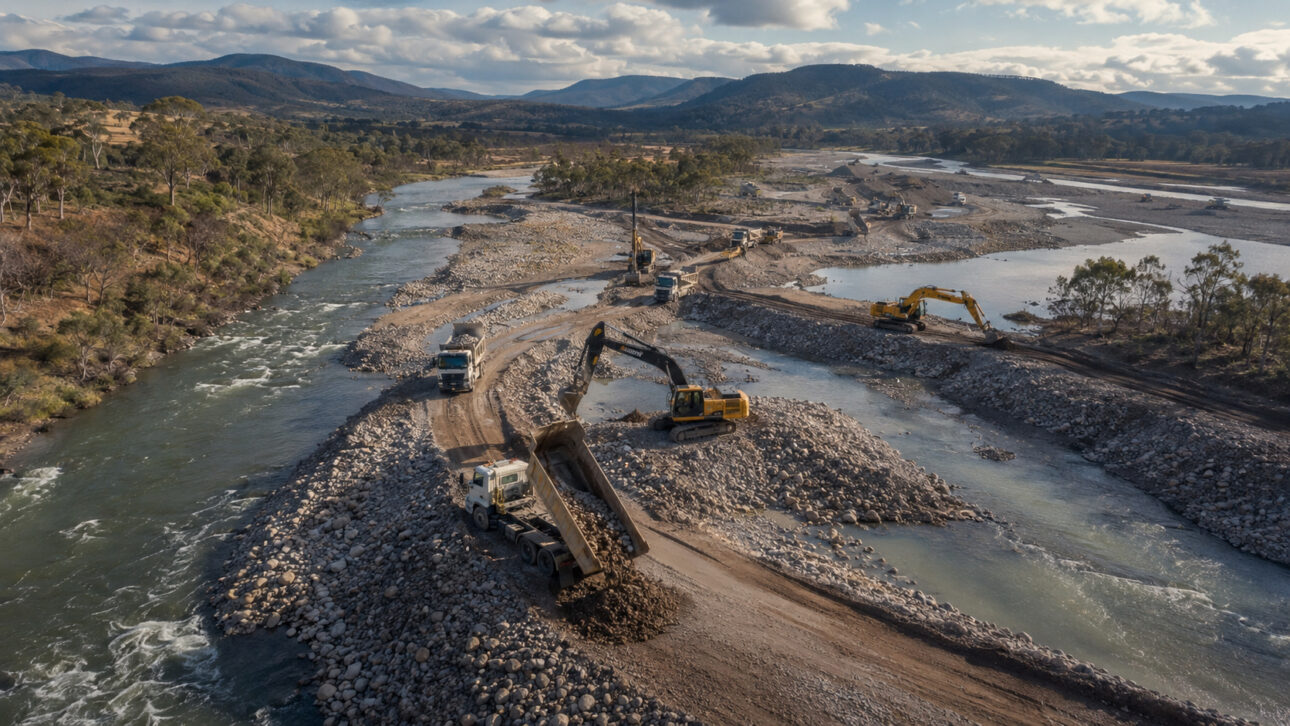
This helps explain why recovering gravel and bed diversity matters so much. It is not just about “beautifying” the river, but about restoring conditions for spawning, juvenile shelter, feeding, and movement of species that have been compressed by more than a century of geomorphological simplification and hydrological alteration.
The institutional goal is to reverse channel simplification and increase ecological resilience
The official documents do not treat this effort as an aesthetic intervention. In the Ovens River EWMP, the long-term goal is to use environmental water and management measures to build viable populations of iconic native fish and make them more resilient, while the fish and flow reports of the southern basin directly associate physical and hydrological management with biological outcomes.
In practice, this means restoring the river’s ability to offer refuge during the dry period, connectivity, larvae production, juvenile survival, and habitat maintenance along the channel. Without a heterogeneous bed and sufficient coarse sediment, these functions are compromised, and the system responds worse to droughts, floods, and new erosion pulses.
This is why gravel is treated as ecological infrastructure. Instead of imposing a rigid form on the river, engineering attempts to return the minimum materials and conditions to the channel so that it can resume part of the geomorphological work it lost.
The Australian case shows that restoring a river sometimes requires replenishing the physical raw material of the system itself
The great lesson of this strategy is that river degradation does not happen only due to a lack of water. It also comes from the loss of adequate sediment, the breakdown of connectivity, and the disappearance of forms that support habitat. In southeastern Australia, this process began with historical mining and was deepened by works and management that changed erosion, sedimentation, and channel shape.
Therefore, restoring the river does not just mean replanting the bank or releasing environmental flow. In some sections, it means replacing gravel so that the channel has enough material to form bars, shallows, and rapids, reopening space for native species and physical processes that have been stalled for decades.
The image of machines bringing material to the bed may seem contradictory at first glance, but the reasoning behind it is the opposite of destruction.
The intention is to return to the river the ability to sculpt itself again, with less rigid artificialization and more support for the natural mechanisms that sustain life, flow, and diversity.