






 Portuguese
  Spanish




Chinese In Combat, North Korea Along Russian Lines, and NATO Arming Kiev: Ukraine Consolidates As The Epicenter Of The Disputed World Order
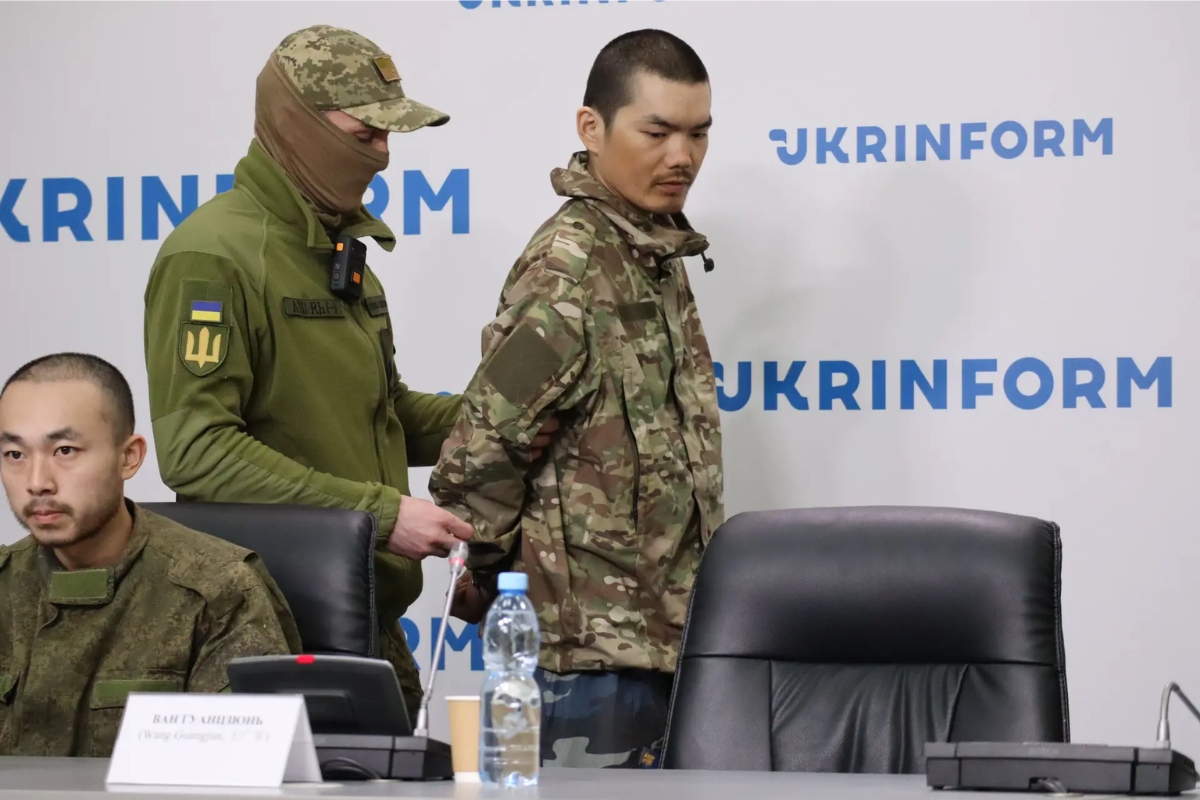
Volodymyr Zelensky stated that the Ukrainian army captured Chinese citizens in combat on the Russian front in the Donetsk region. The same statement also revealed that Ukrainian intelligence identified at least 155 Chinese operating in units linked to Russia, putting China under direct geopolitical scrutiny.
Beijing reacted quickly, denying any deployment of official soldiers and labeling the statements as irresponsible, but the episode reinforces the image of a war that is no longer just a confrontation between Russia and Ukraine and begins to involve great powers at different levels.
Zelensky Mentions Chinese In Combat On The Russian Front
Zelensky publicly announced the capture of two Chinese citizens who were reportedly fighting alongside Russian forces in Donetsk, with images showing the prisoners in Ukrainian custody.
-
The Arctic is no longer just a frozen region and is becoming a new military board with the opening of maritime routes, expansion of bases, nuclear icebreakers, and competition among Russia, NATO, the United States, and China.

-
U.S. Dismisses Brazilian Foreign Ministry’s Military Risk Warning as “Absurd,” Cites Brazilian Criminal Gangs Operating in the U.S. Since May 2026
-
Ukraine War Impacts Brazilian Fuel Supply: Russian Diesel Imports Drop 65% in June, Brazil Turns to US and India Amid Market Concerns

-
Chinese Nuclear Submarine Launches Simulated Warhead Missile in Pacific, Heightening Regional Tensions Amid Naval Drills with Russia Near Qingdao; New Zealand and Papua New Guinea Warn of Persistent Chinese Military Presence



Subsequently, the Ukrainian president stated that the country’s intelligence has mapped at least 155 Chinese integrated into the Russian war effort, with names, dates of birth, and unit data, indicating a broader presence of combatants of Chinese origin.
The revelation directly challenges China’s narrative of neutrality, which seeks to maintain close relations with Moscow while also trying to position itself as a potential mediator of the conflict to the rest of the world.
China Denies Troop Deployment And Tries To Preserve Its Image As A Neutral Power
The Chinese Ministry of Foreign Affairs classified Zelensky’s remarks as irresponsible and reiterated that the country is not part of the conflict and has not sent troops to Ukraine.
Beijing stated that it will verify the information with Kiev but insists that any Chinese citizen found on the front acts independently or is linked to unofficial structures, which the government does not recognize as state policy.
For Chinese diplomacy, admitting any formal connection with combatants on Ukrainian soil would mean abandoning the image of a balanced actor and opening the door to sanctions and new hostile alignments in the West.
Chinese In Donetsk: Official Soldiers Or Just Citizens In Russian Units?
The central issue is defining who these combatants are. In public statements, Zelensky refers to “Chinese citizens”, without providing evidence that they belong to regular units of the People’s Liberation Army deployed directly from China.
Media outlets such as BBC, CNN, and AP highlight that available information points to Chinese individuals integrated into Russian structures as volunteers, contractors, or recruits, rather than an official contingent sent by Beijing.
The lack of Russian transparency regarding the recruitment of foreigners leaves open the exact size of this group and the degree of coordination with Chinese authorities, which increases distrust in Western capitals.
Participation of North Koreans and Iranians Shows That The Front Is No Longer Just Russian and Ukrainian
The presence of Chinese is not the only sign of the war’s internationalization. Since 2024, confirmations have emerged that North Korea has sent troops to Russia, used to support operations in the Ukrainian theater, especially in areas like the Kursk region.
Estimates released by intelligence sources and the press mention thousands of North Korean soldiers sent, at times reaching around 14,000 or 15,000 troops, with subsequent reports of new reinforcements.
Additionally, there is the use of Iranian drones and munitions in the battlefield and the involvement of foreign combatants in different fronts, while the West supplies Kiev with advanced weapons, training, and intelligence, without formally sending regular troops.
This scenario reveals a front where flags and interests of various countries intersect on the same territory, increasingly distancing the idea of a conflict limited to Russia and Ukraine.
Entry of Chinese Into The Battlefield Strengthens Pro-Russia Bloc And Pressures The West
Even with reduced numbers, the presence of armed Chinese citizens alongside Russian forces reinforces the perception of a pro-Russia bloc that includes China, North Korea, and Iran at different levels of support.
For Moscow, foreign combatants help alleviate troop wear and reinforce the message that Russia is not isolated. For Ukraine, exposing this fact serves to pressure China and amplify the political and military support from Western countries.
In the eyes of the West, the simultaneous presence of North Koreans, Iranians, and Chinese citizens alongside Russian forces makes any narrative of neutrality more difficult and increases the urgency for decisions regarding the volume and type of support offered to Kiev.
From Regional Conflicts To Global Wars: How Discrete Escalations Changed The Course Of History
Conflicts of the twentieth century showed that regional wars can turn into global wars when alliances and commitments drag new countries into combat. The outbreak of World War I in 1914 is a classic example of how a localized crisis generated a domino effect among powers.
Today, the war in Ukraine already represents the largest confrontation on European soil in decades, with NATO, the European Union, Russia, China, North Korea, and Iran involved at different levels of political, economic, and military support.
Each new step bringing troops or armed citizens of great powers closer to the front increases the risk of miscalculations, incidents with significant casualties, and internal pressures for tougher responses, which could weaken the barriers that still separate this conflict from a direct clash between global blocs.
The presence of Chinese citizens fighting in Ukraine alongside Russia does not alter the course of the war in terms of the number of combatants, but in what it symbolizes in terms of alignments and risks. The combination of Chinese on the front, North Korean soldiers, Iranian weaponry, and massive Western support for Kiev transforms the conflict into a real test of the 21st-century security architecture.
If this pattern deepens, with more countries sending military personnel or tolerating the direct participation of their citizens in combat, the chance of the war surpassing the limits of regional dispute and posing a tangible threat to global stability increases.







