Portuguese
  Spanish


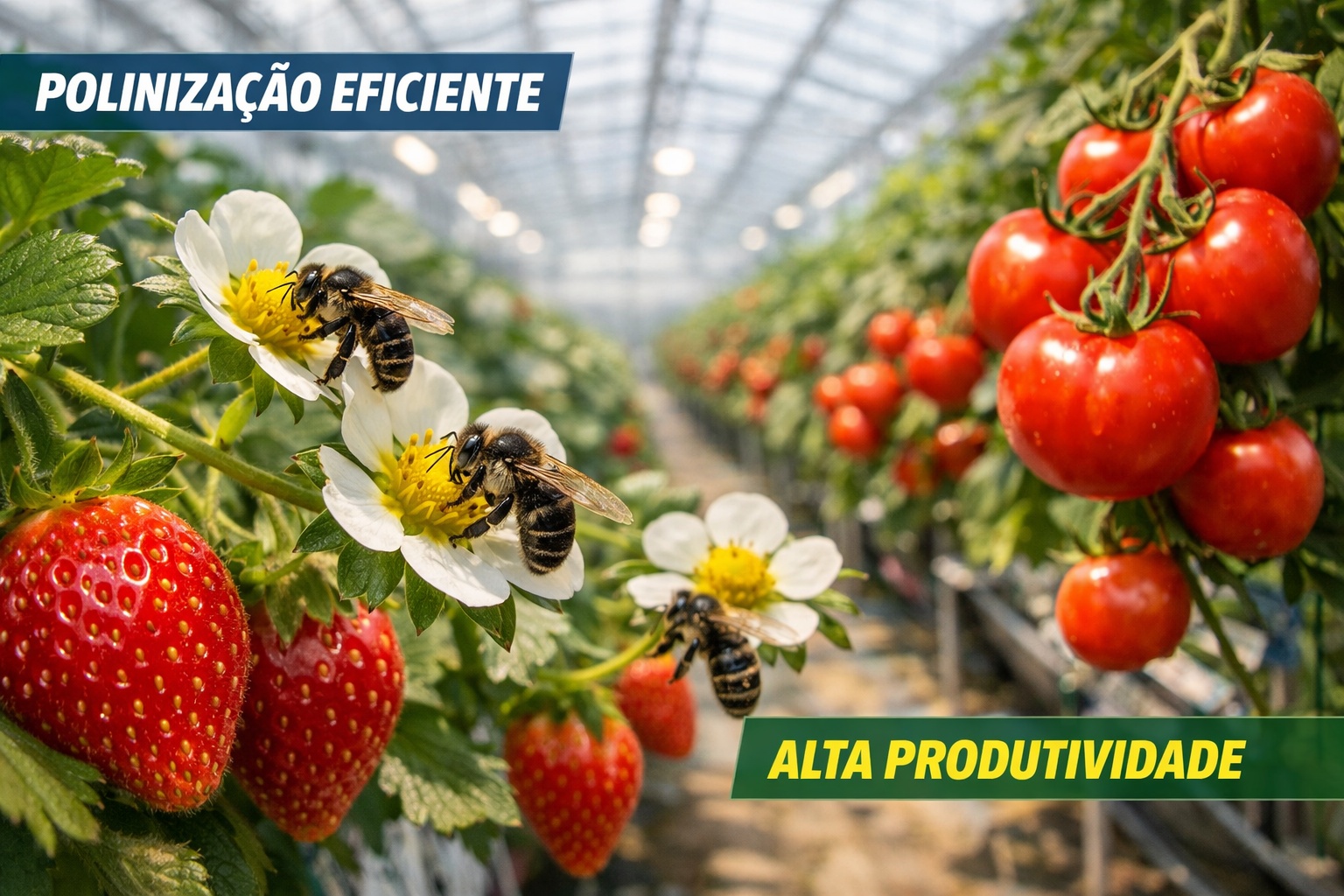


Bees Without Stingers Increase Strawberry and Tomato Production by 12% to 20% in Brazilian Greenhouses, Improving Quality and Becoming Allies of Agriculture.
Few people realize, but 21st-century intensive agriculture relies not only on fertilizers, precision irrigation, and climate-controlled greenhouses. Behind the scenes of vegetables and fruits produced under plastic, wood, and steel, there exists a group of invisible workers that determine the shape, size, and even the flavor of the fruits. We are talking about bees without stingers of the genus Melipona, native insects of Brazil that, in recent years, have begun to migrate from forests to agricultural greenhouses with a single objective: to pollinate better than human hands.
In the south and southeast of the country, especially in regions that produce strawberries (Fragaria × ananassa) and tomatoes (Solanum lycopersicum), researchers have been testing the controlled introduction of these bees in protected systems, with solid results. In experiments conducted by institutions such as Embrapa Clima Temperado, UFV, and USP/ESALQ, average gains of 12% to 20% were observed in productive yield and fruiting, in addition to sensory and commercial improvements in the fruits. Something simple, but that changes everything: a bee entering the flower at the right moment makes a difference in the producer’s pocket.
Why Do Strawberries and Tomatoes Need Bees So Much?
Although they are not exotic crops for consumers, strawberries and tomatoes have a particularity: the degree of fruit formation depends on the quality of pollination. In strawberries, for example, each small “seed” present in the floral receptacle is an achene, and perfect fruiting depends on the fertilization of as many as possible. When this doesn’t happen, deformed fruits appear, small and poorly accepted in the market.
-
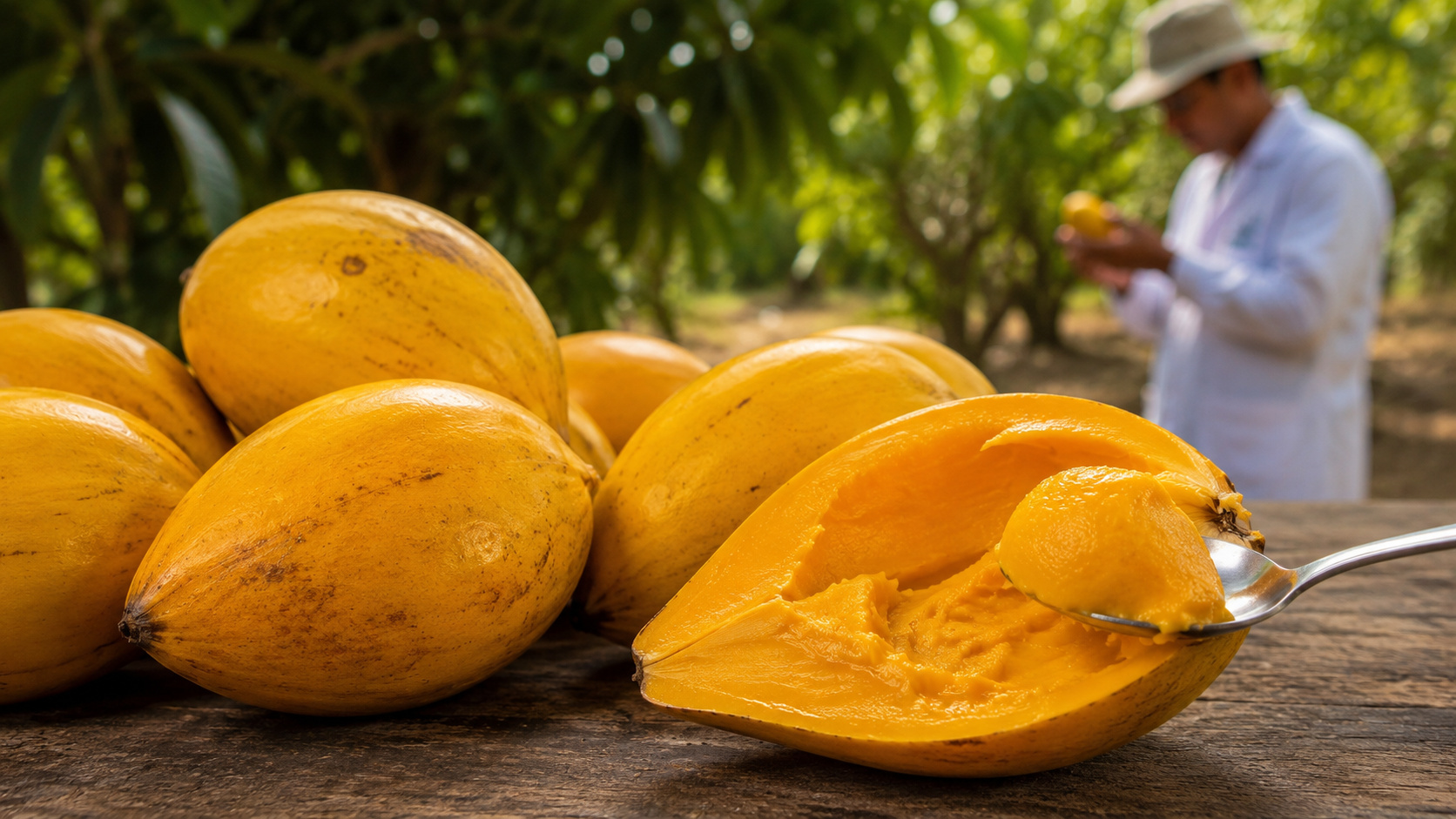
Rare Tropical Fruit Canistel, with Egg Yolk Color and Caramel Flavor, Gains Interest from Researchers and Small Producers in Brazil

-
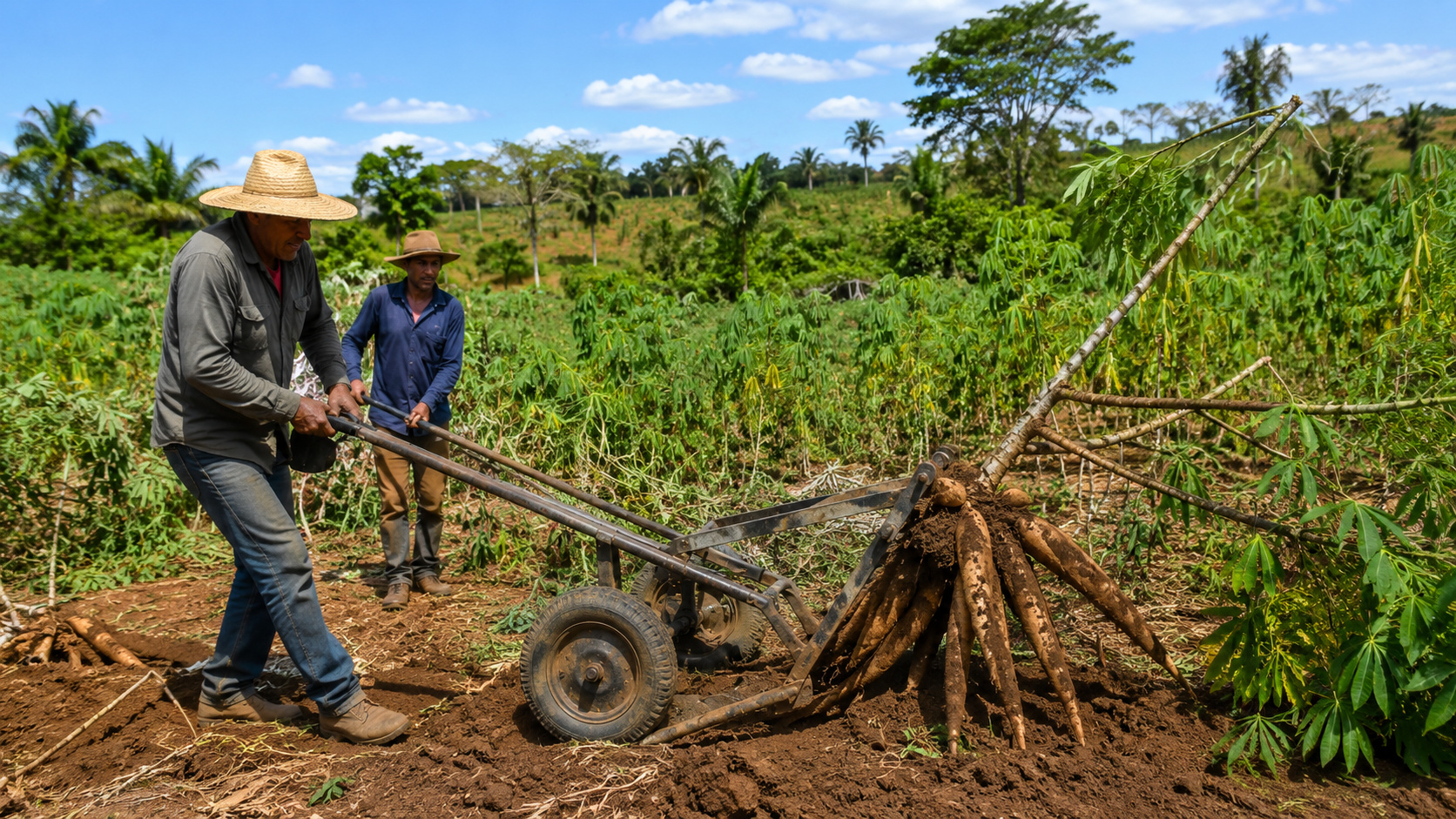
Brazilian Farmers Develop Wheeled Metal Lever to Ease Cassava Harvesting Without Heavy Machinery
-
Study of Brazil’s Tietê River Finds 25 Pesticides in Water, Including Cancer-Linked Substance Near Source
-
Young Entrepreneur Expands from 50 to 1,400 Chickens, Proving “Happy Hens” Can Be a Viable Business




In Brazilian greenhouses evaluated by Embrapa, pollination with Melipona significantly reduces this problem and also improves the level of soluble solids (Brix) — an indicator of sweetness and quality. In the experiments, producers reported that fewer discards and more marketable fruits mean more revenue, even without necessarily increasing the planted area.
Tomatoes, on the other hand, have flowers that respond well to vibration, a phenomenon called buzz pollination. Some native species can vibrate their abdomen and facilitate floral attachment, something that reduces abortion and increases the number of fruits per bunch. In studies from UFV, the use of Meliponini increased fruiting by 15% to 20%, a significant gain considering that greenhouses already operate at high efficiency.
How Do Melipona Enter the Greenhouse and What Happens Inside?
Unlike exotic bees used in Europe such as Bombus terrestris, Melipona are native and stingless, making management easier and reducing risks in enclosed environments. The colonies reach the producer in rational boxes, with controlled populations and active queens. Inside the greenhouse, they:
• visit flowers in short cycles,
• use stable routes,
• avoid excessive energy expenditure,
• and work in temperatures where other species fail.
Researchers highlight an additional point: because they are native, they do not alter the local ecosystem, avoiding damage to fauna and flora, something significant in light of the debates on introducing exotic species for agricultural pollination.
Productivity Is Not Just Quantity; It Is Also Quality and Profitability
While part of agriculture measures success only in tons per hectare, value-added horticulture (such as strawberries and tomatoes in greenhouses) operates on a different model: the fruit needs to be perfect to be sold.
The results observed in recent years concern not only more fruits, but also:
✔ more uniform fruits,
✔ better filling,
✔ fewer deformities,
✔ more soluble solids (Brix),
✔ less waste,
✔ more class A fruits.
For the producer, this directly impacts profitability. A batch with 80% to 90% class A fruits is much more profitable than a batch with 50%, even if total production is equal. In this sense, bees function as a biological fine-tuning, similar to placing a “software” inside the flower that organizes development.
Brazilian Science Has a Central Role in This Advancement
The trend of Melipona in greenhouses did not arise as a fashion — it came from science. Groups such as:
• Embrapa Clima Temperado (RS)
• Embrapa Meio Ambiente (SP)
• USP/ESALQ (SP)
• UFV (MG)
• UFSC (SC)
have been studying flower-insect interaction, foraging behavior, microclimatic adjustments, and the economic impact of pollination. The most recent results reinforce something that Brazilian agribusiness has already learned with ILPF, biological management, and integrated control: applied biology can be more efficient than expensive technology.
Why Does This Issue Matter for Future Agriculture?
The FAO estimates that 75% of global food crops depend, to some extent, on pollinators. In the case of high-value vegetables and fruits, this dependence is even greater.
Leading countries in protected horticulture, such as the Netherlands, Spain, and Israel, have been using planned pollination for decades. Brazil is entering this stage now, and the movement fits into a broader logic:
• fewer agrochemicals,
• more biological precision,
• intelligent use of native biodiversity,
• increased productivity without expanding area.
In times of population growth, environmental restrictions, and rising costs, placing a colony of Melipona to work may be more disruptive than installing a new sensor.
The Final Question Is Not Whether It Works — It Is When It Scales
The use of stingless bees is not a panacea and does not replace genetics, nutrition, climate, or phytosanitary management. But for greenhouse producers, where every square meter counts, 12% to 20% real gain can determine profit margins.
In the end, the scene that summarizes this silent revolution is simple: thousands of native bees entering and exiting flowers inside a white greenhouse, invisible to consumers but essential for the table to receive sweeter strawberries and fuller tomatoes.
The agriculture of the future may not only be digital or chemical but may also be biological, with Brazilian insects working side by side with technology, in a balance that interests science, producers, and the market.