Portuguese
  Spanish


With technical management, cutting-edge genetics, and management accompanied by Sebrae Minas, property in Açucena achieves high productivity in a reduced area
A small rural property in Açucena, in Eastern Minas Gerais, became an example of productivity in dairy farming.
At Fazenda Córrego do Monjolo, Melquisedeque Alves de Oliveira, Mr. Melqui, and Rosemary Gonçalves managed to transform just 11 productive hectares into a reference in the sector.
Currently, the farm records 403 liters of milk per day and reached 147,363 liters in the year, according to data from Educampo Leite, a program by Sebrae Minas.
-
Man Revives 1930s Abandoned Trout Farm, Learns from Scratch, and Earns $1.1 Million Annually Selling Fish to Michelin-Starred Restaurants

-
Bangladeshi Farmers Use Bamboo Levers to Pump Thousands of Liters of Water Daily Without Engines or Electricity

-
Brazilian Forests Could Expand by an Area Twice the Size of Switzerland by 2035, but Agricultural Sector Holds the Key, Study Finds

-
Brazilian Student Develops Solar-Powered Agricultural Machine Capable of Processing 250 Kilograms per Hour


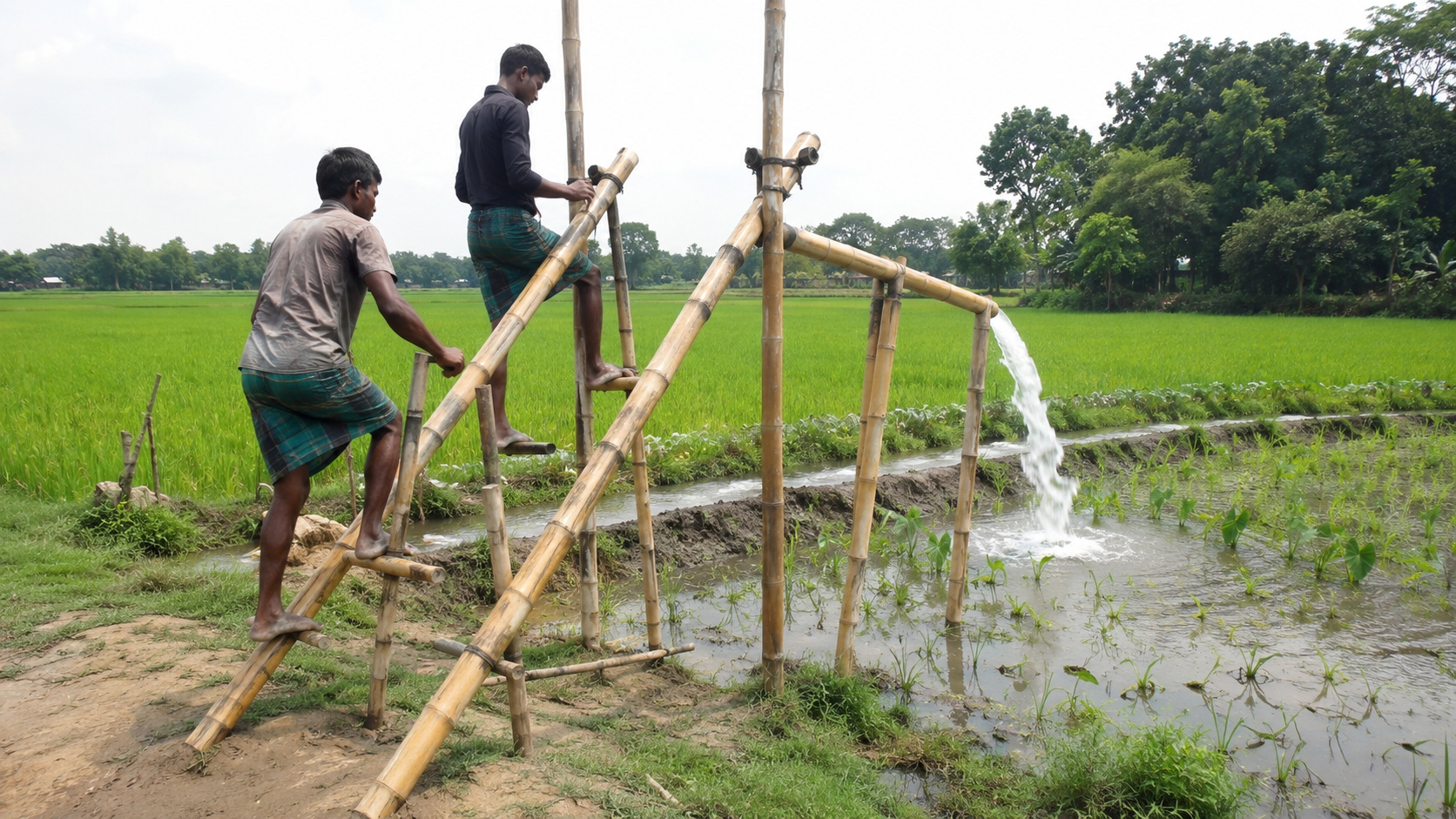


With nine cows in lactation, the daily production reaches about 250 liters, with an average of 27.7 liters per animal.
Planning changed the property’s history
Melqui was born and raised on the same farm where he lives today.
In 1998, upon taking over his part of the property, he decided to abandon the more traditional model and seek production based on goals, technique, and management.
Alongside Rosemary, who also always lived in the countryside, he started taking care of the herd with a focus on performance.
Today, the two work with 33 head of cattle and share the routine with family members.
Genetics and management increased productivity
The turnaround began with training and investment in genetic improvement.
In 2020, through the Cooperativa dos Produtores Rurais de Virginópolis, Cooprovi, Melqui was selected for the Sebraetec FIV, by Sebrae Minas.
The program expanded access for small producers to in vitro fertilization technology.
Currently, the farm has seven animals from Sebraetec FIV, being five half-blood Girolando and two Purebred Holstein.

Educampo Milk brought method and result
In 2021, analyst Claudinei Gomes from Sebrae Minas recommended the farm’s entry into Educampo Milk.
With technical and managerial assistance, the cattle moved from pasture to a semi-confined regime, with 24-hour corn silage.
In the first few days, the average increased from 15 to 20 liters per cow.
In 2025, production consolidated at 22.96 liters per cow per day, above the program group’s average of 18.49 liters.
Small area surpassed group averages
The property reached 13,362 liters per hectare per year.
The result was above the Educampo group’s average, which was 4,682 liters per hectare per year.
Additionally, it surpassed the reference of 5,000 liters per hectare per year.
Some animals reached peaks of 52 kg of milk, about 50 liters per day.
In the last Educampo group tournament, the farm ranked first in production per area, stocking rate, and milk fat.
The stocking rate reached 1.59 cows per hectare, compared to the group’s average of 0.63.
Meanwhile, milk fat reached 3.98%.
Daily care became part of the strategy
At Fazenda Córrego do Monjolo, each cow is monitored individually.
Nutrition, health, comfort, and reproduction are constantly monitored.
The routine is divided between Melqui, Rosemary, her sister, brother-in-law, Rosemary’s mother, and a nephew.
For Melqui, the biggest lesson was straightforward: a well-cared-for animal produces more, gets sick less, and lives longer.
In 2025, about 22% of gross income was reinvested in the property.
The resources were applied in mechanization, improvements, genetics, and herd.
The goal now is to reach 1,000 liters per day
The next plans include building a barn for up to 30 lactating cows.
The structure must have a Compost Barn system, milking pit, and cooler.
The couple’s goal is to reach 1,000 liters of milk per day.
The leveling of the barn was initiated after the good results of 2023 and 2024.
In 2025, the couple decided to make the farm profitable before resuming the project with their own resources.
Data can help other farms in Minas Gerais
The trajectory of Fazenda Córrego do Monjolo could also contribute to the dairy sector of Minas Gerais.
This is because the data from Educampo Leite will be analyzed in a cooperation agreement between Sebrae Minas and Embrapa Gado de Leite.
The proposal is to develop panels and digital tools to identify trends, opportunities, and strategic indicators.
In practice, the results of the small farm could help technicians and producers improve the management of dairy farming in Minas Gerais.
What do you think is most important for small rural producers: investing first in genetics, management, or property management? Leave your opinion!