Portuguese
  Spanish


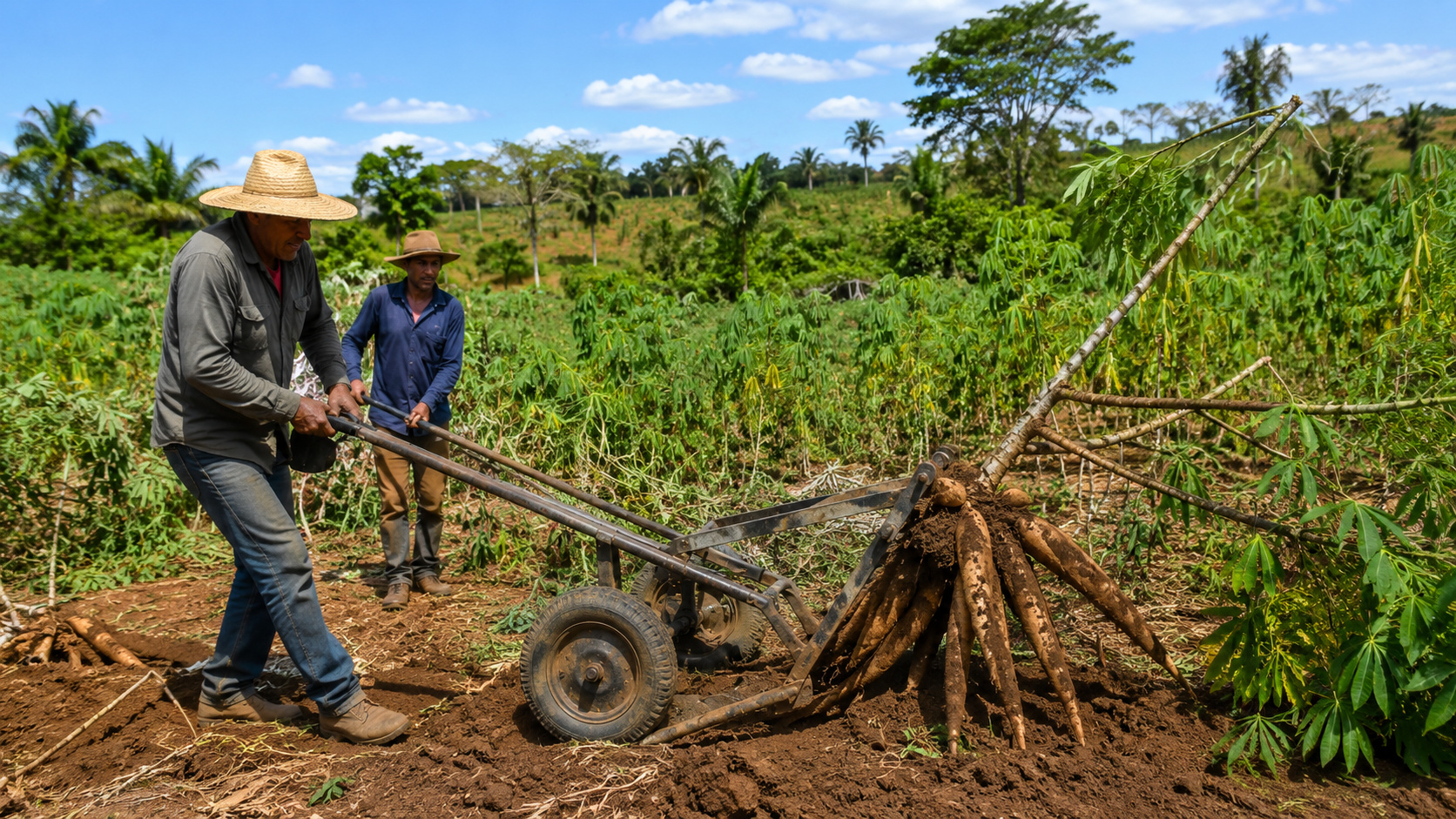

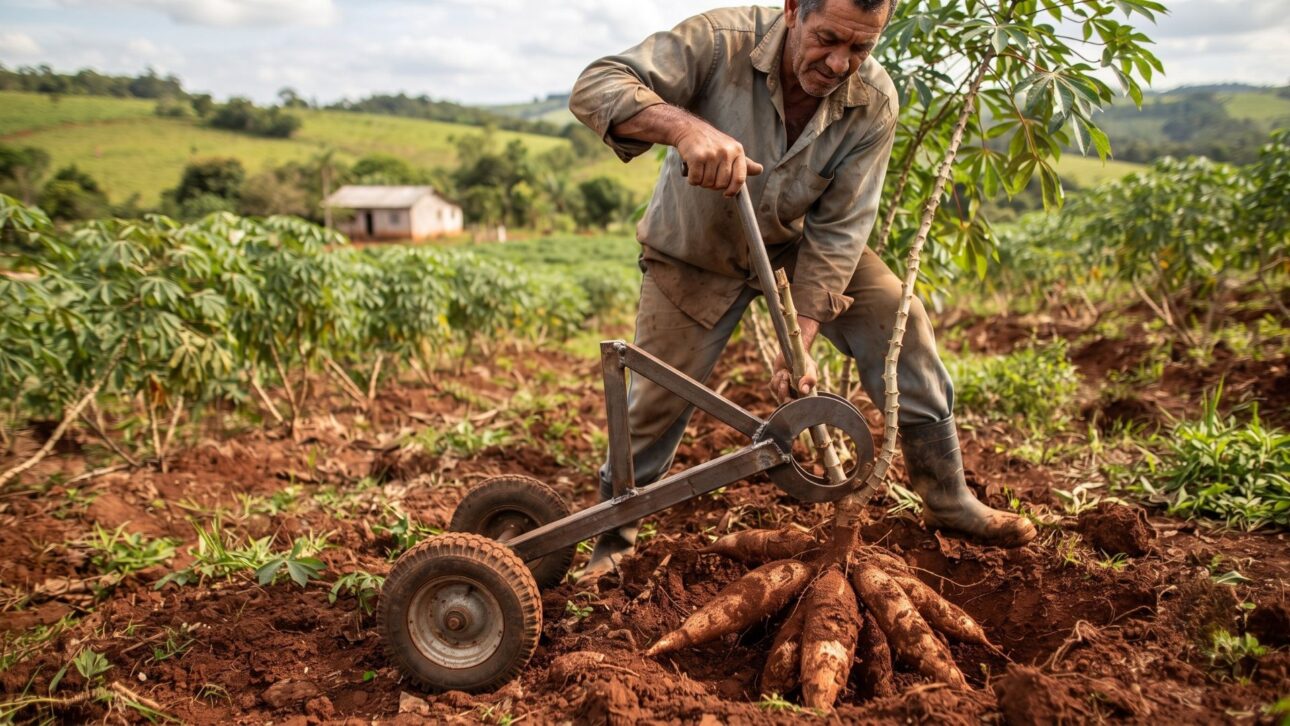
Tool with lever, wheels, and movable claw reduces effort in cassava harvesting and helps family farmers pull out roots with less strain
Cassava harvesting remains one of the most labor-intensive stages of rural work on small farms. In manual systems, pulling out depends on the operator’s strength and can become even more difficult when the soil is heavier, excessively wet, or has characteristics that increase resistance in root removal. To tackle this problem, a simple solution, inspired by inventions created by farmers and later improved by Epagri, gained prominence.
The prototype developed in Urussanga, with wheels and movable claw, was designed to reduce physical effort, change body position during pulling, and ease the routine of family farmers.
Farmers created the basis of the idea which was later improved by Epagri
Before reaching the Santa Catarina prototype, the solution already existed in an artisanal form in different regions of the country. Epagri itself recorded reports of equipment developed by producers in Minas Gerais, Mato Grosso, and Northern Santa Catarina, with popular names such as “friendly hand”, “contraption for pulling cassava”, and “lever for pulling manioc”.
-
Study of Brazil’s Tietê River Finds 25 Pesticides in Water, Including Cancer-Linked Substance Near Source

-
Young Entrepreneur Expands from 50 to 1,400 Chickens, Proving “Happy Hens” Can Be a Viable Business
-
Small Farm in Brazil’s Minas Gerais Produces 403 Liters of Milk Daily, Sets Benchmark for Rural Producers
-
Man Revives 1930s Abandoned Trout Farm, Learns from Scratch, and Earns $1.1 Million Annually Selling Fish to Michelin-Starred Restaurants





These tools were born from the same mechanical logic. Instead of relying solely on arm and back strength, they use the principle of the lever to multiply the applied force and make pulling more efficient.
Recognizing the value of these field-created solutions, the team at the Urussanga Experimental Station turned the idea into a more structured prototype. The goal was to adapt the invention to the reality of family farming and improve the performance of manual cassava and manioc harvesting.
Wheels and lever change the operator’s posture and reduce effort at startup
In the model developed by Epagri, the equipment was designed to change the farmer’s body position and reverse the direction of the force used at startup. This detail is central because it removes part of the overload from the traditional movement, which usually requires direct traction and great physical effort.
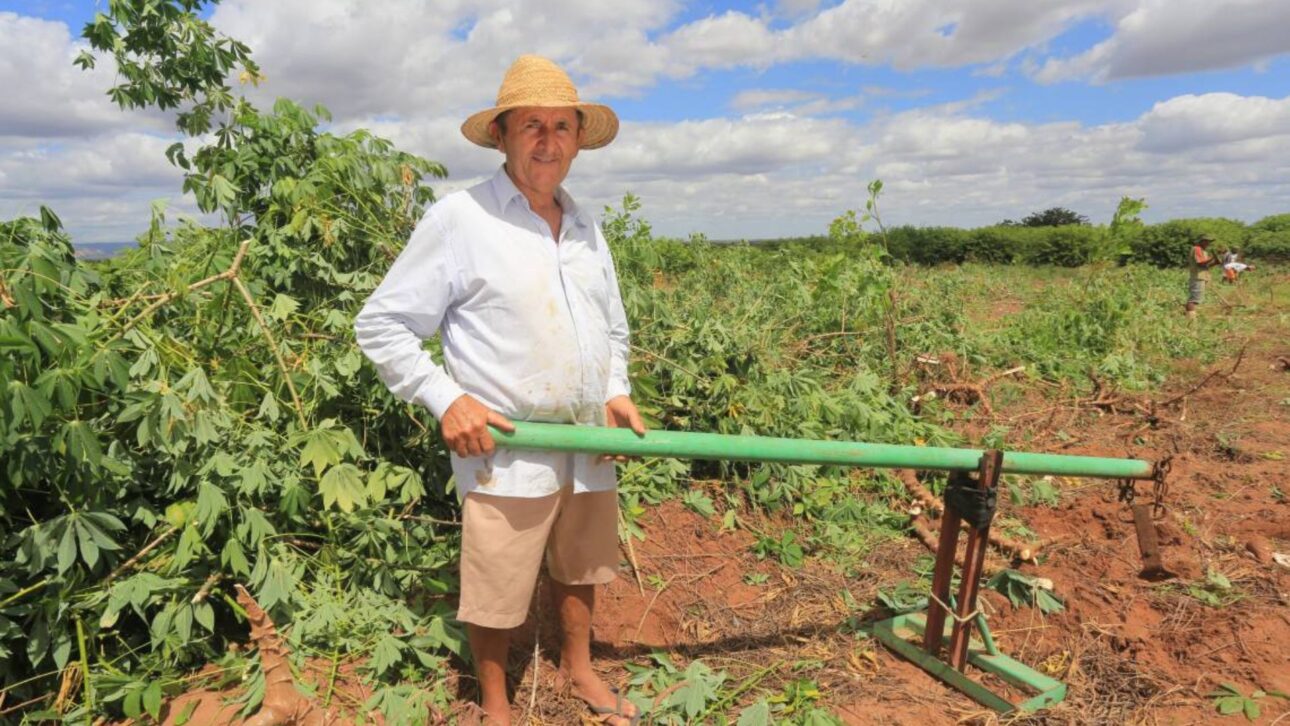
Another important differential was the inclusion of wheels, pointed out by the publication itself as an uncommon element in this type of equipment. They reduce the effort in transportation to the field and also in moving from one plant to another during harvesting.
In practice, the proposal is simple and functional. Instead of carrying weight all the time and pulling the plant only with brute force, the farmer starts using a supported metal structure, with better mechanical support to perform the startup.
Movable claw helps fix the branch and improves field operation
The tool also received a movable claw, described by Epagri as an essential piece to hold the branch before startup. This fixation improves the operation and avoids scraping that could compromise the availability of cuttings, used in the next planting.
This point corrects one of the most common weaknesses of manual harvesting. When the plant is removed without adequate support, the operation tends to require more force, more repetition of movement, and more physical wear on the worker.

With the claw better holding the branch and the structure supported on wheels, the system becomes more stable at the time of startup.
The result sought by Epagri was to make harvesting less arduous and more compatible with the reality of small properties, where heavy mechanization is not always viable.
Test on rural property reinforced acceptance among family farmers
To verify the feasibility of the tool, Epagri took the prototype to the field. One of the tests was conducted with the farmer Gilmar Damásio, from the municipality of Treze de Maio, in Santa Catarina, who works strictly with family labor.
In the account recorded by the technical publication, he stated that the equipment could greatly assist in uprooting cassava roots, especially when the soil is drier and the plants have large roots. He also said that, with the tool, he was able to uproot plants alone that previously required the help of another person and with less strain on his back.
The positive evaluation reinforced an important point of the project. The solution was not designed to replace large harvesters in extensive areas but to cater to an audience that still relies on manual labor and needs simpler, cheaper equipment compatible with the routine of family farming.
Manual cassava harvesting still weighs on the physical cost of small properties
Mechanization exists, but it does not cover the entire cassava production base. Epagri itself highlighted that more sophisticated equipment faces obstacles such as cost, the need for tractors, and the requirement for suitable areas for mechanization, a reality far from many family farmers in Santa Catarina.
In technical materials from Embrapa, cassava harvesting is still described as a basically manual operation or done with the aid of manual implements in various production realities. The same material highlights that soil and climate conditions directly influence the ease or difficulty of uprooting.
In this scenario, the tool developed in Urussanga gains relevance because it relies on an old and efficient principle. By combining a lever, wheels, and a movable claw, Epagri turned an idea born among farmers into a low-cost solution aimed at reducing physical wear and improving the efficiency of manual cassava harvesting.