






 Portuguese
  Spanish
  4 min of reading
  0 comments


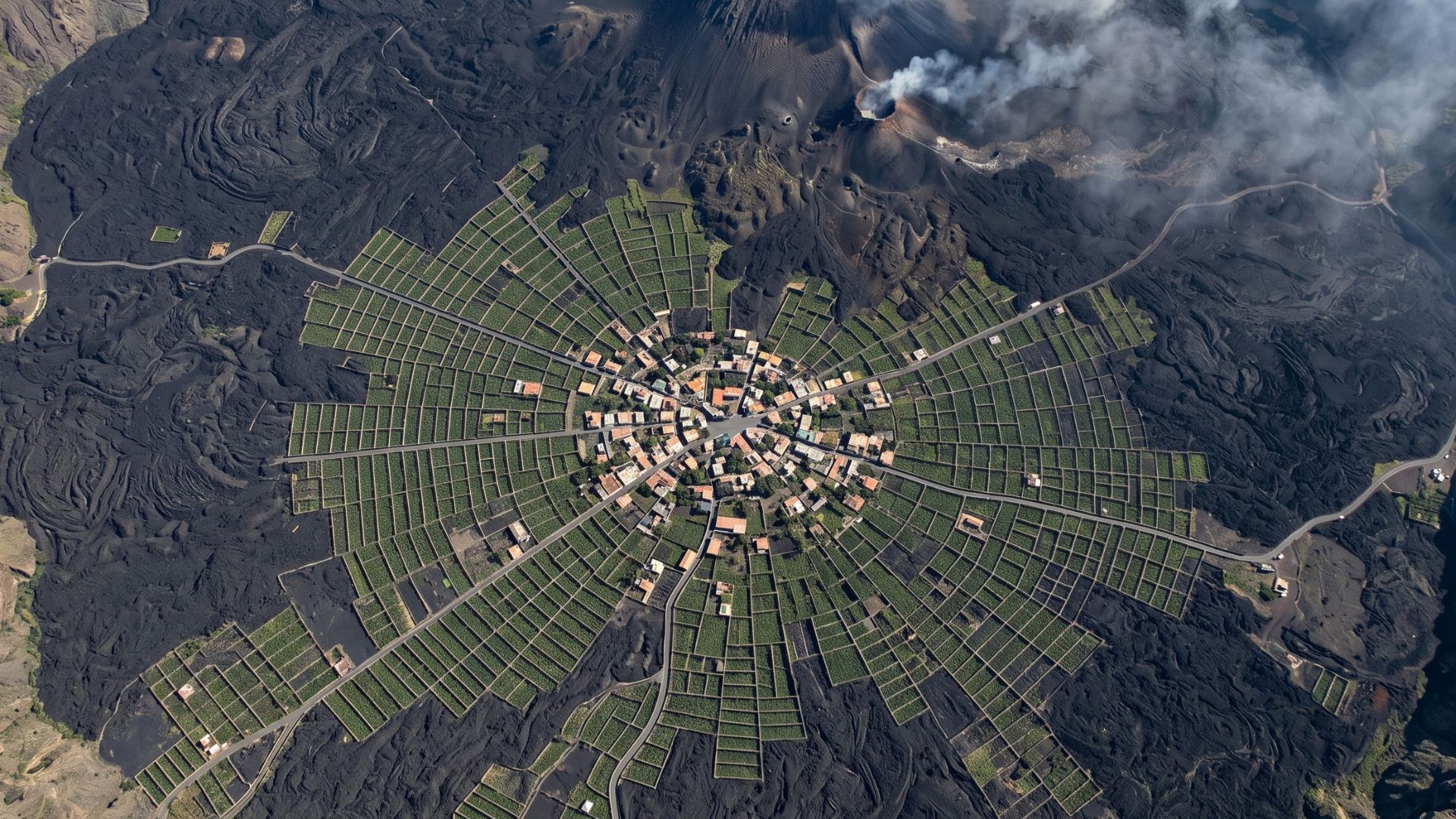
Chã das Caldeiras, in Cape Verde, lives inside the crater of Pico do Fogo, was destroyed by lava in 2014, and continues rebuilding houses, vineyards, and inns in the same place.
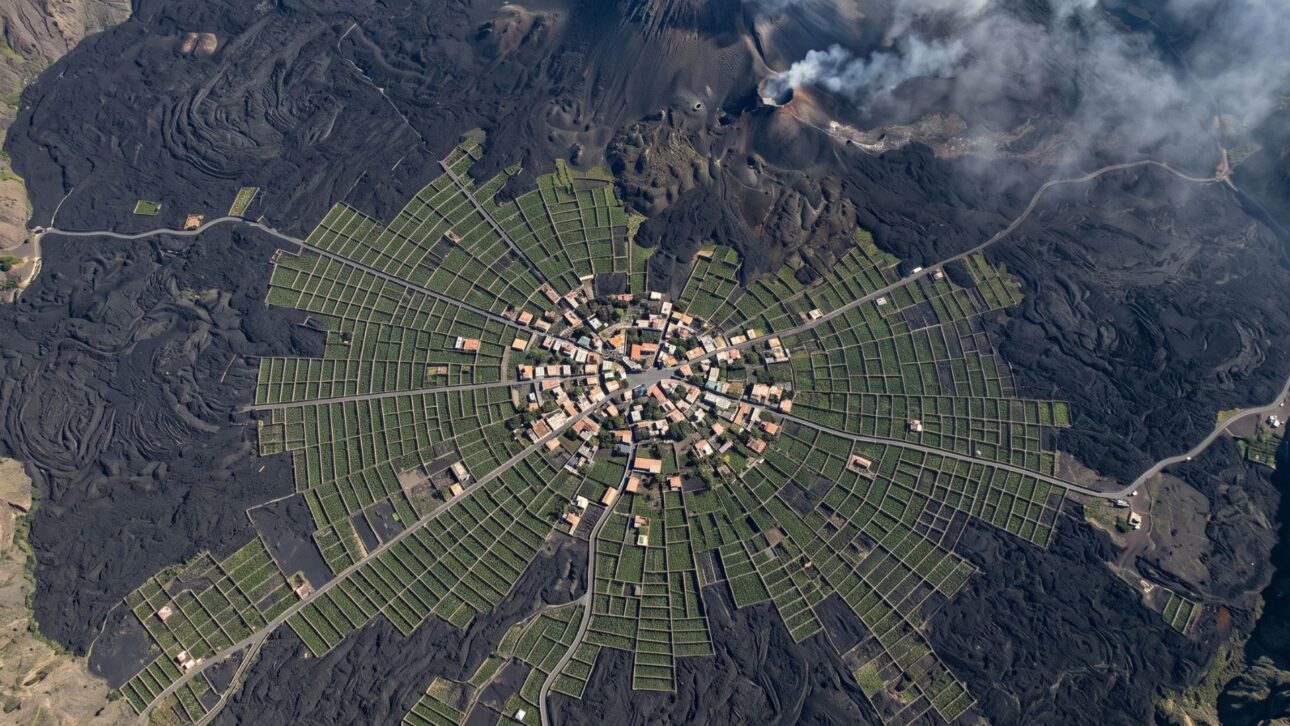
According to AFP, in a report published by Malay Mail, there exists in Cape Verde one of the most improbable inhabited communities on the planet: Chã das Caldeiras, a village located inside the crater of Pico do Fogo, on the island of Fogo. The village lives in a permanent relationship of risk and dependence with the volcano, which destroys houses, crops, and roads when it erupts, but at the same time sustains the local economy with fertile soil and tourism.
The community is located inside the large caldera of the volcano, surrounded by steep walls, and coexists with a cycle that has repeated several times: the lava advances, the residents are evacuated, the landscape is buried, and then, when the danger diminishes, they return to rebuild everything exactly in the same place. This was the case after the eruption of 1995 and it happened again after the eruption that began on November 23, 2014.
Chã das Caldeiras continues returning because the volcano also sustains local life
According to AFP, Pico do Fogo itself generates most of the community’s wealth. The main reason lies in the contrast between destruction and fertility. The volcanic soil of the crater allows for the cultivation of grapes, figs, cassava, and other crops, something valuable in a country marked by dry climate and water limitations. At the same time, the volcano attracts visitors interested in climbing to the summit and experiencing the landscape shaped by lava.
-
Workers removed old panels from a Scottish lighthouse and found a hidden bottle with a message from 1892, names of engineers, lighthouse keepers, and details of a lens used to guide ships.

-
Your child may be gifted and you don’t even suspect it: experts warn that even low grades and disinterest in school may hide high abilities behind boredom.

-
An old telephone booth was removed during construction at an English station and ended up revealing tunnels under platform 4, with hidden rooms connected to the railway logistics of another era.
-
The SP government considers demolishing a 40-meter bridge after a 21-year-old was launched without a rope in a radical jump; the federal structure has been abandoned for 30 years and had already been the subject of warnings.



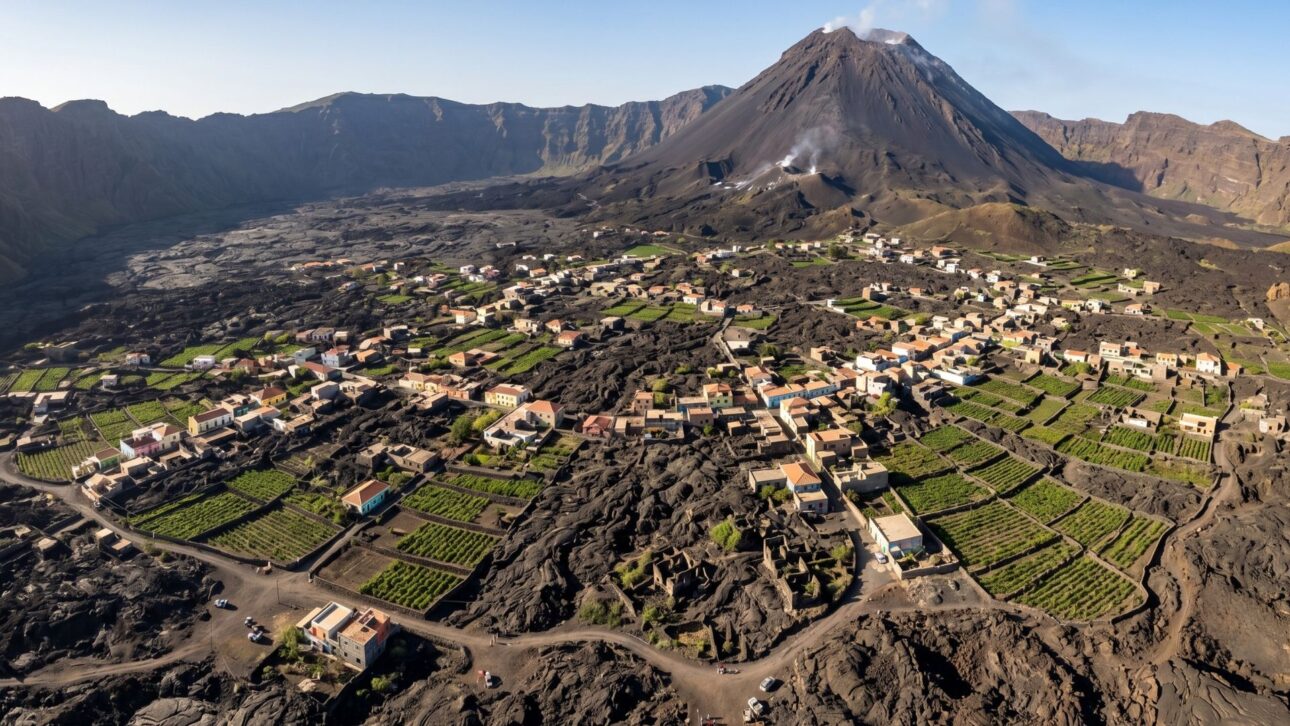
The report states that the location receives about 5,000 tourists per year, which supports inns, restaurants, and the work of guides. This is why many residents treat the volcano as both a threat and a source of livelihood. Without it, the village would lose precisely what keeps it economically alive.
This contradiction helps explain why a definitive departure never consolidates. The risk is real, but the economic and emotional connection to the land remains stronger than the pressure to abandon the area.
2014 Eruption Destroyed Much of the Village and Left About 1,500 People Homeless
According to AFP, the most recent eruption radically changed the crater’s landscape. The lava swallowed inns, plantations, roads, and entire neighborhoods of the village, leaving about 1,500 people homeless. The evacuation was done in time, and the eruption did not kill residents, but buried the community’s physical base under a thick layer of volcanic rock.


Wired, while following the start of the eruption in November 2014, reported that authorities evacuated the residents of Chã das Caldeiras when volcanic activity began to threaten local routes and expand lava flows within the caldera. The publication also recalled that the previous eruption, in 1995, had covered more than six square kilometers of the crater floor.
The 2014 episode reinforced that the threat of Pico do Fogo is neither abstract nor distant. It is an active volcano, with a recent history and proven capability to erase in a few days what took years to build.
Residents Rebuilt Inns, Houses, and Vineyards on Still Hot Lava
According to AFP, the return began shortly after the evacuation. Many residents returned despite government opposition and extreme precariousness. The reconstruction was largely carried out by the inhabitants themselves, who reopened paths, sourced materials, and rebuilt inns and homes on the new layer of lava.
The report describes an impressive detail of this return: years after the eruption, the floor of a rebuilt inn still remained hot to the touch in some places.
The hotel owner, Marisa Lopes, said that in the first months the floor was too hot to walk barefoot because the reconstruction had been done quickly over the lava that had not yet completely cooled.
This shows the degree of improvisation and urgency that marked the village’s return. Instead of waiting for ideal conditions, the residents chose to return as soon as they could, even knowing that the landscape still held heat, instability, and risk.
The connection with the land explains why the residents insist on living inside the volcano
According to AFP, the explanation that the inhabitants of Chã das Caldeiras give for this repeated return is straightforward: it is their home. Many were born there, know the soil, live off local tourism and agriculture, and cannot imagine their lives outside the crater.
The resident Cicilio Montrond, cited in the report, lost fruit trees, belongings, and part of his material life to the lava, but returned with his wife after a few weeks away from the village. The logic repeated by several residents is simple and powerful: the volcano can destroy everything, but it is also what makes living there possible.

This relationship explains why Chã das Caldeiras has become a rare symbol of human resilience in the face of extreme geological forces.
The community knows that Pico do Fogo will erupt again one day. Even so, they continue planting, welcoming tourists, rebuilding houses, and treating their permanence there as an inevitable part of their identity.





Be the first to react!