






 Portuguese
  Spanish


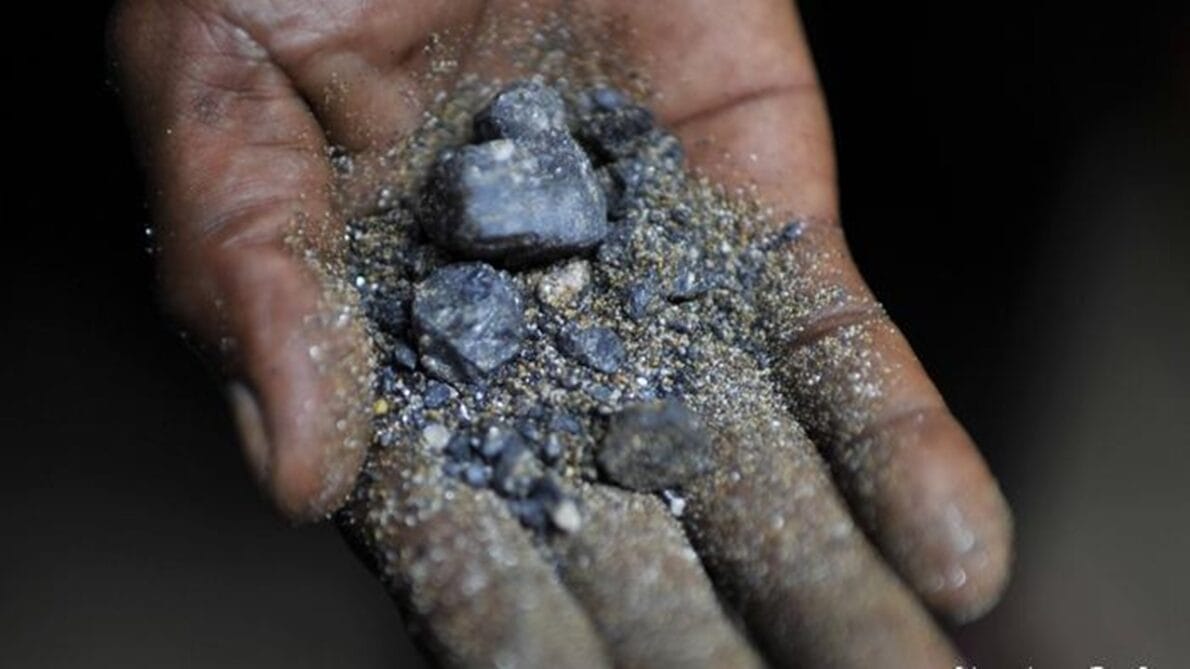


A Niobium And Rare Earth Reserve Discovered In Northeastern Siberia Has Just Been Rated The Third Largest Reserve In The World!
The third largest niobium reserve is discovered in northeastern Siberia in Russia. According to the mining company Polymetal, it – which is located in Tomtor, a town formed by several small villages in the Republic of Sakha – has already been evaluated and confirmed for its scale and high content.
And it doesn’t stop there: in addition to the niobium deposit, the site also holds a large quantity of rare earth minerals. Rare earths are necessary to produce almost any modern high-tech item, including smartphones, computers, chips, and even fighter jet fuselages.
According to a source cited by Russia Today, a feasibility study for a project will begin soon, and the construction of a mining factory capable of producing about 170,000 tons annually is scheduled for 2025.
-
Volvo’s New Loaders Feature Obstacle Detection, Automatic Braking, and 360-Degree Operator View

-
Study Reveals 97% of Pregnant Munduruku Women in the Brazilian Amazon Have Mercury Levels Above Safe Limits, 90% of Newborns Contaminated by Gold Mining

-
Chinese Manager Accused of Whipping Worker Sparks Protest by 1,200 Employees at Major Brazilian Factory
-
France Revamps 530 Social Housing Units with Large Balconies and Glass Facades Without Demolishing Existing Buildings




What Are Rare Earths?
The term rare earths is unknown, but it is the common name for 17 chemical elements: scandium, yttrium, and the 15 elements in the lanthanide series: Lanthanum (La), Cerium (Ce), Praseodymium (Pr), Neodymium (Nd), Promethium (Pm), Samarium (Sm), Europium (Eu), Gadolinium (Gd), Terbium (Te), Dysprosium (Dy), Holmium (Ho), Erbium (Er), Thulium (Tm), Ytterbium (Yb), and Lutetium (Lu).
It should be noted, experts say, that this classification does not consider the actinide series.
Although the name rare earths may lead to the conclusion that these are scarce elements in the Earth’s crust, some elements like cerium, yttrium, and neodymium are more abundant.
According to the literature reviewed, these minerals are described as “rare” because it is very rare to find them in pure form, although there are deposits of some of them worldwide.
How Is Niobium Produced?


Brazil Is The Largest Global Supplier Of Niobium, A Mineral Found On A Large Scale In Indigenous Reserves In The Amazon
It is in the municipality of São Gabriel da Cachoeira, in Amazonas, that one of the largest niobium reserves in the world is found, a mineral with a wide range of applications. In the Amazon rainforest, the territory lies on the border of Brazil with Venezuela and Colombia.
Although the total estimated ore in the reserve is around 2.9 billion tons of niobium, the area cannot be explored due to being located in indigenous territory and within the environmental protection areas of Pico da Neblina National Park and the Morro dos Seis Lagos State Biological Reserve.
Besides the Amazon, another large operational niobium reserve is located in the city of Araxá, in the Triângulo Mineiro and Alto Paranaíba region. Just in Araxá, the reserves are estimated at over 800 million tons of the mineral, a volume sufficient to ensure more than 100 years of production, given the current demand. However, if the underground rock deposits are considered, the mining exploration capacity is estimated to exceed 400 years.
Currently, the niobium produced in Minas Gerais by CBMM mining is exported to over 50 countries, with the greatest potential for supply to steel companies.
Use Of Niobium
Niobium, such a precious mineral, is used in alloys, primarily in steel, which is strengthened by adding a small amount of this element, but it can also be used in jewelry, optics, electronics, and the nuclear sector, experts say.
Niobium is used on a larger scale in the production of special steels and superalloys. Niobium has the function of “refining.” Only 400 grams per ton are enough to produce lighter and stronger steels.
In mining, the metal is sold in the form of ferroniobium alloy (with about two-thirds niobium content and one-third iron) and is used in cars, aircraft turbines, gas pipelines, ships, magnetic resonance imaging devices, particle accelerators, lenses, and even piercings and costume jewelry.
I would love to know if you have heard of niobium. Let us know in the comments section if you are a mining, steel, or related professional. Don’t forget to turn on notifications from CPG to keep up with all the news from Brazil and the world. Until next time!





Excelente matéria.
Nióbio tem uso extremamente limitado, mas o tupiniquim segue tratando como se fosse um material revolucionário e exclusividade do Brasil.
A Rússia é vida pelos países do otanistão por ter. Todos recursos **** do planeta.