Portuguese
  Spanish


CNI indicators reveal a drop in production, financial deterioration, and business confidence below 50 points for 17 consecutive months
The small Brazilian industry entered 2026 under strong economic pressure, raising an alert in the national productive sector. The Small Industry Overview, released by the National Confederation of Industry (CNI), showed that the performance index reached 43.7 points in the first quarter of 2026, the lowest level since the second quarter of 2020, during the Covid-19 pandemic. The drop of 1 point compared to the first quarter of 2025 reinforces the loss of momentum of small industrial companies. This movement demonstrates that production, installed capacity, and the number of employees remain pressured in a scenario of expensive credit, high inputs, and low confidence.
Technical drop exposes weakening of the small industry
The change results from the simultaneous deterioration of three indicators used by CNI to measure the performance of the small industry. After all, the survey considers the volume of production, the utilization of installed capacity, and the evolution of the number of employees. Furthermore, according to Julia Dias, CNI’s Policy and Industry analyst, all these indicators fell in the first quarter of 2026, compared to the last three months of 2025. This result reveals that the weakening was not concentrated in just one area but affected different operational bases of the sector.
Financial situation worsens and increases pressure on companies
Meanwhile, the financial situation of small industrial companies also declined significantly. The indicator dropped 2.5 points and reached 39 points, the worst result in five years. Therefore, the financial deterioration increases the pressure on companies already facing tight margins and difficulties in maintaining investments. According to Julia Dias, the scenario reflects the maintenance of high interest rates and the increase in prices of inputs and raw materials. Small industries also struggle more to access credit, as they are seen by the market as higher-risk businesses.
-
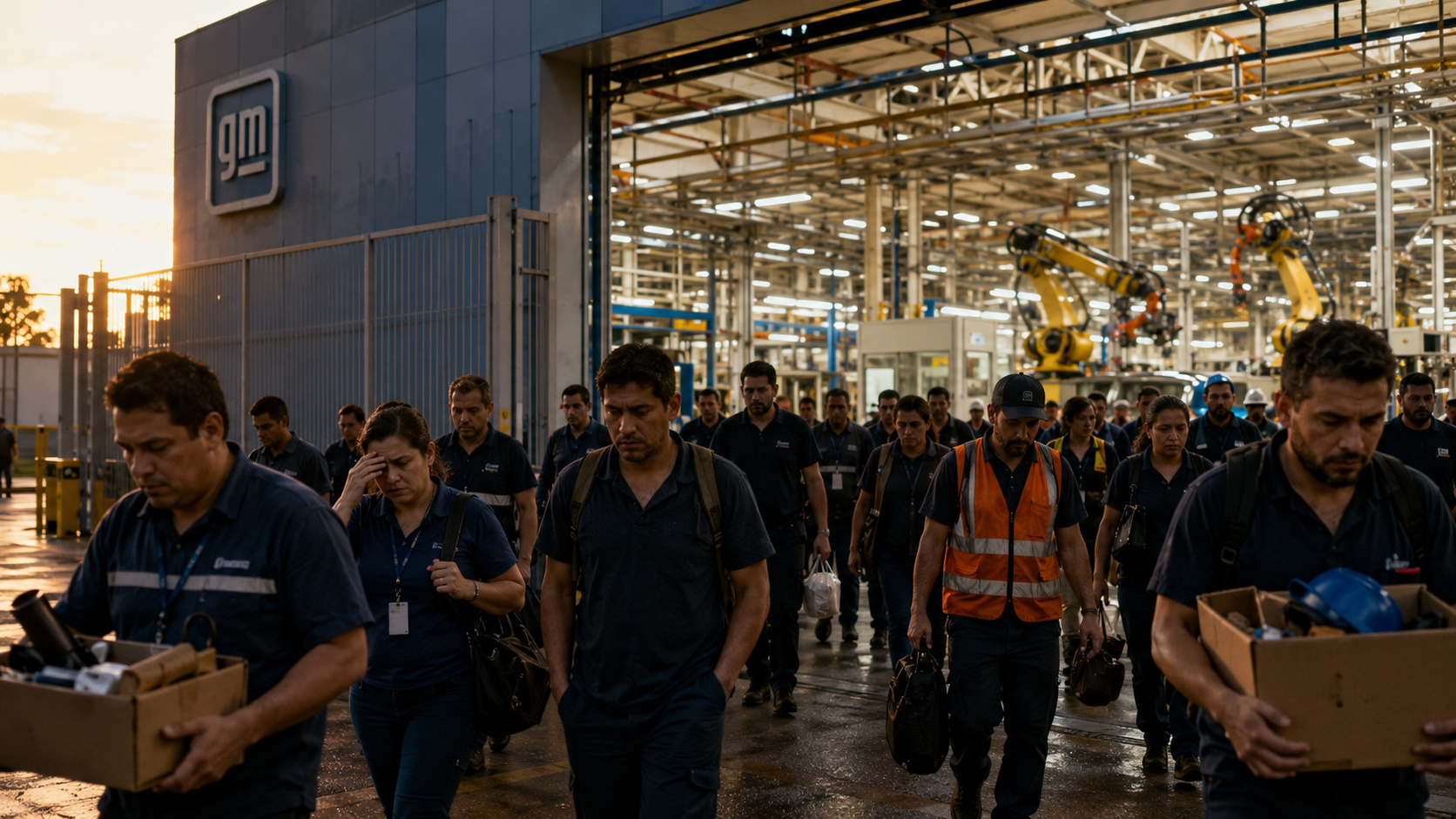
General Motors Replaces Over a Thousand Workers with 50 Cobots at Electric Vehicle Plant, UAW Union Criticizes Move Amid Industry’s Automation Push

-
Havaianas: From Humble Beginnings to a $900 Million Global Fashion Icon
-
Helsinki Residents Receive Water That Travels 120 Kilometers Through a Hidden Rock Tunnel from a Lake Before Treatment
-
SENAI Launches $36 Million Innovation Round to Boost Brazilian Manufacturing Productivity and Reduce Business Risks with R&D Projects by 2026



Tax burden and raw material lead concerns
Additionally, the high tax burden appears as the main obstacle for the small industry in the first quarter of 2026. In the manufacturing industry, this problem was cited by 39.6% of entrepreneurs. Next, the lack or high cost of raw material reached 34.1%, jumping from sixth to second position among the biggest concerns. Meanwhile, the lack or high cost of qualified workers stood at 26.5%. This advance shows that production costs have become even more burdensome on the routine of small companies.

Construction also feels the impact of interest rates and labor
In construction, the scenario is also pressured by structural costs. The high tax burden led the difficulties, with 42.2% of mentions. Next, the high interest rates appeared with 37.1%. Furthermore, the lack or high cost of unskilled labor reached 31%. This set of problems highlights how construction faces financial, tax, and operational obstacles simultaneously, which slows down the recovery pace of small companies in the sector.
Conflict in the Middle East pressures industrial inputs
Concern with raw materials is also linked to the conflict in the Middle East. After all, this scenario pressures the prices of important inputs for the industry, such as oil and derivatives. As a consequence, small companies feel a direct impact on production costs. Additionally, this increase compresses profit margins, as many industries cannot pass all costs on to the final consumer. This movement makes the business environment even more challenging.
Business confidence remains below the equilibrium line
The survey also shows a drop in the Industrial Entrepreneur Confidence Index (ICEI) of small companies. The indicator reached 44.6 points in 2026, the lowest level since June 2020, a year marked by the pandemic. Moreover, the index has remained below the 50-point line for 17 consecutive months. This demonstrates an intense, widespread, and persistent lack of confidence among entrepreneurs. This behavior reinforces caution in investments, hiring, and expansion plans.
Moderate perspectives indicate an uncertain future
Finally, the small industry outlook index stood at 47.4 points, signaling moderate expectations for the next six months. The indicator considers investment intention, demand or activity expectation, and the evolution of the number of employees. Thus, the Brazilian small industry enters a phase of caution, marked by high costs, difficult credit, and reduced confidence.
To what extent can high interest rates, tax burden, and expensive inputs still limit the recovery of small industries in Brazil?