






 Portuguese
  Spanish
  5 min of reading
  10 comments


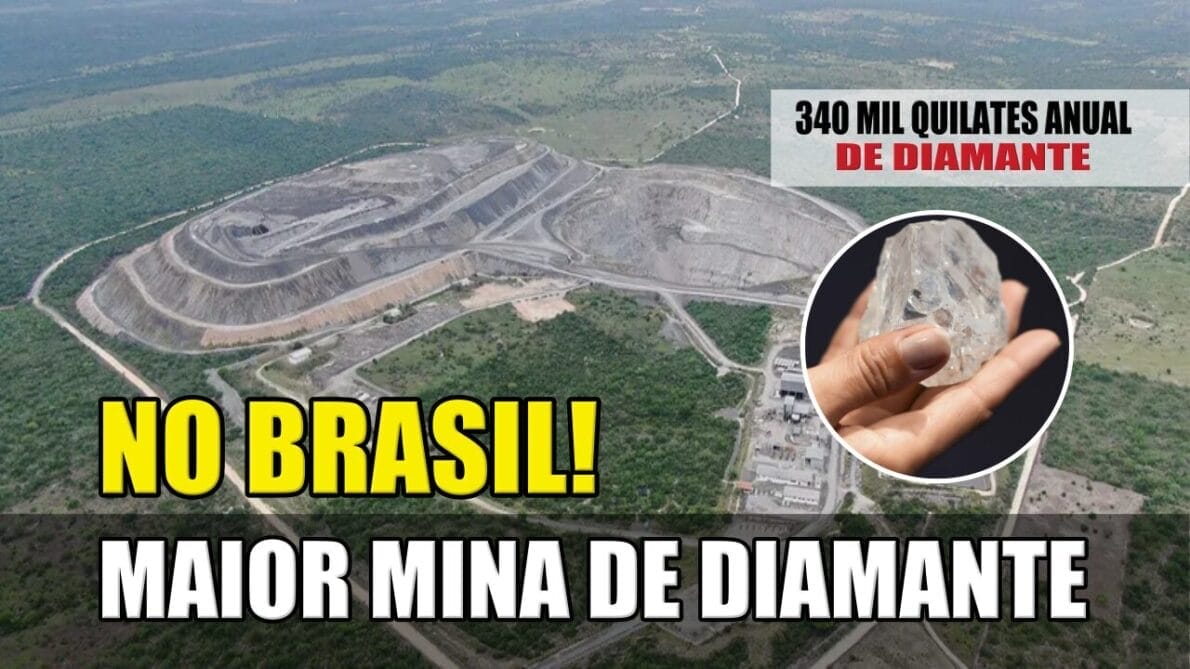


Discovery in the Sertão of Bahia Changed the History of Brazil, Positioning the Country as One of the Major Producers and Exporters of Diamonds in the World!
Let’s talk about a fascinating subject in mining: the largest diamond deposit in Brazil and South America, found on April 19 in the small municipality of Nordestina. Located in the Sertão of Bahia, in an arid and little-known region, the Braúna mine is a recent discovery that has enormous potential.
In this article, we will explore all the details about this mine, from its location to the quantity and value of the diamonds found. Get ready to be amazed by this incredible story!
Largest Diamond Deposit in Brazil
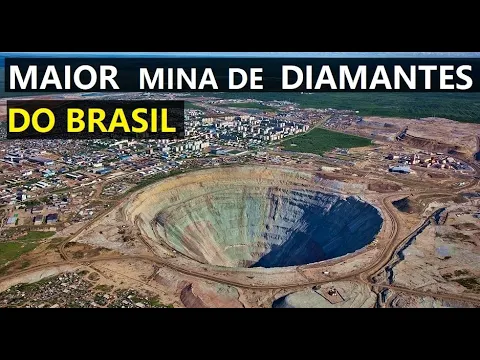

The Discovery of the Braúna Mine: The Largest Diamond Mine in Brazil and Latin America
Located about 10 km from the small town of Nordestina, the Braúna mine is situated in a nearly flat area, near the Itapicuru River. Few people know about the existence of this super deposit, but that is about to change.
-
Without a mansion, without high investment, and without a traditional classroom, a teacher living in a 22 m² house taught students to build a 9 m² studio apartment with the equivalent of R$10,000.

-
Without her own home and pressured by rent, a 25-year-old bought a small 15-meter boat, gradually renovated the interior by herself, transformed the interior with paint, new flooring, a larger bathroom, and started living on the canals, paying much less per month.
-
Long before sustainable construction became a trend, China built earthen fortresses with multiple floors, a central courtyard, and the capacity to house up to 800 people living in a community.
-
China could reduce iron ore imports from 80% to 50% of consumption by 2030, while its share in global steel production falls from 52% to 46%, in a shift that could reshape the global market, says CMRG.




The town of Nordestina, with just over 12,000 inhabitants, will become known as the home of the largest diamond deposit in Brazil and Latin America. The Braúna mine is operated by Lipari Mineração Limitada, a Canadian company that has invested over 100 million dollars in this project in search of diamonds.
Since 2016, the company has been exploring the open-pit deposit, without the need to build tunnels. The quantity of diamonds found is enormous, and the production from this mine has the potential to increase Brazil’s current diamond output by 495%.
Kimberlite Phenomenon: The Primary Rock Source of Diamonds
Have you ever wondered why diamonds exist in certain places? The answer lies in kimberlite pipes. The Braúna mine is located on one of these pipes, which are geological formations responsible for the concentration of diamonds. But what exactly is a kimberlite? Kimberlite is a volcanic rock that forms deep within the Earth, beneath the common lava layer.
In this environment, there is enough heat and pressure to transform carbon into diamonds. At some point in the distant past, this volcanic lava found a breach in the Earth’s crust and managed to reach the surface. This volcanic eruption caused the dispersion of diamonds over a radius of more than 50 km. The Braúna deposit is a perfect example of this phenomenon.
It is located in an arid region of the Sertão of Bahia, where no one would expect to find diamonds. However, geologists hit the jackpot by discovering this kimberlite pipe, which houses an impressive amount of diamonds.
Exploration of the Braúna Mine: Annual Production Capacity of 340,000 Carats of Diamonds
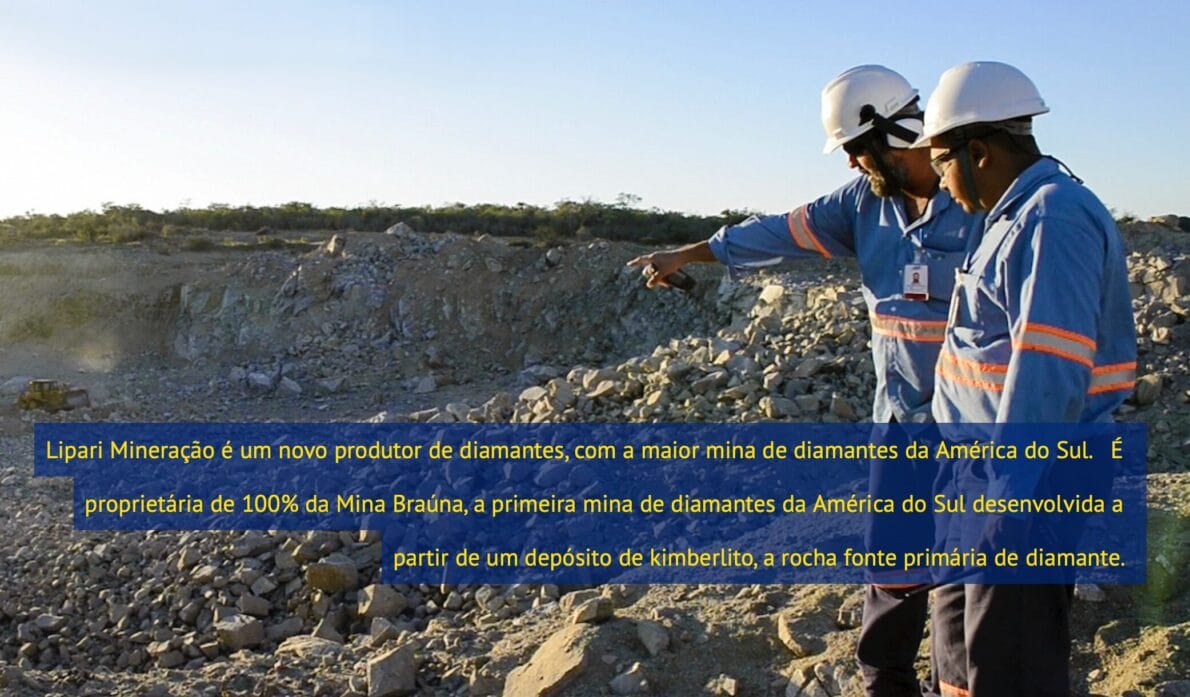
Before the Braúna mine, diamond exploration in Brazil only occurred in secondary sources, such as rivers and gravel. These secondary sources are formed when diamonds separate from kimberlite rocks and are carried away by water action. However, the Braúna mine is the first deposit in Latin America explored in a primary source of diamonds.
This means that the diamonds are directly linked to the kimberlite pipe, making exploration more efficient and productive on a large scale. The Braúna mine stands out not only for its size but also for the quality of the diamonds found. During the research phase, between 2014 and 2016, approximately 2,500 high-quality diamonds were extracted.
The projection is that the mine will be able to extract about 340,000 carats of diamonds per year, over a lifespan of at least seven years. This represents almost half a ton of diamonds throughout the entire operational period of the mine.
The Future of the Braúna Mine
The mine is an open-pit mining operation that utilizes its own fleet and equipment to feed a processing plant of 2,000 tons of kimberlite ore per day, 24 hours a day, 7 days a week.
The mining company Lipari plans to further deepen research to verify the feasibility of extracting diamonds from the bottom of the mine, about 260 meters deep. If possible, the Braúna mine will transition from an open-pit mine to an underground mine, expanding its production potential.
Currently, the Braúna mine employs more than 300 workers, and the operations involve diamond extraction and processing. This is a large-scale operation, with investments exceeding 100 million dollars and projected profits of about 750 million dollars by the end of the process.
Discovery of the Braúna Mine in the Sertão of Bahia Represents a Milestone for Brazil
The discovery of the Braúna mine in the Sertão of Bahia represents a milestone for Brazil. This mine, which has become the largest in the country and Latin America, reaffirms Brazil as a world leader in diamond production. Additionally, this discovery opens up new possibilities for diamond exploration in other regions of the country.
As we await the advancement of Brazilian science and technology for the discovery of more kimberlite pipes, we can continue to admire and value this natural wealth.
Did You Know? The Largest Niobium Deposit on the Planet is in Brazil: With 90% of Global Production and an Annual Capacity of 150,000 Tons, Brazilian Niobium is the Crucial Raw Material to Save and Revolutionize Industry Worldwide
You have probably heard of Indiana Jones movies, where he goes in search of hidden treasures in the remotest corners of the planet. But the story you will read today is equally fascinating, yet real. It is about the discovery of the largest niobium province in the world, which changed the history of mining in Brazil!
The U.S. Geological Survey classifies niobium as the second “critical” mineral, estimating that 90% of global production comes from Brazil. “Our country can stand out as an essential supplier of materials for the energy transition,” says Ricardo Lima, president of CBMM. “The main advantage we offer is quick loading,” he explains. “In the battery industry, we have a great opportunity for success.” Click here and check it out in full.
I would love to know if you already knew about the Braúna mine. Tell us in the comments section what you think. Don’t forget to leave 5 stars and activate the CPG notifications to keep up with all the news in the mining world. Until next time!





Muy fascinante conocer que por primera vez se explotan diamantes de alta calidad, relacionados con rocas kimberlitica, En sud América es posible encontrar mas pipas De Kimberlita_ Sin o No
⁹legal ..como isso pertence ao “”ao governo brasileiro “” pq eles falam que tudo que achamos ñ é nosso ..então essa jazida faz parte do governo ..então dá pra dividir com o povão…divindo os lucros tudo certinho , ñ vai ter brasileiro mais em sarjeta!!
Eu acho isso !! Parabéns pra quem Deus usou a descobrir esses milhões… parabéns pro governo que permitiu a descoberta ..uuhhuuu
Muito importante essa descoberta espero que danos ambientais sejam minimizados preservando o meio ambiente .