






 Portuguese
  Spanish
  6 min of reading
  0 comments


Projection presented in Singapore indicates significant change in Chinese iron ore consumption by 2030, with greater use of steel scrap, advancement of domestic supply, and reduction of the country’s share in global steel production.
Imported iron ore is expected to drop from about 80% to 50% of China’s total consumption by 2030, according to a projection presented this Tuesday (16) by Yilin Wang, general manager of the market research and external cooperation department of the CMRG Institute, linked to the China Mineral Resources Group.
The anticipated change combines the advancement of domestic supply, greater use of steel scrap, and a lower Chinese share in the global production of the metal alloy, in a movement that could alter the balance between suppliers, steel mills, and buyers in the global ore market.
During an industrial conference in Singapore, Wang stated that China’s share in global steel production is expected to decrease from 52% last year to 46% in 2030, accompanying a scenario of more moderate internal consumption.
-
Brazil is sitting on one of the largest lithium reserves in the world, in the Jequitinhonha Valley, but national mining has almost become an appendage of China: 97% of the metal’s export goes to a single country, which also dominates refining.

-
Iron ore falls to 762 yuan in China as real estate sales decline and steel production hits lowest level since 2018
-
Brazil has minerals, clean energy, and a waiting market, but it could miss a billion-dollar opportunity if it doesn’t speed up the race for green minerals, while the steel industry seeks to reduce emissions.
-
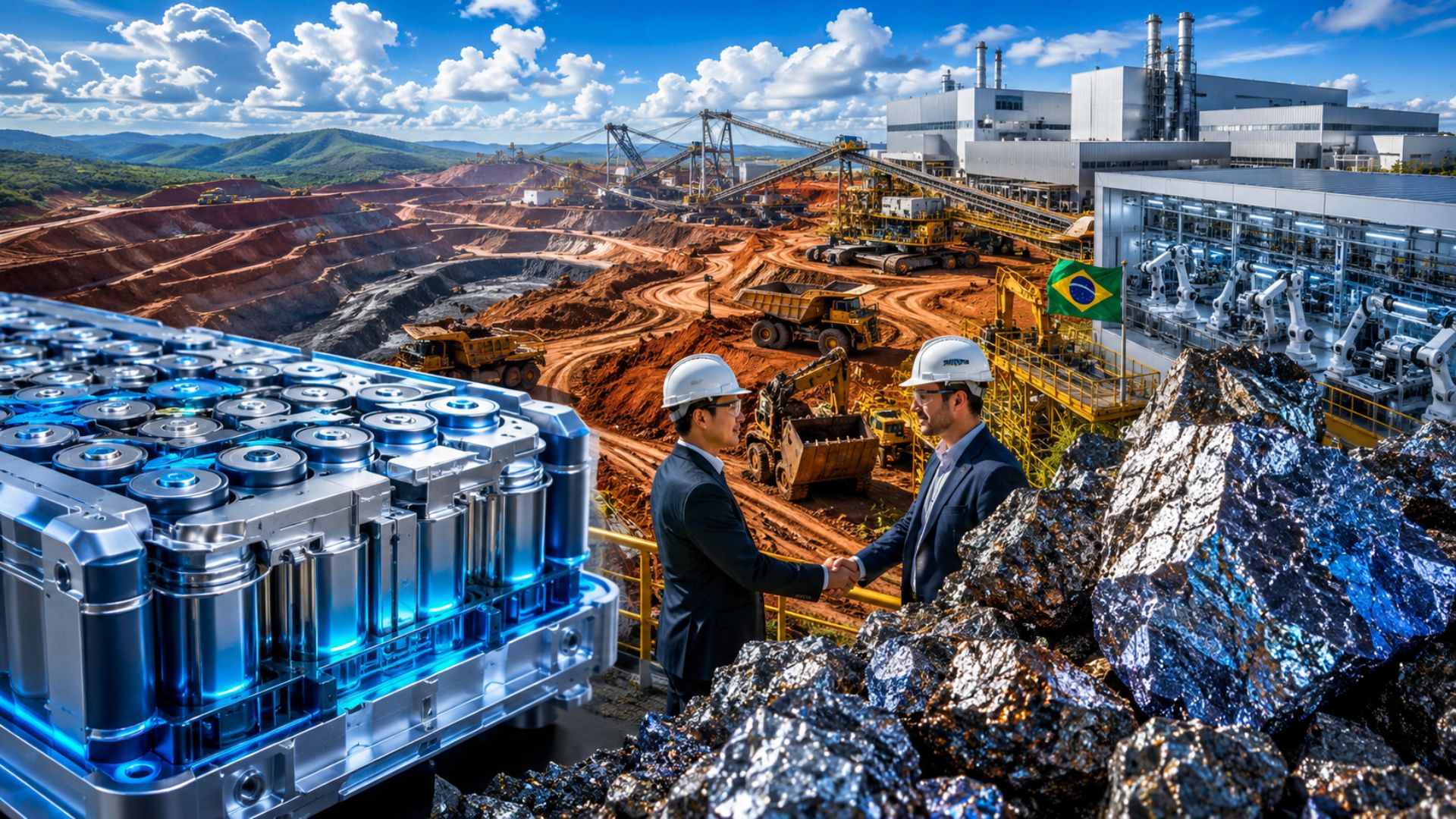
Asian battery manufacturer becomes a partner in a rare earth and niobium project in Minas Gerais, with estimated reserves of 70 million tons and operations expected to start in 2027.


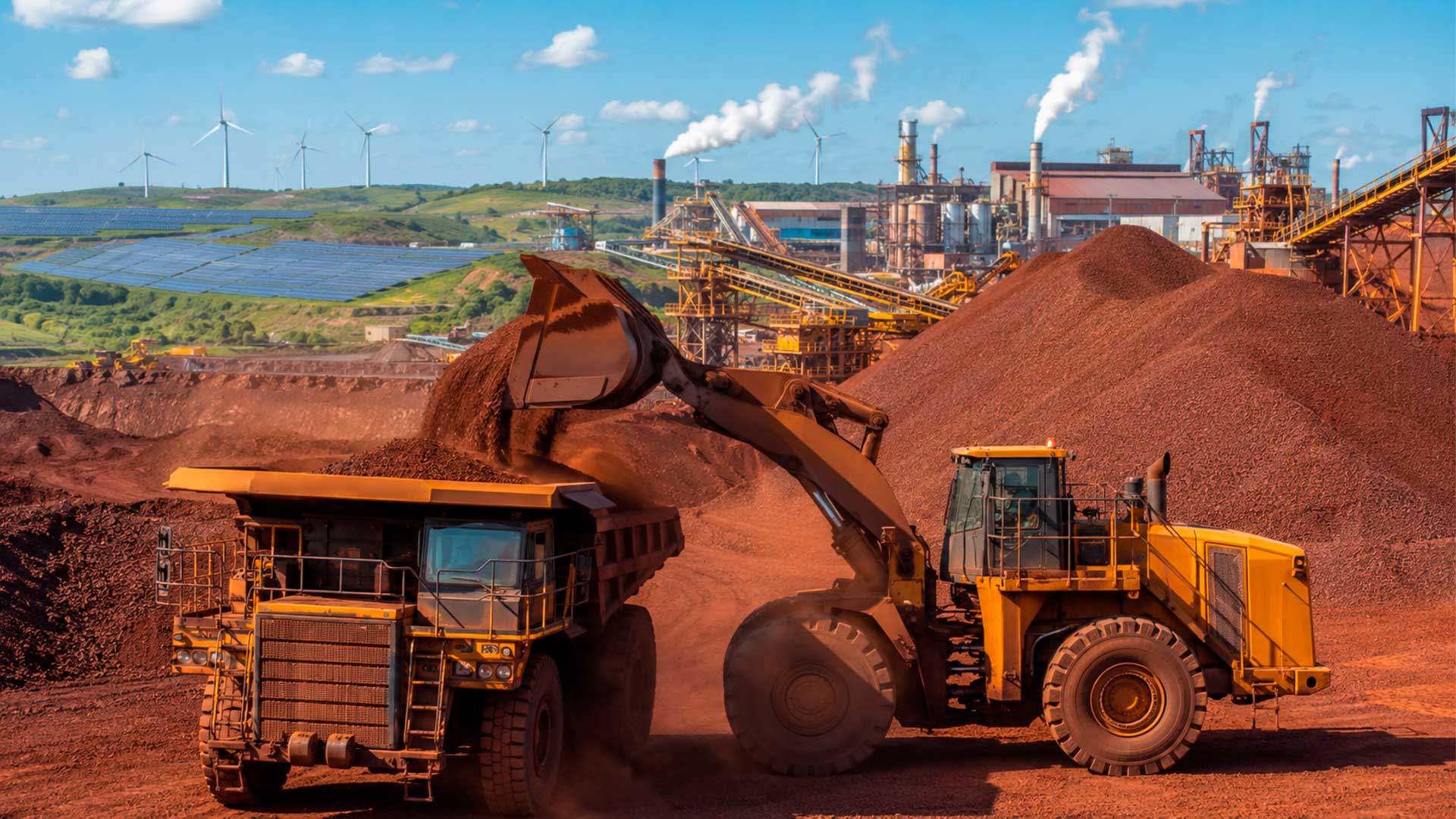
China attempts to reduce dependence on imported ore
According to CMRG’s projection, China would not stop buying iron ore from abroad but would significantly reduce its dependence on imports within its total consumption by the end of the decade.
This movement brings together three central factors: greater availability of national raw materials, advancement of steel scrap recycling, and gradual adjustment of the steel industry to less accelerated domestic demand.
Occupying an essential position in the steel chain, iron ore influences sectors such as civil construction, infrastructure, automotive industry, machinery, and equipment, which broadens the economic reach of any change in Chinese consumption.
With less need for imported ore, producers, traders, and maritime transport companies are likely to closely monitor the effects on prices, supply contracts, freight, and traded volumes in the coming years.
The China Mineral Resources Group is described as a group supported by the Chinese state, a factor that increases the relevance of the assessment presented by its research institute to companies and governments linked to the mineral sector.
Even so, the numbers cited by Wang are estimates for 2030 and depend on the evolution of steel demand, the capacity of internal ore production, and the pace of expansion of scrap use.
Steel production is also expected to lose global share
In addition to the projected decrease in the imported share of ore, the CMRG forecasts a reduction in China’s weight within global steel production, a sector in which the country still maintains broad influence.
The Chinese share, which was 52% last year, is expected to reach 46% by 2030, reflecting lower consumption, industrial adjustments, and a more mature local market.
In the same assessment, Chinese crude steel production may fall to about 900 million metric tons by 2030, indicating a lower level for the world’s largest steel industry.
Another highlighted data point is steel scrap production, which is expected to reach 310 million metric tons in the same period, reinforcing the role of recycling as a partial alternative to new ore.
With more scrap available, the possibility of producing steel with less need for primary ore increases, although the raw material remains relevant for Chinese steelmaking and the global supply chain.
The decline in China’s share of global production does not mean an immediate loss of importance in the sector, as the country would still account for a significant portion of the global steel supply.
Even in a scenario of a decline to 46%, China would maintain influence over prices, trade flows, and investment decisions, especially since its consumption still serves as a reference for international suppliers.
Impact on iron ore exporters
Among major iron ore exporters, the reduction in the imported share of Chinese consumption tends to be closely monitored, especially by countries and companies that rely on Chinese purchases to sustain high volumes.
The final effect, however, will depend on the pace of this transition, the ability of other markets to increase consumption, and the speed with which China can boost domestic production and recycling.
Since the projection targets 2030, the adjustment should not be read as an immediate rupture, but as a gradual change in the composition of sources used by Chinese steelmaking.
In this scenario, China would increasingly combine national ore, scrap reuse, and a smaller expansion of steel production, without disappearing as a relevant buyer in international trade.
For the market, the most sensitive information lies in the difference between the current situation and the scenario projected for the end of the decade.
Today, imports account for about 80% of Chinese iron ore consumption; by 2030, according to the CMRG, this proportion is expected to drop to half of the total.
This difference may affect calculations of global supply and demand, especially in a sector where long-term contracts, maritime freight, and investments in mines depend on forecasts about Chinese steelmaking.
The lower the need for imported ore by China, the greater the pressure for suppliers to adjust commercial strategies, diversify buyers, and revise growth expectations.
Steel scrap gains space in Chinese strategy
In the projection presented in Singapore, the advancement of steel scrap appears as one of the main components of the Chinese strategy to reduce dependence on ore purchased abroad.
By increasing the reuse of metallic material, the country can reduce part of the demand for primary ore and, at the same time, adjust its industry to a more moderate consumption profile.
The estimate of 310 million metric tons of scrap by 2030 indicates that China seeks to strengthen an alternative source of input for steel production.
For this advancement to materialize, it will be necessary to expand collection, processing, logistics, and industrial capacity, as the recycled material needs to meet the standards required by different steel-consuming sectors.
The increase in scrap usage should also be analyzed alongside the forecast of lower crude steel production, as both movements reduce the pressure on imported ore.
If total production decreases and scrap availability increases, the share of ore purchased abroad tends to lose space more consistently in Chinese consumption.
Even so, the projection does not remove the relevance of iron ore for the Chinese market, especially in industrial processes that require quality, supply regularity, and high scale.
The commodity remains essential for steelmaking, but its relative weight in Chinese imports may become smaller as internal sources and recycled materials gain participation.
Chinese demand enters a new phase
Yilin Wang’s statement reinforces a cautious reading about the future of Chinese demand for imported iron ore, especially in light of the combination of lower consumption and greater use of scrap.
More than the percentage reduction in external purchases, the central point lies in the simultaneous change in the profile of Chinese steelmaking and the country’s participation in global steel production.
For companies in the sector, the CMRG projection may influence decisions on mine expansion, supply contracts, maritime logistics, and commercial exposure to the Chinese market.
If confirmed, the transition tends to require greater attention to the growth of other steel consumers and the adaptability of global suppliers in the face of a China less dependent on imports.
The scenario presented in Singapore shows that the country intends to use more internal and recycled resources in steelmaking, reducing external participation in ore consumption without abandoning its central position in the global market.
By 2030, this strategy may decrease the weight of imports in Chinese supply and, at the same time, reduce China’s participation in global steel production.




Be the first to react!