






 Portuguese
  Spanish
  4 min of reading
  0 comments


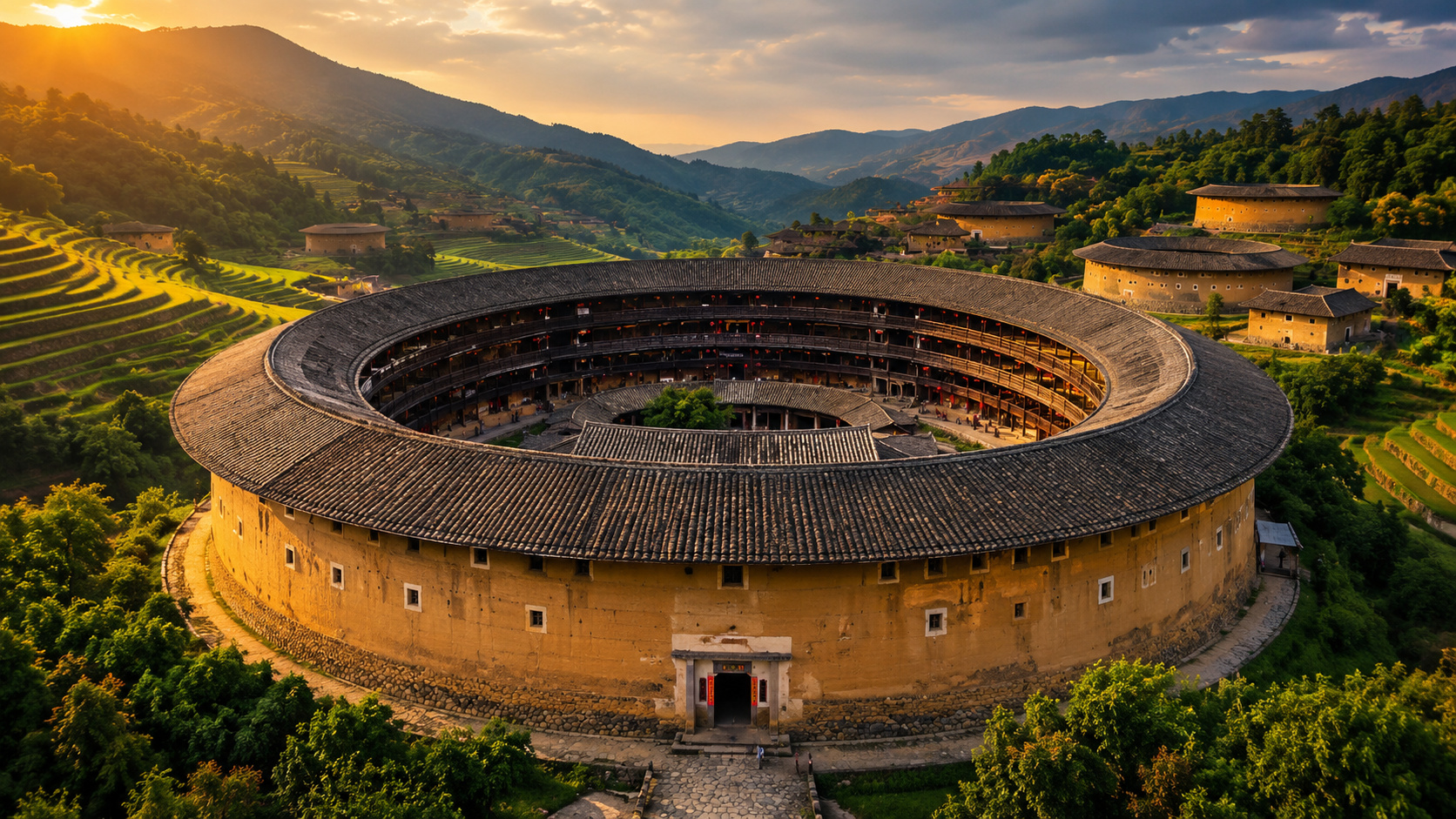
In the southeast of China, the Fujian Tulou show how rammed earth, defense, and collective living came together in giant houses that looked like fortresses, housed entire clans, and integrated into the rural landscape formed by rice fields, tea, and tobacco
Long before sustainable construction became a trend, China already had multi-story earthen fortresses with central courtyards and the capacity for up to 800 people living in community. These constructions are known as Fujian Tulou and are located in the southeast of the country.
The information was released by the UNESCO World Heritage Centre. The complex includes 46 earthen constructions, built between the 15th and 20th centuries, in the southwest of Fujian province.
From the outside, they look like closed blocks, strong and difficult to invade. Inside, they functioned as a kind of vertical village, where families of the same clan lived around a central courtyard.
-
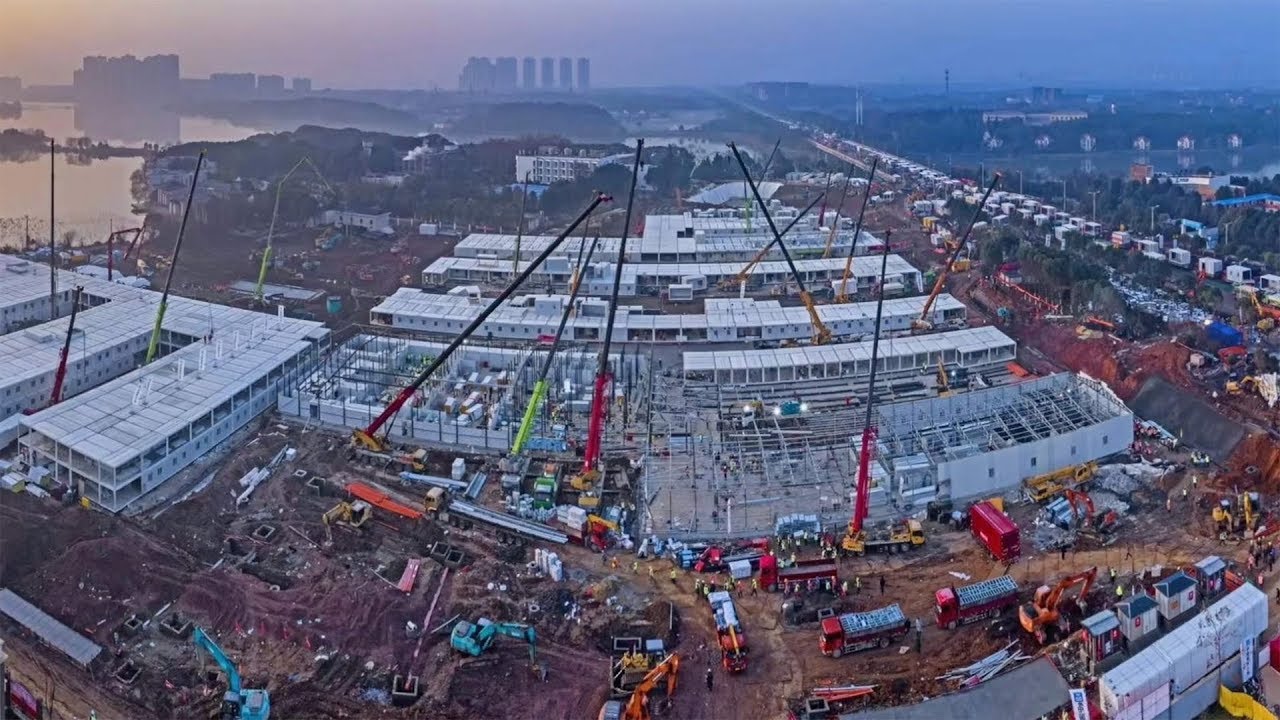
While in the rest of the world building a hospital takes years from design to inauguration, China erected the Huoshenshan Hospital from scratch in just 10 days, with 1,000 beds, foundation, structure, electrical installations, plumbing, and oxygen system ready to receive patients, mobilizing 7,000 workers.

-
Without mortar, grout, or traditional construction: the ClickBrick system assembles brick facades with ceramic pieces held by metal clips, eliminating the need for glue, speeding up installation, and even allowing everything to be dismantled later without turning the construction into expensive permanent debris.
-
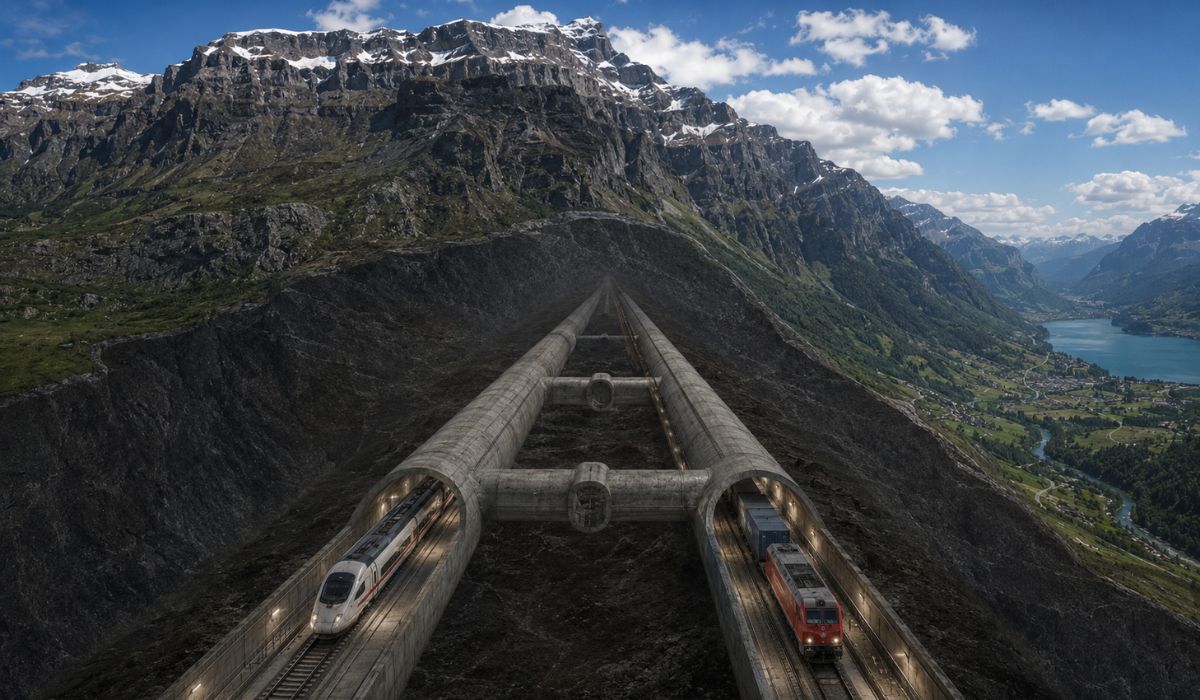
Switzerland took 17 years to tear through the Alps and build the world’s largest railway tunnel, a 57.1 km passage under 2,300 meters of rock, with 50 °C heat and 28.2 million tons excavated to connect the north to the south of Europe.

-
With 1,415 m², a frontal view of the sea, and surrounded by skyscrapers, the mansion worth R$ 140 million bought by Luciano Hang is the last standing residence on the waterfront of the ‘Brazilian Dubai’ in Balneário Camboriú.



The giant houses of China looked like fortresses but functioned as collective housing
The Fujian Tulou attract attention because they were not ordinary houses. They were large constructions, with several floors, designed to house many families in the same space.
The shape could be circular or square. The exterior had a strong and closed appearance, while the interior was oriented towards a central courtyard. This courtyard helped with circulation and the coexistence of the residents.


The idea was to gather an entire clan. Clan means a group of families linked by common origin. Therefore, these earthen houses also show an ancient way of living in community.
Rammed earth helped create tall, thick, and resistant walls
The main material was rammed earth. In simple terms, this means clay pressed into layers until forming firm walls. This technique took advantage of the local soil and allowed for the construction of large structures.
In Brazil, the idea recalls ancient techniques like rammed earth and adobe, which also use earth in construction. The difference is that the Tulou reached a much larger scale, with several floors and space for hundreds of people.
These houses show that the use of earth in construction was not just a simple solution. In the Fujian Tulou, clay became the basis for collective housing, protection, and family organization.
Single entrance and few external windows helped in the defense of the residents
The fortress-like appearance was not just aesthetic. The Tulou had a single entrance, which made it easier to control who entered and exited.
The external windows were only above the first floor. This choice reduced the exposure of families and made it difficult for attacks from outside.
Therefore, these giant houses combined two functions in the same building. They served as a place to live and, at the same time, to protect those who lived there.
Some constructions managed to gather up to 800 people in the same space
UNESCO World Heritage Centre, UNESCO’s center for World Heritage, records that some of these structures could house up to 800 people. This number helps to understand why the Tulou seemed almost like small enclosed villages.
Each family occupied internal parts of the construction. The vertical division allowed organizing rooms on different floors, without losing the collective logic of the ensemble.
Even with so many people, the construction followed an internal order. The central courtyard, the floors, and the arrangement of spaces created a shared routine within the clay walls.
The Fujian Tulou are located among rice paddies, tea, and tobacco in southeast China
The 46 earth constructions recognized are distributed over more than 120 km in the southwest of Fujian province. The surrounding landscape includes rice paddies, tea, and tobacco plantations.
This detail makes the Tulou even more remarkable. They were not separate from rural life. On the contrary, they were part of a territory where housing, work, and community met.
The most elaborate constructions date from the 17th and 18th centuries. Even so, the ensemble includes works made between the 15th and 20th centuries, which shows a long tradition of building with earth.
What these clay fortresses reveal about architecture before the modern era
The Fujian Tulou show that building with earth did not mean creating something small or fragile. These houses had several floors, strong walls, and were designed to accommodate many people.
They also present a different vision of housing. Instead of a house for an isolated family, there was a structure to protect and gather many families connected by the same clan.
Today, these constructions draw attention because they combine popular architecture, use of local materials, and community life. They demonstrate ancient solutions to problems that still seem current, such as housing, protection, and coexistence.
China’s earthen fortresses continue to impress not only for their size but for their social function. They were houses, defense points, and centers of coexistence at the same time.
The fact that up to 800 people lived in a single structure helps explain the strength of this architecture. More than just curious constructions, the Fujian Tulou reveal how a community could organize itself within walls made of earth.
Do you think a construction made to bring so many families together would still have a place in today’s world, or has modern life made this type of coexistence impossible? Comment and share this story with those who enjoy curious architecture.







Be the first to react!