






 4 min of reading
  0 comments


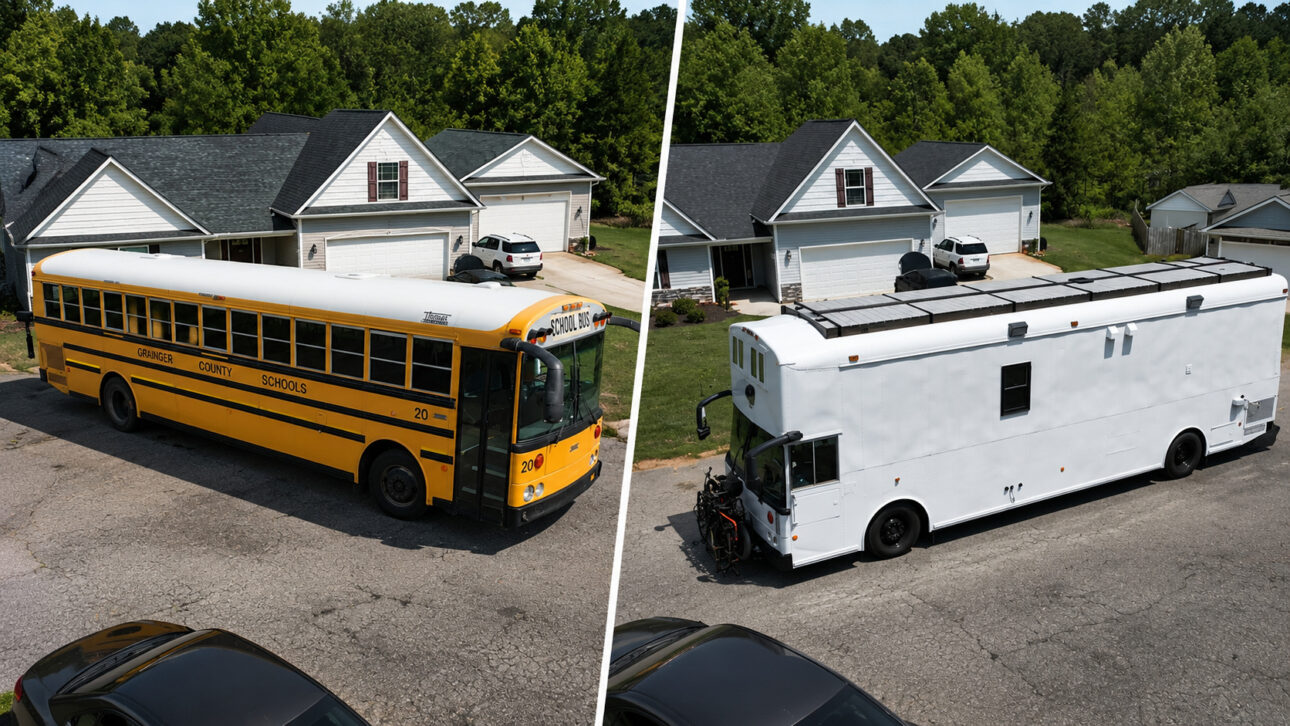
The renovation transformed an old school bus into a two-story mobile home, with a raised roof, two bedrooms, kitchen, bathroom, and water tanks
Chay Denne, creator known as President Chay, got tired of renting and took the idea of living on wheels to another level. He bought an old school bus, removed 28 seats and started a transformation that turned into a two-story mobile home.
The information was published by Realtor.com, a real estate and housing news portal. The project took more than a year, cost about US$ 57,000, and completely changed the vehicle’s internal structure.
From the outside, the bus still resembles an old school bus. Inside, the renovation created two bedrooms, kitchen, bathroom, water system, and circulation areas in a space designed to function as a home.
-
How the right choice of blocks reduces construction costs by up to 30%, eliminates beams and pillars, and prevents structural failures that can lead to rework, material waste, and significant losses over the years.

-
Researchers create reusable brick walls that can be dismantled and rebuilt elsewhere, like Lego pieces, to reduce construction waste and cut emissions by up to 60%.

-
During the construction of the world’s highest bridge, the Huajiang Bridge in China, engineers discovered a giant aquifer and turned what would have been a serious problem into a 625-meter artificial waterfall, an engineering feat that no one had planned.
-
The river rose 15 meters overnight and devastated a village in Vietnam in 2025, and Japan responded with dams that hold back mud and stones, training 15,000 people for evacuation, and a sewage station for 1 million residents.




School bus turned into a home on wheels after 28 seats were removed
The first major change was to create space. Chay Denne removed 28 seats from inside the bus, leaving the vehicle empty to receive flooring, walls, and internal divisions.
This step seems simple, but it changes the entire function of the vehicle. What once served to transport people now functions as a construction base, with free space to install rooms.
After the seats were removed, the interior began to receive house structure. The flooring helped create a firm surface, while the walls divided spaces and allowed for organizing the kitchen, bathroom, and bedrooms.
The roof was raised to allow two stories inside the mobile home
The most striking part of the renovation was the change in the roof. Chay Denne cut the upper part of the bus and raised the structure to create enough height inside the vehicle.
The raised roof paved the way for a project with two floors. This change made it possible to place areas on different levels, something uncommon in simple bus adaptations.
The original roof of a bus was not made to become a two-story house. Therefore, the structure needed to be altered and reinforced to gain more internal space.
Steel tubes were used to reinforce the structure after the roof change
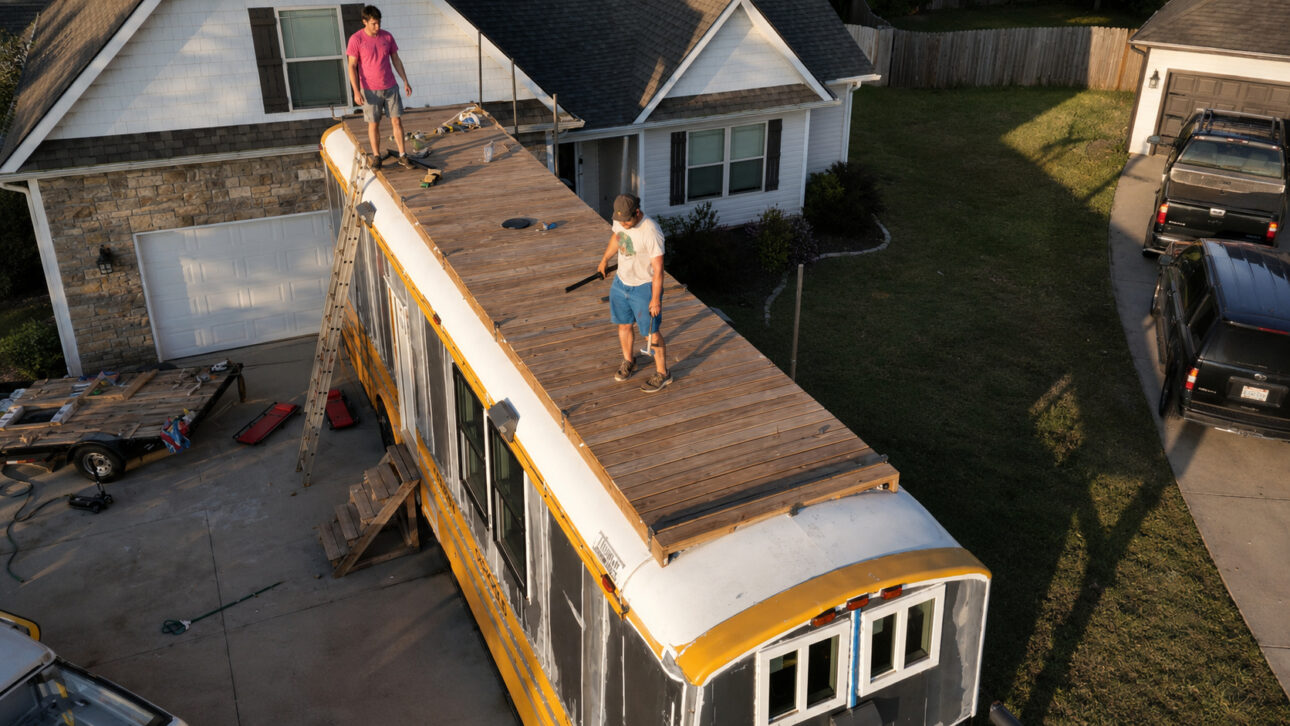
After modifying the roof, the bus received reinforcements with steel tubes. This material acts as a frame, helping to support the new height of the structure.
President Chay on YouTube, the creator’s own video channel, records the stages of the transformation and shows the school bus being dismantled, cut, and adapted. The work was not limited to the internal appearance.
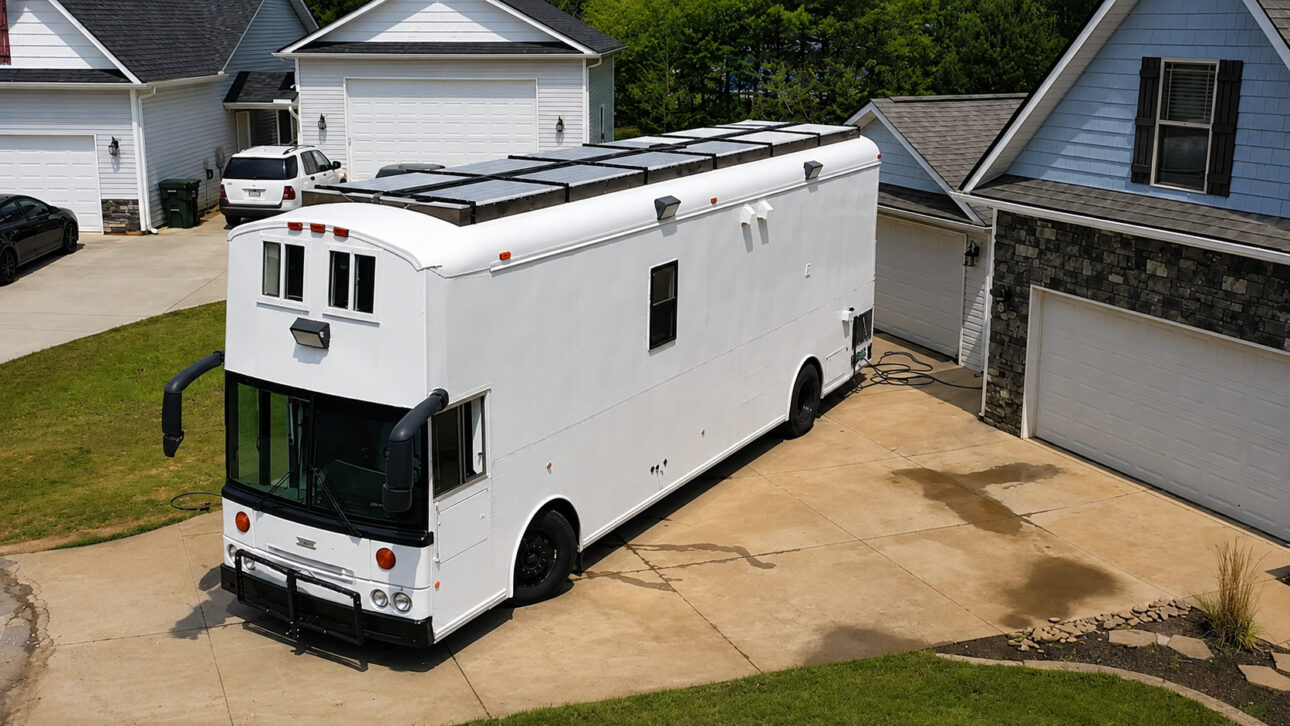
The change also involved insulation, flooring, walls, and closing off the altered areas. Insulation is important because it helps reduce heat, cold, and humidity inside a metal structure.
Inside, the bus gained two bedrooms, kitchen, bathroom, and water tanks
The mobile home received two bedrooms, in addition to a kitchen and bathroom. These spaces are what make the project look like a real house, not just a vehicle with improvised furniture.
The bathroom required planning to function within a small space. The installation of water tanks allowed the use of a sink, shower, and other basic daily needs.
The kitchen was also included in the project as a central part of the home. In a small house, every corner needs to have a function, so cabinets, circulation, and daily use areas require care.
The transformation cost about US$ 57,000 and took more than a year
The total cost of the transformation was about US$ 57,000. This amount includes the purchase of the bus and the renovation, with structural changes, internal materials, finishing, and daily use systems.
The execution time also shows the complexity of the work. The transformation took more than a year, with stages of dismantling, cutting, reinforcement, insulation, and assembly of the environments.
The number draws attention because it shows that a mobile home of this type is not born solely from creativity. It requires money, time, tools, help, and a good sequence of decisions.
In Brazil, a similar project requires care with traffic and safety rules
The story is impressive, but it should not be read as a simple solution to escape rent in Brazil. Turning a bus into a mobile home involves safety, documentation, and circulation rules.
Licensing is the authorization that allows the vehicle to operate legally. When the structure changes significantly, as in the case of a raised roof and internal adaptation, regularization may require specific analysis.
It’s also necessary to consider weight, height, brakes, electrical system, water, and stability. A house on wheels needs to be safe both when stationary and during movement.
The case went viral because it mixes construction, rent savings, and a house hidden inside a bus
The transformation draws attention because it takes a common vehicle and delivers something unexpected. An old school bus turned into a two-story mobile home, with two bedrooms inside and an appearance still linked to the original vehicle on the outside.
Chay Denne’s project shows the power of adaptation but also reveals the difficulty behind such a work. Removing seats was just the beginning of a renovation that altered the roof, steel, water, floor, walls, and daily use.
Do you think living in a converted bus would be a smart solution against high rent, or does this type of project work better as an extreme construction experience? Share your opinion in the comments.








Be the first to react!