Portuguese
  Spanish



Municipalities Sign Intergovernmental Agreement That Reorganizes Oil Royalties Distribution in Eastern Fluminense and Ensures New Revenues Starting in 2026.
The dispute over oil royalties in the State of Rio de Janeiro has moved to a new stage with the formalization of a historical intergovernmental agreement for Eastern Fluminense.
The understanding involves five municipalities and significantly alters the map of distribution of funds from offshore oil and natural gas production.
The initiative has direct impacts on municipal budgets and seeks to correct distortions that have persisted for decades.
-
Petrobras Approves $1.2 Billion Refinery in Brazil to Produce Aviation Fuel and Diesel from Plants

-
Petrobras Secures $2.2 Billion Contract to Build and Operate Four Support Vessels for Brazil’s Offshore Oil Fields
-
Oil production grows in Rio, but reserve replacement raises a warning sign

-
Petrobras is expected to complete the drilling of the Morpho well in the Foz do Amazonas in August 2026, the first well in the Equatorial Margin, an oil frontier that the ANP estimates at more than 30 billion barrels and could redraw the map of Brazil.




Furthermore, the agreement ends a significant legal dispute among municipalities while creating an environment of greater fiscal predictability for the coming years.
Mayors Sign Agreement and End Legal Dispute Over Oil
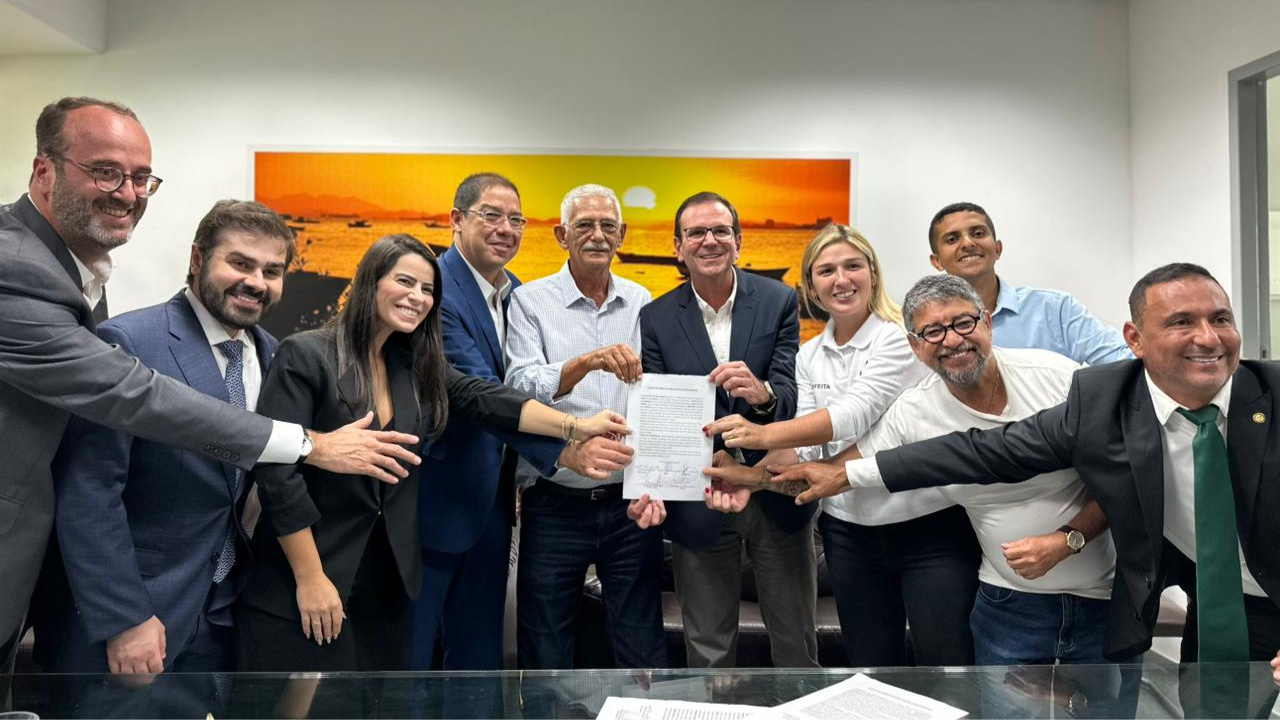
The pact was signed in São Gonçalo, during a meeting held in the office of Mayor Captain Nelson. The mayors of Rio de Janeiro, Eduardo Paes, and Maricá, Washington Quaquá, as well as the mayor of Guapimirim, Marina Rocha, and the vice-mayor of Magé, Jamille Cozzolino, participated in the meeting.
With the exception of Niterói, the involved municipalities agreed to the redistribution of oil royalties currently in dispute in court. According to the agreement, Rio de Janeiro and Maricá will forfeit part of their revenues in favor of São Gonçalo, Magé, and Guapimirim, effective from January 2026.
The understanding will be forwarded to the judiciary for ratification, officially ending the litigation between the signatory parties.
Inclusion in the Main Production Zone Changes Regional Landscape
One of the central points of the intergovernmental agreement is the inclusion of São Gonçalo, Magé, and Guapimirim in the Main Production Zone of the State of Rio de Janeiro.
This classification arises from the geographical confrontation of these municipalities with oil and natural gas production fields.
In practice, this change recognizes a technical right that has been claimed for years.
From this classification, the municipalities will have direct access to royalties, significantly altering their investment capacity.
Meanwhile, the legal dispute will continue only concerning Niterói, which opted not to join the agreement.
Progressive Transfers Ensure Fiscal Security for Donor Municipalities
To ensure financial stability for the coffers of Rio de Janeiro and Maricá, the agreement includes specific transition rules. Among them is the absence of any retroactive burden.
Moreover, all oil royalty revenues that have already been incorporated into the municipal budgets of these cities will be preserved.
Another relevant point is the guarantee of legal and fiscal security, deemed essential for the continuity of ongoing public policies. Structuring projects outlined in the Municipal Multi-Year Plans remain protected, as they depend on predictability in revenue flow.
The transfer percentages will be implemented progressively. The entire redistribution is planned only for 2030, which reduces abrupt impacts on the municipalities that have relinquished part of the resources.
Managers Highlight Technical and Social Nature of the Agreement
Commenting on the understanding, the mayor of São Gonçalo emphasized the suprapartisan nature of the decision. According to him, it is an initiative guided by the fiscal reality of the involved cities.
“This agreement we are signing is of great importance for the Metropolitan Region and corrects an injustice against the cities of São Gonçalo, Magé, and Guapimirim. We are discussing humanity here, not politics. We can no longer have neighbors divided between rich and poor. With this initiative, we can continue investing in health, sanitation, and education, ending decades of delay in the city. And I must highlight all the effort and mobilization of Federal Deputy Altineu Côrtes, tireless in his support for the people of Gonçalense,” he stated.
The statement underscores the social weight that the redistribution of oil royalties is likely to produce over the coming years.
Regional Impact Reinforces Discourse of Metropolitan Solidarity
The mayor of Rio de Janeiro also highlighted the regional repercussions of the agreement. For Eduardo Paes, fiscal balance among municipalities strengthens the entire Metropolitan Region.
“If these cities do not do well, the entire region suffers. Solidarity and empathy are fundamental for us to continue improving the lives of the people of Rio. I am fully convinced that no carioca will oppose this historical agreement we are signing today here in São Gonçalo, alongside municipal managers who have the recognition of the entire population, having been re-elected after proving their capacity to govern their cities,” he stated.
In this context, oil ceases to be just a source of local revenue and takes on a redistributive role.
Maricá Reinforces Regional Vision on Budget and Oil
The mayor of Maricá noted that the agreement meets both technical and political criteria. According to Washington Quaquá, the financial autonomy of municipalities is essential for joint development.
“Eduardo Paes and I talked a lot and agreed that this is a deserved agreement for the people of São Gonçalo, Guapimirim, and Magé. It is just from a political perspective and also from a technical perspective because we are all from the same region. Even though we develop joint policies, acting collectively, it is essential that each municipality has its own budget and the ability to carry out its own projects. The entire population of these cities will benefit from this,” he stated.
Financial Projection Shows Historic Leap in Revenue
If the agreement is ratified by the judiciary, the projected numbers indicate a profound transformation in municipal finances. In São Gonçalo, for example, average annual revenue from oil royalties is expected to leap from approximately R$ 45 million to around R$ 386 million.
During the signing of the document, federal and state deputies, as well as municipal prosecutors and legal representatives who directly participated in the technical construction of the understanding, were also present.
“We need to make it clear that this agreement will correct a historical injustice committed against São Gonçalo, Magé, and Guapimirim. I would like to highlight the tireless work of the prosecutors from these municipalities, who defended a purely technical right that was recognized by mayors Eduardo Paes and Washington Quaquá,” said Altineu Côrtes.