






 Portuguese
  Spanish
  4 min of reading
  0 comments


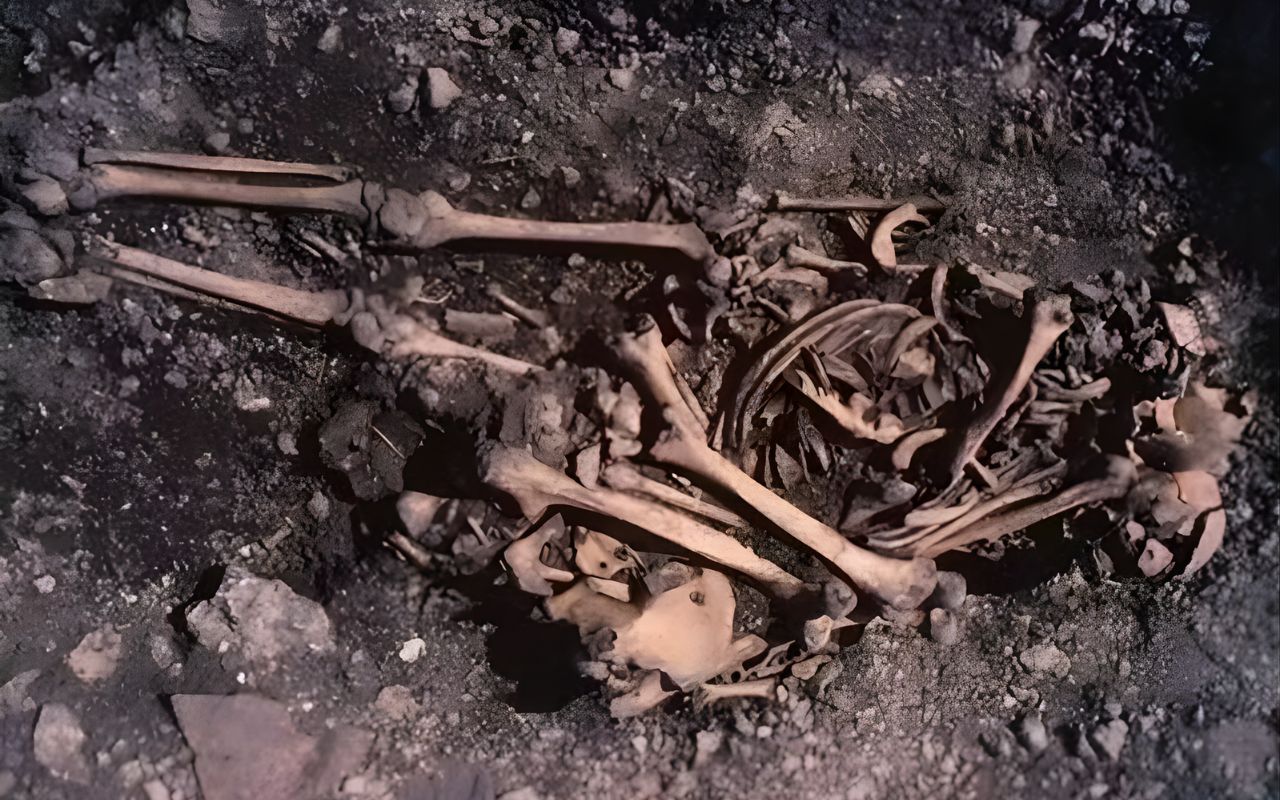
Genetic Research in Archaeological Site of Ajvide, Sweden, Reveals Teenager Buried with Father’s Bones and Shows That Burials Gathered Distant Relatives.
A grave from the Stone Age revealed an unusual scene at an archaeological site in Sweden. A teenager was found buried on her back, with a pile of bones positioned over her body.
Analyses of ancient DNA confirmed that the remains belonged to the father of the young woman.
According to the researchers, he likely died before her and had his bones subsequently transferred to his daughter’s tomb.
-
Helicopter Drops 180 Tons of Sand and Gravel on Swedish River to Revive Ecosystem Damaged by Decades of Exploitation

-
Brazilian Company Launches Retro Smartphone with 48 MP Camera, T9 Keyboard, and Privacy Features for Social Media-Free Use

-
Self-Taught Chinese Farmer Builds 5-Ton Submarine from Scrap, Launches It in Anhui River
-
Invisible Induction Technology Enables Wireless Power for Blenders, Coffee Makers, and Air Fryers, Reducing Countertop Cables





Ancient DNA Changes Understanding of Burials
The finding is part of a genetic study conducted by researchers from Uppsala University.
The research was published in the scientific journal Proceedings of the Royal Society B.
The scientists analyzed four of the eight multiple burials identified at the archaeological site of Ajvide, located on the island of Gotland.
The initial hypothesis predicted direct family ties, but the results indicated another reality.
In several graves, the individuals buried together were not first-degree relatives.
Instead, relationships of second and third degrees emerged, such as cousins, aunts, and nephews.
This pattern suggests that the funeral rituals valued broader family ties.
Thus, the concept of family may have been more inclusive than the modern nuclear model.
Woman Buried with Children Was Not the Mother
One of the analyzed graves revealed the skeleton of a woman alongside two children. DNA showed that the young ones were biological siblings.
However, the woman did not have a maternal link to them. The data indicated that she could be an aunt or half-sister, revealing an unexpected family arrangement.
In another grave, a boy and a girl buried together were identified as third cousins. In yet a third grave, the skeletons of a girl and a young woman also showed distant kinship.
The hypotheses include relationships such as cousins or even great-aunts and grandnieces. Therefore, collective burials were not limited to parents and children.
Ajvide: An Archaeological Site Excavated for Decades
The archaeological site of Ajvide began excavations in 1983. Since then, archaeologists have identified 85 graves associated with the Corded Ware culture.
This society lived in the region about 5,500 years ago.
The site remained occupied for at least four centuries, indicating a relatively stable community.
Hunters-Gatherers Resisted Agricultural Expansion
Even with agriculture already widespread in much of Europe, the inhabitants of Gotland maintained a lifestyle based on hunting and fishing.
The subsistence depended mainly on seal hunting and fishing.
This detail reinforces the historical context of the archaeological site. Ajvide represents a period when different ways of life coexisted on the continent.
Helena Malmström, archaeogeneticist and co-author of the study, emphasized the importance of the results.
“Surprisingly, the analysis showed that many of those buried together were second or third-degree relatives, rather than first-degree relatives — that is, parents and children or siblings — as is usually assumed,” Malmström said in a statement. “This suggests that these people had a good knowledge of their family lineages and that relationships beyond the immediate family played an important role.”
What Does the Archaeological Site Reveal About This Society?
The genetic data indicate that social ties extended beyond the direct family nucleus.
Broader relationships, possibly linked to lineage and belonging, seem to have influenced funeral decisions.
Thus, the archaeological site suggests a more complex social organization than previously thought.
Distant kinship may have played a relevant role in the group identity.
Ancient DNA Expands Horizons of Archaeology
The genetic analysis of ancient human remains has been transforming archaeological studies. Ancient DNA allows identifying biological relationships impossible to detect through traditional excavation alone.
In the case of Ajvide, this approach revealed unexpected family connections. Furthermore, it raised new questions about rituals and social structures.
The Uppsala University team plans to expand analyses to other skeletons recovered in Ajvide.
The goal is to map social structure, reconstruct life stories, and better understand funeral rites.
Therefore, the archaeological site may still reveal decisive information about Scandinavian hunters-gatherers. Each new analysis helps reshape the narrative about human past.
The discoveries show that prehistoric funeral practices were more diverse and symbolic than previously thought.
Source: Galileu Magazine





-

1 person reacted to this.