Portuguese
  Spanish


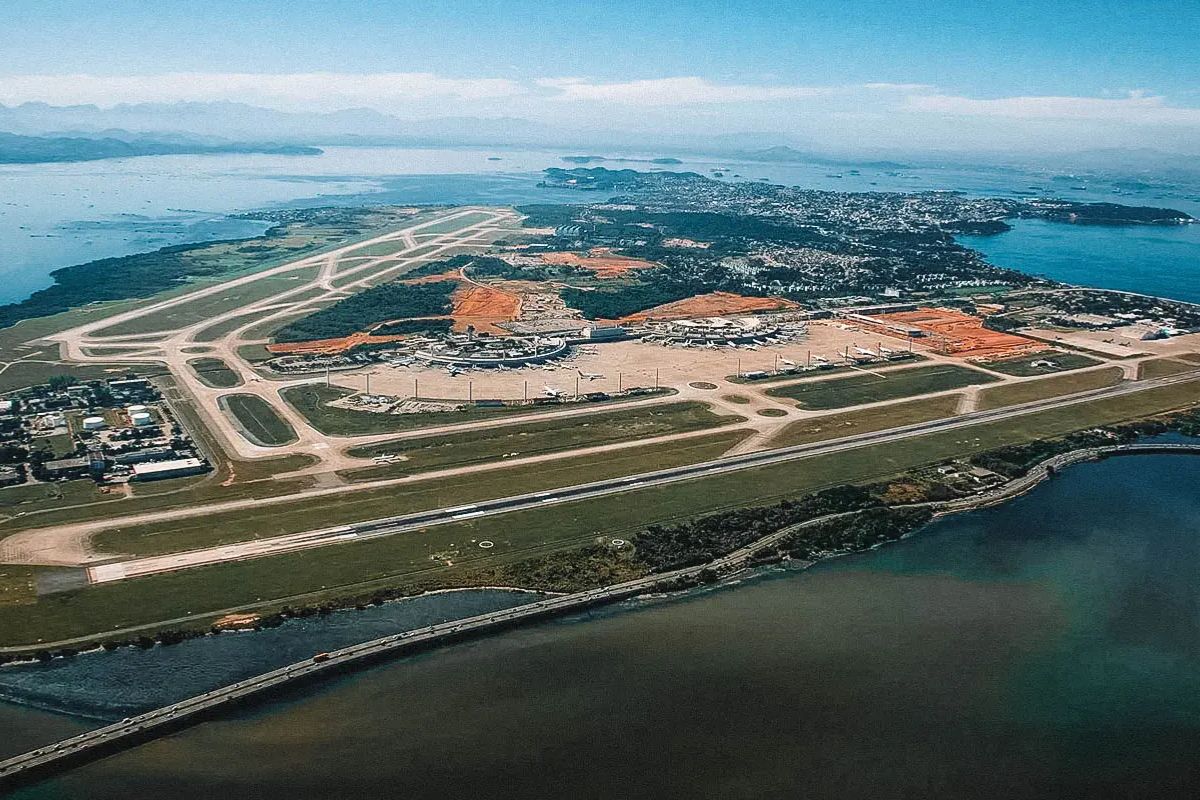


Galeão Airport Enters Billion-Dollar Bid with Six Interested Parties, Minimum Bid of R$ 932 Million Upfront and Chance of End to State Participation, While Rio Watches Who Will Command 100% of the Operation and the Future of the Hub
Galeão Airport may change hands on March 30, in an auction at B3, in São Paulo, with a minimum bid of R$ 932 million paid upfront. Six companies have already expressed interest, and the result may end a mixed arrangement that still keeps state participation in the operator RIOgaleão.
What is at stake goes beyond the initial value. Galeão Airport handled about 17.5 million passengers per year and has strategic importance for international flights, and the promise of a private controller with 100% of the operation reignites the debate about efficiency, targets, revenue, and what changes for those using the terminal in Rio de Janeiro.
Why Galeão Airport Became Such an Observed Auction
The event is scheduled for March 30, at the B3 headquarters in São Paulo, and brings together six groups that have signaled interest in the concession.
-
Former Marketing Agency Owner Thrives on Foraging for 250 Days, Sampling Over 170 Plants, and Says He No Longer Remembers Supermarkets

-
IKEA’s AI Handles Nearly Half of Customer Calls, Company Reassigns 8,500 Staff as Design Consultants, Boosting Revenue by €1.3 Billion
-
Owner of Havan Visits Paraguay to Discuss Lower Taxes, Local Suppliers, and International Expansion with President

-
Brazilian Construction Retail Chain Closes After 60 Years, Begins Liquidation Sale Across Five Cities




The auction model requires a minimum bid of R$ 932 million, with upfront payment, which already creates a natural filter: only those with cash, appetite, and strategy for a complex operation qualify.
Galeão Airport is presented as the third largest in Brazil and operates on a scale that interests both global and national operators.
In numbers, the annual movement mentioned is around 17.5 million passengers, with 5.6 million on international flights, a segment that is often decisive for terminal revenues, connectivity, and higher value-added services.
What Changes When the Operation Could Leave State Control
Currently, the operation is divided within the RIOgaleão concessionaire: Infraero holds 49% and private groups own 51%.
The expectation stated is that the winning consortium will take 100% control, eliminating state participation and therefore changing the decision-making process.
In practice, this shifts the governance axis.
A single controller gains speed to renegotiate routes, services, contracts, and partnerships, but also takes on all risks and the responsibility to meet targets and keep infrastructure running without the “cushion” of public ownership.
What Makes the Process Competitive for Industry Giants
The government sought to increase predictability and market appetite with a roadshow from the Ministry of Ports and Airports, presenting contractual guidelines, growth expectations, and answering questions.
This type of agenda has a clear objective: to reduce uncertainties, as uncertainty increases the cost of capital and decreases the offered value.
In addition to the demand attractiveness, there is a continuous financial mechanism anticipated in the arrangement: the new concessionaire will have to contribute annually with 20% of gross revenue to the Union until 2039.
This is a mechanism that pressures for efficiency, because it takes a significant portion of gross revenue and requires disciplined management of costs, investments, and commercial expansion.
Operational Challenges and the Targets That May Define the Winner
The operation of Galeão Airport involves both passengers and cargo logistics, two systems that compete for yard space, flow, infrastructure, and capacity.
Therefore, the practical requirement for the new administrator is not only financial: it must include experience in airport management and the ability to maintain operational standards under variable demand.
With 100% control and without Infraero as a partner, the new operator gains more freedom to forge strategic partnerships, which can mean new agreements, routes, and integration with international networks.
The promised efficiency, however, only becomes public perception when it manifests in queues, punctuality, flight availability, and terminal experience.
There is also a projected growth mentioned of up to 20 million passengers per year.
This target is not automatic: it depends on the operator’s ability to enhance connectivity and attractiveness of Galeão as a gateway to and from Rio de Janeiro to other markets, especially on international routes, which tend to raise average ticket prices and airport commercial revenues.
Galeão Airport goes to auction on March 30, with a minimum bid of R$ 932 million and six interested parties, and it may come to have a controller with 100% of the operation, ending Infraero’s participation in RIOgaleão.
With around 17.5 million passengers per year and 5.6 million on international flights, the terminal is entering a phase where governance, targets, and efficiency will be tested in real time.
If you use Galeão Airport, what should weigh more in choosing who takes over: lower ticket prices via more routes, visible improvements at the terminal, or an operator with a strong history in cargo and punctuality? What change would you feel first in your daily routine?