Portuguese
  Spanish


Transport companies in ABC Paulista face a shortage of truck drivers and experienced drivers for hazardous loads, leaving trucks idle for months. The problem grows as young people turn to apps, urban deliveries, and flexible jobs, exposing a labor crisis in Brazilian road transport.
The shortage of truck drivers is already affecting transport companies in ABC Paulista, where a company keeps 20 trucks idle due to the lack of available drivers to take the wheel. The problem mainly affects operations with hazardous loads, which require qualification, experience, and greater responsibility on the road.
With information from the Jornal da Record channel, the case came to light in a recent report on the transport sector in Brazil, at a time when companies report increasing difficulty in hiring. According to the cited data, almost 90% of transport companies face obstacles in finding truck drivers, while young people migrate to apps, urban deliveries, and other forms of work.
Transport company leaves trucks idle due to lack of drivers

At the transport company in ABC Paulista, 20 trucks in the fleet are not running. They remain in the garage because there are not enough truck drivers to fill the open positions, some of which have been available for over a year.
-
Brazil’s Assaí Generates $4 Billion in Quarterly Revenue, Profits $16.7 Million, Highlighting High Tax Burden

-
Former Marketing Agency Owner Thrives on Foraging for 250 Days, Sampling Over 170 Plants, and Says He No Longer Remembers Supermarkets

-
IKEA’s AI Handles Nearly Half of Customer Calls, Company Reassigns 8,500 Staff as Design Consultants, Boosting Revenue by €1.3 Billion
-
Owner of Havan Visits Paraguay to Discuss Lower Taxes, Local Suppliers, and International Expansion with President



The impact is direct: without a driver, the truck ceases to be a productive asset and becomes idle equipment. The company may have clients, cargo, and infrastructure, but cannot complete the operation if there is no qualified professional to drive the vehicle.
The situation becomes even more complex because the transport company mainly deals with hazardous loads. This type of operation requires more care, training, and experience, which reduces the number of suitable candidates.
Drivers with little driving experience may be fitted into some activities, but they cannot always take on more sensitive routes. For hazardous loads, the company needs someone more prepared, and it is precisely this profile that is difficult to find.
Hazardous loads require more experience behind the wheel
Transporting hazardous cargo is not like making a regular delivery. Depending on the product, the driver needs to deal with chemical, flammable, environmental, or operational risks, in addition to following specific safety regulations.
Therefore, experience weighs more than just the availability to drive. The transport company cannot place just any professional on a route that requires heightened attention, mastery of the vehicle, and responsibility for the cargo.
This filter makes hiring slower. Even if there are qualified people, not all have enough experience to take on certain operations. The result is visible in the garage: parked trucks, open positions, and difficulty in serving clients.
The lack of experienced truck drivers creates a bottleneck within a chain that depends on deadlines. If the cargo doesn’t leave, the industry, commerce, and consumer may feel the effects in subsequent stages.
Young people prefer apps and urban deliveries
One of the reasons pointed out for the shortage is the change in the profile of younger workers. Many have started seeking income through apps, urban deliveries, motorcycles, cars, and activities with a more flexible routine.
The road has lost part of the appeal it once had for other generations. Previously, the truck driver profession was seen as a natural path in some families, passed from father to son or inspired by relatives who lived on the road.
Today, some young people prefer jobs with more immediate returns, less distance from home, and less time away from family. Apps and urban deliveries offer a different routine, although they also have challenges.
This change helps explain why the sector finds it difficult to renew its workforce. If few young people enter the profession, the average age of truck drivers rises, and replacement becomes increasingly difficult.
Brazil depends on highways but loses workforce

Brazil is highly dependent on road transportation. Even in countries with more developed railways, the truck remains essential for the so-called final stretch, delivering products to markets, pharmacies, stores, and points of sale.
In Brazil, this dependency is even greater due to the historical lack of a broad railway network. When truck drivers are lacking, the problem is not restricted to transport companies; it affects national logistics.
According to the numbers cited in the report, the country currently has about 4 million truck drivers, a smaller number than 10 years ago. Additionally, only 17% of these professionals are under 40 years old.
This data raises an alert about the future of the profession. If the base ages and few young workers enter the sector, shortages tend to become more frequent in the coming years.
Sector fears bottleneck in freight transport
The question that arises is whether Brazil’s main freight transport mode could collapse due to a lack of drivers. The answer is not simple, but the alert from companies shows that the problem has already moved beyond the realm of prediction.
When a transport company leaves trucks idle, the bottleneck ceases to be theoretical. It appears in vehicles without routes, customers without service, and operations that need to be reorganized due to a lack of professionals.
The lack of truck drivers can also put pressure on costs. If there are fewer experienced drivers available, companies may need to compete for labor, offer better conditions, or review hiring models.
At the same time, the profession faces well-known challenges: long hours, road risks, distance from family, deadline pressure, and high personal costs. These factors weigh on the decision of those considering a career in transport.
Profession needs to be rethought to attract new drivers
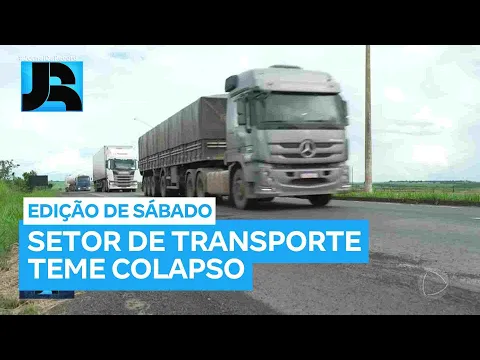

The shortage of truck drivers shows that the sector needs to discuss more than just vacancies. It is necessary to think about training, safety, remuneration, quality of life, and real conditions to attract younger workers.
The profession remains essential, but it needs to compete with new forms of income. For many young people, driving for an app or making urban deliveries seems simpler than taking on long journeys and high-responsibility loads.
Transport companies dealing with hazardous loads face an even greater challenge because it’s not enough to hire quickly. It’s necessary to train, educate, and retain drivers capable of operating safely.
In the long term, the sector may need to invest more in training and professional appreciation programs. Without this, the fleet may grow, but it will continue to depend on a workforce that does not renew at the same pace.
Idle trucks reveal a bigger problem on the roads
The lack of truck drivers in the ABC Paulista serves as a snapshot of a national difficulty. Twenty trucks idle at a single transport company show how the shortage of drivers is already affecting the routine of companies.
The problem is not just finding someone to drive; it’s finding professionals prepared for a heavy, strategic, and often dangerous activity. In the case of hazardous loads, the requirement is even greater.
While young people choose apps, urban deliveries, and jobs with a more predictable routine, road transport tries to keep an essential mechanism for the country functioning.
Do you think the truck driving profession has lost attractiveness for young people, or is the problem with the conditions offered by the transport sector? Leave your opinion in the comments.