






 Portuguese
  Spanish
  4 min of reading
  0 comments


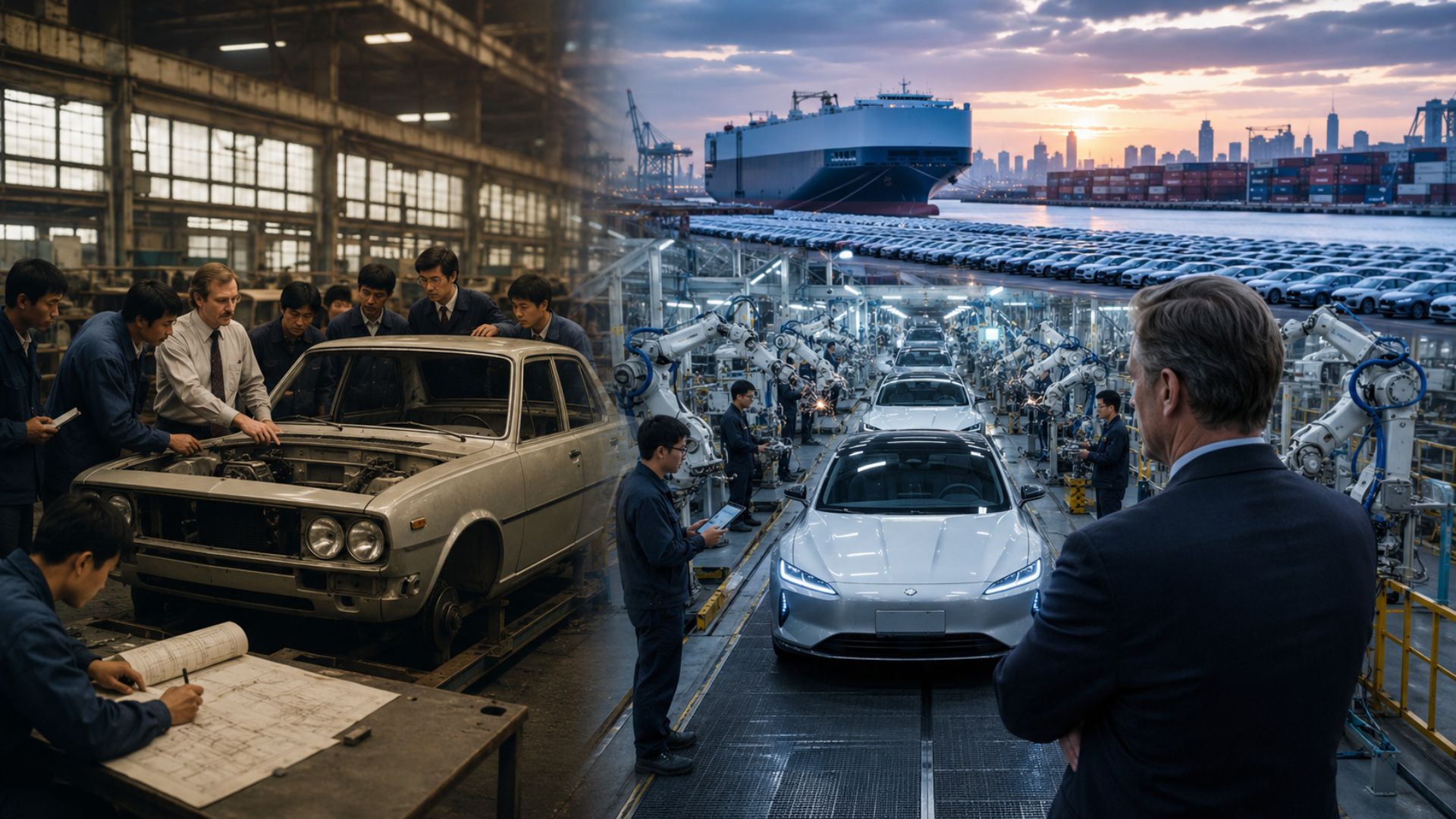
In the 1980s, German companies brought know-how to the Chinese in joint ventures to manufacture cars. Decades later, the student became the master: China launches cars as good as the Germans and floods the world with its production, in a Chinese shock that pressures the German industry and exposes Berlin’s complacency.
About forty years ago, German companies landed in China and taught the Chinese to manufacture cars in joint ventures, confident that no one would reach German engineering. Time turned the tables: today Germany admits to having underestimated China, which launches cars as good as the Germans and floods the world with its production.
The harshest message came from a recent study, “The Chinese shock 2.0,” by economists Sander Tordoir and Brad Setser, which points to the German industry as the biggest victim of the new Chinese advance. The analysis came out a few days before the German Economy Minister, Katherina Reiche, returned from a trip to China without concrete results, a sign of the size of the challenge.
From pupil to master: how the Chinese surpassed Germany

It all started amicably. In the early 1980s, German companies were brought to China and had to set up joint ventures with local partners, especially in the automotive sector, to access the Asian market. In return, they transferred their knowledge. According to consultant Manuel Vermeer, who has been advising German companies in the country for four decades, the Chinese observed, listened carefully, and learned, until they surpassed the Germans precisely where they considered themselves unbeatable.
-
Helicopter Drops 180 Tons of Sand and Gravel on Swedish River to Revive Ecosystem Damaged by Decades of Exploitation

-
Brazilian Company Launches Retro Smartphone with 48 MP Camera, T9 Keyboard, and Privacy Features for Social Media-Free Use

-
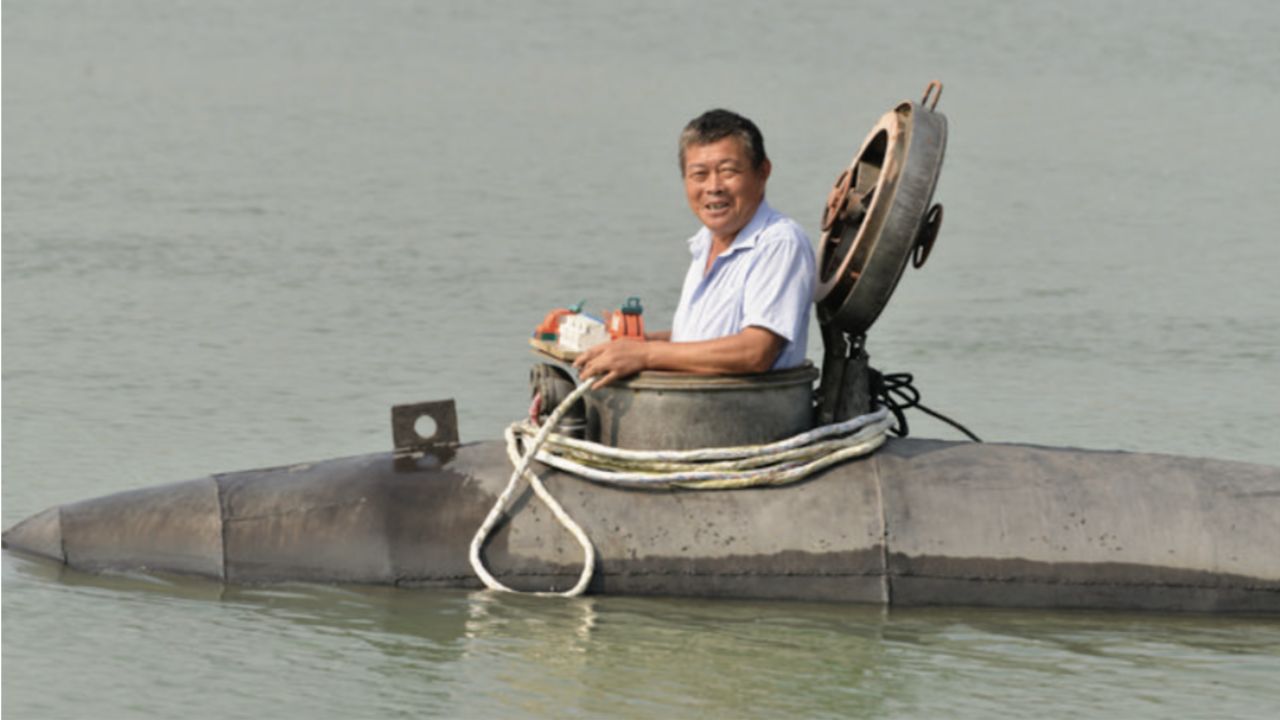
Self-Taught Chinese Farmer Builds 5-Ton Submarine from Scrap, Launches It in Anhui River
-
Invisible Induction Technology Enables Wireless Power for Blenders, Coffee Makers, and Air Fryers, Reducing Countertop Cables




The copying was sometimes blatant. Vermeer recalls the case of Brilliance, BMW’s Chinese partner, at a plant in Shenyang: on one side of the line, the BMW was assembled; on the other, Brilliance’s own model. With Volkswagen, he says, it was no different. The result is that today’s Chinese cars are not only cheap but good enough to compete on equal terms, something that, according to the consultant, almost no one in Germany thought possible in the sector.
The Long-term Vision of the Chinese

Photo: Jochen Tack/picture alliance
The shift was not by chance, but by planning. About twenty years ago, five-year plans already indicated the Chinese investment in electric mobility, but according to Vermeer, the Germans did not take it seriously or simply did not read these documents. Programs like “Made in China 2025”, from 2015, and the “dual circulation” policy adopted by Xi Jinping from 2020, made the strategy clear: to depend less on imports while the world becomes increasingly dependent on what is manufactured in China.
The five-year plan from 2026 to 2030 reinforces this direction, with the Asian country betting on quantum computing, artificial intelligence, humanoid robotics, and brain-machine interfaces. The direction is towards less dependence on the West and more control over global supply chains. For the German industry, accustomed to leading in engineering, realizing that the Chinese were playing a long-term game was a late shock.
The Chinese Shock 2.0 and German Complacency


In the study “The Chinese Shock 2.0: The Cost of German Complacency”, Tordoir, from the Centre for European Reform, and Setser, from the Council on Foreign Relations, argue that nowhere was the new Chinese industrial advance as harsh as in Germany. They recall that the “first Chinese shock“, in the 2000s, primarily affected the United States and even benefited the Germans for a while. Now, the bill has arrived for Berlin.
The numbers help to understand the alarm. According to analyses linked to the study, German exports to China have fallen by about 40% since 2021, impacting several points on GDP and affecting hundreds of thousands of industrial jobs. The Chinese trade surplus now far exceeds the German one, supported by billion-dollar industrial subsidies. As the authors summarize, China has already eaten a large part of the German industry’s lunch and is preparing to eat dinner, while Berlin remains hesitant.
Dependency, rare earths, and Reiche’s fruitless trip
According to information from the portal DW, dependency makes everything more delicate. Europe still needs the Chinese in sensitive areas, such as rare earths, pharmaceutical inputs, and electronic components, which reduces its power of reaction. It was in this scenario that Minister Katherina Reiche landed in Beijing at the end of May, accompanied by heavyweight executives, and met with the Minister of Commerce, Wang Wentao, and Vice Premier He Lifeng, but returned without concrete results.
Economists advocate tougher measures, such as tariffs in strategic sectors, preference for European products, and stricter rules for Chinese companies wishing to produce in Europe, including joint venture requirements similar to what China itself has done.
Germany, however, hesitates, fearing retaliation and due to deep economic ties. The study warns that if China moves towards about 40% of global industrial production by 2030, German dependency will affect even Europe’s ability to rearm and support Ukraine, and the longer Berlin delays, the harsher the response will have to be. Germany’s history with the Chinese is quite a warning: teaching how to make cars turned into seeing the student dominate the market.
Tell us in the comments if you think the German industry still has a way to react to the Chinese shock or if the golden age of European engineering is over. And more: would you buy a Chinese car today?





Be the first to react!