Portuguese
  Spanish





Farmers Reported That Their Smart Tractors Began to Act Uncontrollably, “As If Possessed”, After a Mysterious Signal from Space.
We are entering the most intense phase of the 11-year solar cycle. In 2024, the Sun has been bombarding the Earth with charged plasma flows and particles, a pattern that, according to NASA, is expected to last until 2025 and possibly into 2026. This phenomenon has caused a major scare among farmers who own smart tractors.
With so many solar storms, modern agriculture, a high-tech operation that relies on precision, suffered a major blow on May 10, 2024, when the sun unleashed its largest geomagnetic storm in decades.
Recent reports show that the G5-classified event disrupted GPS systems in various parts of the world, directly impacting agricultural operations in the Midwest United States.
-
Engineers Develop Fridge-Sized Machine to Produce 95-Octane Synthetic Fuel from Air and Water, Aiming to Sustain Combustion Engines Without Oil

-
Two-Armed Robot Uses AI to Reassemble Destroyed Pompeii Frescoes, Solving an “Impossible” Puzzle
-
New Law in Brazil Requires Breaks for Type 1 Diabetes Management at Work, School, and Public Exams

-
Scientists Confirm “Greening” of Antarctica: Ice on the World’s Coldest Continent Turns Green as Mosses Multiply Over Tenfold in Four Decades


GPS-Guided Agriculture
GPS-guided tractors are the backbone of modern agriculture. They allow farmers to plant, fertilize, and harvest with extreme precision, ensuring efficiency and maximum yield.
These machines follow exact paths to minimize waste and maximize the use of inputs like fertilizers and seeds.
However, the reliance on GPS also creates vulnerabilities. During geomagnetic storms, the signals sent from satellites to Earth are distorted, causing tractors to lose connection or veer off course.
The G5 Storm of May 2024
The event on May 10 was one of the most intense recorded in decades. This geomagnetic storm caused severe disruptions in the ionosphere of theEarth, a crucial layer for GPS signal transmission.
While stunning auroras lit up the sky, farmers faced a true nightmare in their fields.
GPS-guided tractors “acted as if possessed“, according to reports from farmers to Spaceweather.com. These machines lost the ability to stay on their paths, forcing farmers to resort to manual control or halt work completely.
The Growth of Technological Dependence
According to Ethan Smidt, services manager at John Deere, 80% of farmers in the Midwest utilize GPS in some part of their agricultural operations, while 50% heavily rely on the system at all stages.
This growing dependence makes events like solar storms a significant threat to the agricultural sector.
Twenty years ago, farmers could ignore a geomagnetic storm like the one in May 2024. But in the age of automation and precision agriculture, these storms can cause delays that directly impact yields and productivity.
The Storms of October
The smaller solar storms in October, classified as G3 and G4, brought new challenges during the harvest season.
Farmers reported issues with the Autosteer system of their tractors, which drifted away from their predefined lines.
Ramstad, a farmer from Minnesota, described how the GPS of her tractor became out of sync by nearly half a meter, making work difficult. “My tractor danced a row to the left and right. By nightfall, the Autosteer was completely out of control,” she said.
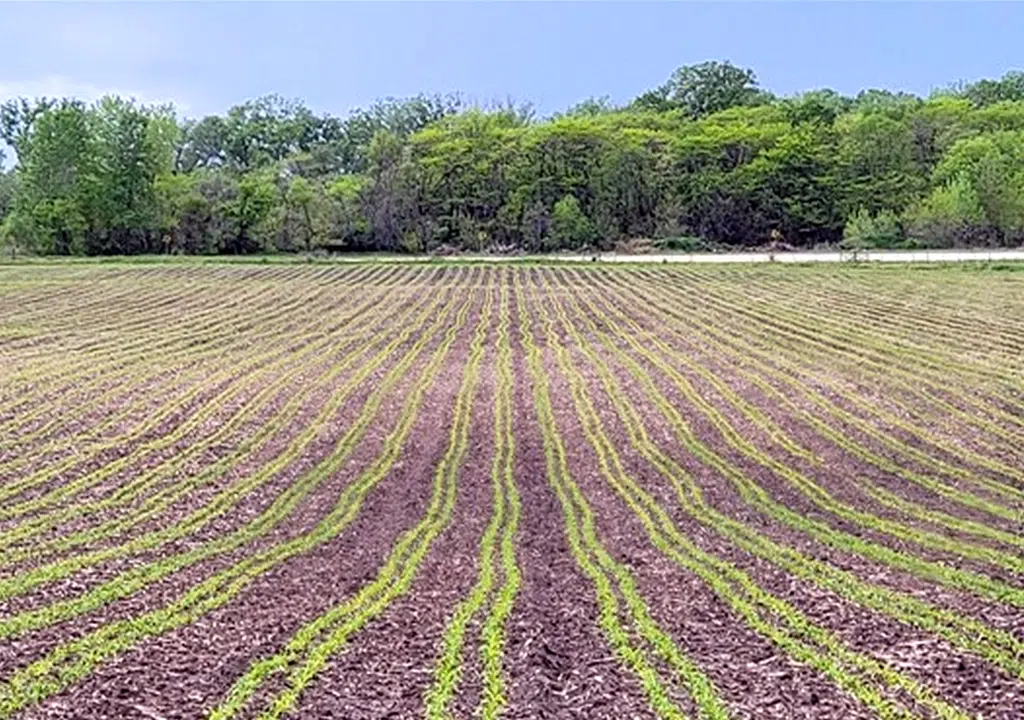
Michael Spencer, a farmer from Indiana, faced similar problems. “My tractor would suddenly jerk sideways, and I had to manually restart it. It was frustrating and beautiful at the same time.”
The Economic Implications
The dependence on GPS makes solar storms a serious economic issue.
Delays in planting or harvesting can reduce yields, while repairing or recalibrating GPS systems increases operational costs.
During solar maximum—a period of higher solar activity in 11-year cycles—moderate events like G3 and G4 storms may become more frequent.
This requires farmers to be prepared to deal with delays and develop strategies to mitigate the effects of solar storms.
Future Solutions
In light of these vulnerabilities, researchers and companies are investing in alternative technologies.
The next generation of agricultural guidance systems should incorporate artificial intelligence, machine vision, and expert systems.
These technologies will allow tractors to operate with greater autonomy, without solely relying on GPS.
Terry Griffin, a professor at Kansas State University, highlighted in farmdoc Daily that these innovations aim to reduce vulnerability to GPS disruptions, ensuring greater operational stability during periods of high solar activity.